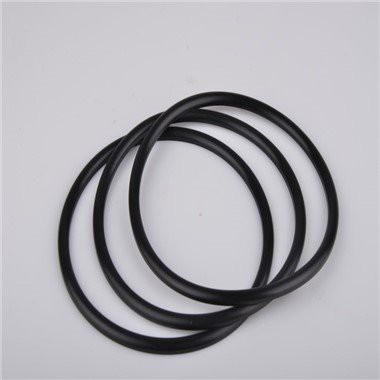

What is the chemical composition of a rubber ring?
As a dedicated rubber ring supplier, I've witnessed firsthand the diverse applications and critical roles that rubber rings play across numerous industries. From automotive engines to plumbing systems, these unassuming components are essential for ensuring the proper functioning and longevity of various equipment. One of the most frequently asked questions I encounter is about the chemical composition of rubber rings. Understanding this aspect is crucial for selecting the right rubber ring for specific applications, as different chemical compositions endow rubber rings with distinct properties.
Natural Rubber (NR)
Natural rubber is derived from the latex of the Hevea brasiliensis tree. It is composed mainly of polyisoprene, a polymer consisting of repeating isoprene units. The chemical formula of isoprene is C₅H₈, and in natural rubber, these isoprene units are linked together in a long - chain structure through a cis - 1,4 - addition polymerization process.
The unique molecular structure of natural rubber gives it excellent elasticity, high tensile strength, and good tear resistance. It has a low glass - transition temperature, which means it remains flexible even at relatively low temperatures. This makes natural rubber rings suitable for applications where high flexibility and resilience are required, such as in shock - absorbing mounts and some types of gaskets. However, natural rubber is not very resistant to oil, ozone, and sunlight. Exposure to these elements can cause it to degrade over time, leading to a loss of its physical properties.


Synthetic Rubbers
- Styrene - Butadiene Rubber (SBR)
SBR is a synthetic rubber that is produced by copolymerizing styrene and butadiene. The ratio of styrene to butadiene can vary, which affects the properties of the resulting rubber. Typically, SBR contains around 23.5% styrene.
The chemical structure of SBR combines the properties of both styrene and butadiene. It has good abrasion resistance, making it suitable for applications such as tires. SBR also has relatively good aging resistance compared to natural rubber. However, its elasticity is not as high as that of natural rubber. SBR rubber rings are commonly used in automotive applications, such as in door seals and some types of hoses. - Nitrile Rubber (NBR)
Nitrile rubber is a copolymer of acrylonitrile and butadiene. The acrylonitrile content in NBR can range from 18% to 50%. The presence of acrylonitrile gives NBR excellent oil and fuel resistance. As the acrylonitrile content increases, the oil resistance of NBR improves, but its low - temperature flexibility decreases.
The chemical structure of NBR allows it to form strong intermolecular forces, which contribute to its resistance to swelling in oil and fuel. NBR rubber rings are widely used in the automotive and aerospace industries, especially in applications where contact with oil, fuel, or hydraulic fluids is expected. For example, they are used as seals in engines, transmissions, and fuel systems. - Ethylene - Propylene - Diene Monomer (EPDM)
EPDM is a terpolymer composed of ethylene, propylene, and a small amount of a non - conjugated diene monomer. The diene monomer is usually ethylidene norbornene (ENB) or dicyclopentadiene (DCPD).
The chemical composition of EPDM gives it outstanding resistance to ozone, weathering, and heat. It has a wide service temperature range, from - 40°C to 120°C. EPDM rubber rings are commonly used in outdoor applications, such as in roofing seals, window seals, and automotive weatherstripping. They are also used in some water - based systems due to their good water resistance. - Silicone Rubber
Silicone rubber is based on a polymer backbone of silicon - oxygen bonds (-Si - O -) with organic side groups, usually methyl groups (-CH₃). The general formula of silicone rubber can be represented as [R₂SiO]ₙ, where R is an organic group.
Silicone rubber has several unique properties due to its chemical structure. It has excellent heat resistance, with a service temperature range from - 60°C to 230°C. It also has good electrical insulation properties and is resistant to ozone and UV radiation. Silicone rubber rings are used in high - temperature applications, such as in ovens, heaters, and some electrical equipment. They are also used in medical applications because of their biocompatibility. - Fluorocarbon Rubber (FKM)
Fluorocarbon rubber, also known as Viton (a well - known brand), is a family of synthetic rubbers containing fluorine atoms in their chemical structure. The most common type of FKM is based on copolymers of vinylidene fluoride (VDF) and hexafluoropropylene (HFP).
The presence of fluorine atoms gives FKM excellent chemical resistance, especially to aggressive chemicals, fuels, and high - temperature oils. It has a high service temperature range, up to 250°C in some cases. FKM rubber rings are used in demanding applications, such as in the chemical processing industry, aerospace, and high - performance automotive engines.
Additives in Rubber Rings
In addition to the base rubber polymers, rubber rings often contain various additives to enhance their properties.
- Vulcanizing Agents
Vulcanization is a process that cross - links the polymer chains in rubber, improving its strength, elasticity, and heat resistance. Sulfur is the most commonly used vulcanizing agent. In the presence of heat and a vulcanization accelerator, sulfur forms cross - links between the polymer chains of the rubber. Other vulcanizing agents, such as peroxides, are used for some types of synthetic rubbers, especially those that are difficult to vulcanize with sulfur. - Fillers
Fillers are added to rubber to improve its mechanical properties, reduce costs, and modify its processing characteristics. Common fillers include carbon black, silica, and clay. Carbon black is widely used to improve the abrasion resistance and tensile strength of rubber. Silica is used to enhance the wet - grip properties of rubber, which is important for tires. - Antioxidants and Antiozonants
These additives are used to protect the rubber from degradation caused by oxygen and ozone. Antioxidants prevent the oxidation of the rubber polymer chains, while antiozonants form a protective layer on the surface of the rubber to prevent ozone cracking. They are especially important for rubbers that are exposed to air and sunlight. - Plasticizers
Plasticizers are added to rubber to increase its flexibility and processability. They work by reducing the intermolecular forces between the polymer chains, allowing them to move more freely. Phthalates are common plasticizers, although their use is being restricted in some applications due to environmental and health concerns.
Choosing the Right Rubber Ring Based on Chemical Composition
When selecting a rubber ring for a specific application, it is essential to consider the chemical environment, temperature range, and mechanical requirements. For example, if the application involves contact with oil, NBR or FKM rubber rings would be a good choice. If the rubber ring needs to withstand high temperatures, silicone or FKM rubber might be more suitable.
As a rubber ring supplier, we offer a wide range of rubber rings with different chemical compositions to meet the diverse needs of our customers. Whether you need a Customized Rubber Ring tailored to your specific requirements, a Rubber Square Ring for a particular sealing application, or a Molded Rubber Ring with precise dimensions, we have the expertise and resources to provide high - quality products.
If you are in the market for rubber rings and need assistance in choosing the right chemical composition for your application, please do not hesitate to contact us. Our team of experts is ready to help you make an informed decision and ensure that you get the best - fitting rubber rings for your needs.
References
- Billmeyer, F. W. (1984). Textbook of Polymer Science. Wiley - Interscience.
- Morton, M. (1987). Rubber Technology. Van Nostrand Reinhold.
- Kresge, T. K., & Tokita, E. (2001). Synthetic Rubber. Kirk - Othmer Encyclopedia of Chemical Technology.