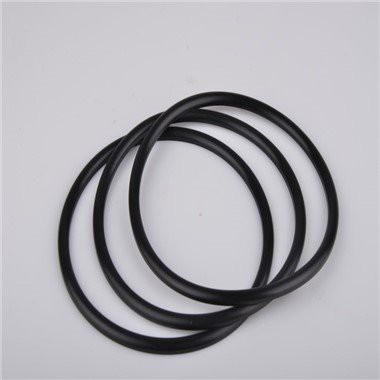

Hey there! As a PTFE O Rings supplier, I've been getting a lot of questions lately about how these little guys perform in abrasive environments. So, I thought I'd dive deep into this topic and share some insights.
First off, let's talk a bit about what PTFE O Rings are. PTFE, or Polytetrafluoroethylene, is a synthetic fluoropolymer known for its outstanding chemical resistance, low friction coefficient, and high temperature tolerance. When it comes to O Rings, PTFE is a game - changer. These O Rings are used in a wide range of industries, from automotive to aerospace, and their performance in abrasive settings is crucial.
In abrasive environments, there are usually two main types of abrasion: sliding abrasion and impact abrasion. Sliding abrasion occurs when the O Ring slides against a rough surface, while impact abrasion happens when the O Ring is hit by solid particles.
Let's start with sliding abrasion. The low friction coefficient of PTFE is a huge advantage here. When an O Ring is sliding against a rough surface, the low friction means there's less resistance. This reduces the amount of wear and tear on the O Ring. For example, in a hydraulic cylinder where the O Ring has to slide back and forth continuously, a PTFE O Ring will last much longer compared to other materials. It won't get stuck or damaged easily due to the smooth movement it can achieve.
Another factor that helps PTFE O Rings in sliding abrasion is their self - lubricating property. PTFE has a natural ability to lubricate itself during operation. This further reduces the friction between the O Ring and the mating surface, minimizing the risk of abrasion. You can check out our O - ring with Teflon Coating for more details on how this works in practice.
Now, let's move on to impact abrasion. In environments where there are flying particles or where the O Ring might be subject to sudden impacts, PTFE O Rings have some great features. PTFE is a relatively tough material. It can withstand a certain amount of impact without cracking or breaking. This is because of its molecular structure, which gives it a good degree of flexibility and resilience.
However, it's important to note that PTFE isn't completely indestructible. In extremely harsh impact environments, you might need to consider some additional measures. One option is using a PTFE Coated O - ring. The coating can add an extra layer of protection against impact abrasion. It can absorb some of the energy from the impacts and prevent the base material from getting damaged.
The chemical resistance of PTFE also plays a role in abrasive environments. In many industrial settings, the abrasive particles might be mixed with chemicals. PTFE O Rings are resistant to a wide range of chemicals, including acids, bases, and solvents. This means that even if the O Ring is exposed to a corrosive and abrasive environment simultaneously, it won't degrade easily. For instance, in a chemical processing plant where there are abrasive salts and acids present, a PTFE O Ring can maintain its integrity and sealing performance.


When it comes to temperature, PTFE O Rings are pretty impressive too. Abrasive environments can sometimes generate a lot of heat due to friction. PTFE can handle high temperatures, up to around 260°C (500°F) in continuous use. This means that even if the O Ring is subjected to high - heat conditions during the abrasion process, it won't melt or lose its shape. You can rely on it to keep sealing effectively in hot and abrasive environments.
One of the challenges with PTFE O Rings in abrasive environments is their initial wear. Sometimes, when a PTFE O Ring is first introduced to an abrasive surface, there might be a small amount of initial wear as the O Ring conforms to the surface. But once this initial phase is over, the wear rate becomes much lower. This is something to keep in mind during the installation and start - up of systems using PTFE O Rings.
There are also different grades of PTFE available for O Rings. Some grades are specifically formulated to have better abrasion resistance. These grades might have additives or fillers that enhance their toughness and wear - resistance properties. When choosing a PTFE O Ring for an abrasive environment, it's important to select the right grade based on the specific conditions of your application. You can explore our PTFE Coating O Ring Seal options to find the best fit for your needs.
In conclusion, PTFE O Rings perform quite well in abrasive environments. Their low friction coefficient, self - lubricating property, chemical resistance, and temperature tolerance all contribute to their ability to withstand abrasion. However, it's important to understand the specific type of abrasion in your environment and choose the right PTFE O Ring grade or coating to ensure optimal performance.
If you're looking for high - quality PTFE O Rings for your abrasive applications, we're here to help. We have a wide range of products that can meet your needs. Whether you're in the automotive, aerospace, or any other industry, we can provide you with the right solutions. Don't hesitate to reach out for more information or to start a purchase negotiation. We're always happy to assist you in finding the perfect PTFE O Ring for your specific situation.
References
- "Handbook of PTFE Technology" - This book provides in - depth knowledge about the properties and applications of PTFE.
- Industry research papers on O Ring performance in abrasive environments, which discuss real - world case studies and test results.