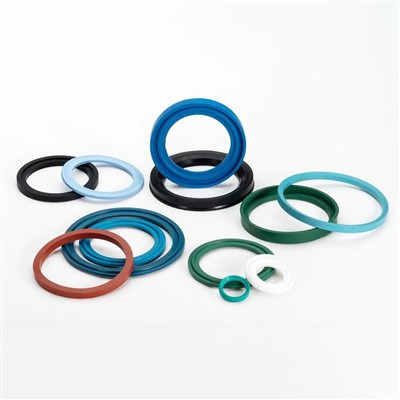
O-Ring vs Gasket - When to Use Which?
Both O-rings and gaskets are sealing components, but they work differently and are designed for different applications. Understanding when to use each type ensures optimal sealing performance and cost-effectiveness.
What's the Difference?
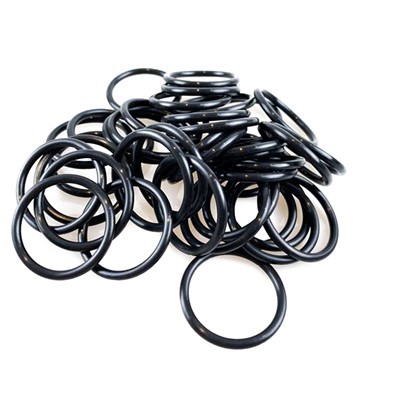
O-Ring
- Shape: Round cross-section, torus-shaped (doughnut)
- Installation: Sits in a groove or gland
- Sealing: Creates seal through radial compression
- Movement: Can handle dynamic (moving) applications
Gasket
- Shape: Flat with various profiles (round, square, custom)
- Installation: Placed between two flat surfaces
- Sealing: Creates seal through axial compression
- Movement: Only for static (non-moving) applications

Quick Comparison
| Feature | O-Ring | Gasket |
|---|---|---|
| Shape | Round cross-section | Flat, various shapes |
| Installation | Requires groove/gland | Between flat surfaces |
| Sealing Method | Radial compression (squeeze) | Axial compression (clamp) |
| Dynamic Use | Yes (pistons, shafts) | No (static only) |
| Pressure Range | Low to very high | Low to high |
| Space Required | Compact, less space | Larger sealing area |
| Replacement | Easy to replace | Moderate difficulty |
| Cost | Lower per piece | Varies by size/complexity |
When to Use O-Rings
Perfect for O-Rings:
- Dynamic sealing: Pistons, hydraulic cylinders, rotating shafts
- High pressure: Hydraulic systems, pneumatic equipment (up to 400+ bar)
- Compact spaces: Where installation area is limited
- Round ports/connections: Pipe fittings, tube connections, boss seals
- Easy maintenance: Quick replacement without special tools
- Standardized sizes: When using standard AS568, ISO 3601, or JIS sizes
Common O-Ring Applications:
- Hydraulic cylinders and actuators
- Pneumatic systems
- Automotive fuel injectors, transmission seals
- Plumbing pipe connections
- Valve stems and seats
- Pump seals
- Quick-connect fittings
- Electrical enclosures (cable glands)
O-Ring Installation Requirements:
Important: O-rings require a properly designed groove or gland:
- Groove depth: typically 70-85% of O-ring cross-section
- Groove width: 1.5-2.0 times O-ring cross-section
- Smooth surface finish: Ra 0.4-1.6 μm
- Rounded corners to prevent O-ring damage
When to Use Gaskets
Perfect for Gaskets:
- Static sealing: Flanges, covers, housings (no relative movement)
- Large sealing areas: Wide flanges, inspection covers, tank lids
- Flat surfaces: When no groove is available or practical
- Custom shapes: Irregular or complex sealing perimeters
- Multiple bolt holes: Flange connections with 4+ bolts
- Surface irregularities: Filling gaps between uneven surfaces
- Low to moderate pressure: Typically under 100 bar
Common Gasket Applications:
- Pipe flange connections (ANSI, DIN, JIS)
- Pump and valve body flanges
- Heat exchanger covers
- Engine head gaskets, oil pan gaskets
- Gearbox and transmission housings
- Electrical enclosure doors
- Tank manholes and inspection ports
- HVAC ductwork connections
Gasket Installation Requirements:
Important: Gaskets require proper surface preparation and tightening:
- Clean, flat surfaces free from rust and debris
- Surface finish: Ra 0.8-3.2 μm
- Even bolt tightening in star/cross pattern
- Correct torque specification
- Gasket centered properly before tightening
Decision Guide
| Your Situation | Recommended Solution | Why |
|---|---|---|
| Moving parts (piston, shaft) | O-Ring | Only O-rings can handle dynamic sealing |
| High pressure (100+ bar) | O-Ring | Better pressure resistance with groove support |
| Pipe flange connection | Gasket | Large flat surface, multiple bolts, static seal |
| Small round port | O-Ring | Compact, efficient, standardized |
| Irregular shape needed | Gasket | Can be custom-cut to any shape |
| No groove available | Gasket | Works on flat surfaces without machining |
| Frequent replacement needed | O-Ring | Faster and easier to replace |
| Large inspection cover | Gasket | Better for large sealing areas |
| Standardized connection | O-Ring or Gasket | Both available in industry standards |
Can You Use Both Together?
Yes! Some applications combine O-rings and gaskets for enhanced sealing:
- Flange with O-ring groove: O-ring in groove + flat gasket for added security
- Double sealing: Primary O-ring seal + backup gasket
- High-pressure flanges: O-ring for sealing + gasket for vibration dampening
- Complex assemblies: Different seals for different areas of the same component
Material Considerations
Both O-rings and gaskets are available in similar materials. Choose based on your application requirements:
| Material | Best For | Temperature Range |
|---|---|---|
| NBR (Nitrile) | Oil, fuel, hydraulic fluid | -40°C to +120°C |
| EPDM | Water, steam, weather resistance | -50°C to +150°C |
| FKM (Viton) | Chemicals, high temperature | -20°C to +230°C |
| Silicone (VMQ) | Food grade, extreme temperatures | -60°C to +230°C |
| HNBR | Enhanced oil resistance, heat | -40°C to +150°C |
Summary
Choose O-Rings when you need:
- Dynamic sealing (moving parts)
- High pressure resistance
- Compact sealing solution
- Easy replacement
Choose Gaskets when you need:
- Static sealing (no movement)
- Large or irregular sealing areas
- Flat surface connections
- Custom shapes
Understanding the differences helps you select the right sealing solution for optimal performance, longevity, and cost-effectiveness.
About Best Seal
Best Seal manufactures both O-rings👉 and gaskets👉 in a wide range of materials and sizes:
- 10,000+ standard O-ring sizes (AS568, ISO 3601, JIS)
- Custom gaskets in any shape and size
- All materials: NBR, EPDM, FKM, Silicone, HNBR
- Technical support for seal selection
- Fast delivery with large inventory
Need help choosing between O-rings and gaskets? Our technical team provides free consultation.
Contact US
Xiamen Best Seal Imp and Exp Co.,Ltd
Tel: +86-592-5782315
Mob: +8618950159396
Email: yunying2@bestsealhk.com
Add: Unit 522-525, Gaodian Road 6#, Huli District, Xiamen, China
Date: December 2025