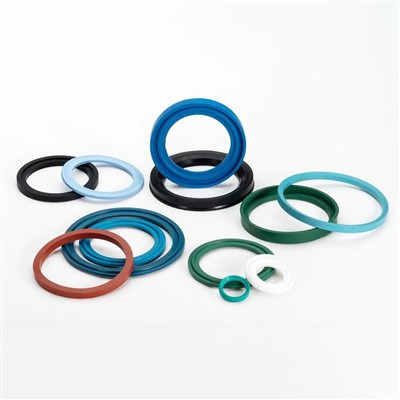
Gasket Leaking? Quick Troubleshooting Guide
Gasket leaks are a common problem in industrial and automotive systems. Understanding why gaskets leak and how to fix them can save time, money, and prevent equipment damage. This guide helps you quickly identify and solve gasket leaking issues.
Common Causes of Gasket Leaks
1. Incorrect Material Selection
Problem: Gasket material not compatible with fluid, temperature, or pressure
Signs: Swelling, cracking, hardening, or deterioration
Solution:
- Check chemical compatibility chart
- Use NBR for oil, EPDM for water/steam, FKM for chemicals
- Verify temperature rating matches operating conditions
2. Insufficient Compression
Problem: Bolts not tightened enough, gasket not compressed properly
Signs: Visible gaps, uneven contact, loose bolts
Solution:
- Follow proper torque specifications
- Tighten bolts in a star/cross pattern
- Use torque wrench for accurate tightening
- Typical compression: 15-25% of original thickness
3. Over-Compression
Problem: Bolts tightened too much, gasket crushed or extruded
Signs: Gasket squeezed out from joint, material damage
Solution:
- Don't exceed maximum torque specifications
- Use thicker or harder gasket material
- Add backup rings for high-pressure applications
- Maximum compression: usually 30-35%
4. Poor Surface Condition
Problem: Rough, scratched, corroded, or warped mating surfaces
Signs: Leaks along specific areas, uneven sealing
Solution:
- Clean surfaces thoroughly before installation
- Remove rust, dirt, old gasket material
- Check for warpage with straight edge
- Surface finish: Ra 0.8-3.2 μm recommended
- Resurface or replace damaged flanges
5. Wrong Gasket Size
Problem: Gasket too small, too large, or wrong thickness
Signs: Gasket doesn't fit properly, hangs over edges, or leaves gaps
Solution:
- Measure flange dimensions accurately
- Check inner diameter, outer diameter, and thickness
- Verify bolt hole positions and sizes
- Order correct size or custom gaskets
6. Gasket Aging & Compression Set
Problem: Gasket has lost elasticity over time
Signs: Gasket remains compressed when removed, brittle or hard
Solution:
- Replace gasket - it cannot recover
- Use better material with low compression set
- Establish regular replacement schedule
- Typical service life: 2-5 years depending on conditions
Quick Diagnosis Table
| Leak Symptom | Most Likely Cause | Quick Fix |
|---|---|---|
| Leak immediately after installation | Insufficient tightening or wrong size | Check torque and gasket dimensions |
| Leak develops after a few days | Thermal cycling or relaxation | Re-torque bolts after 24-48 hours |
| Leak only at high temperature | Material not temperature-rated | Upgrade to FKM or silicone |
| Leak only under pressure | Insufficient compression or wrong material | Increase torque or use harder gasket |
| Leak at one spot only | Surface defect or uneven tightening | Clean/repair surface, re-torque properly |
| Gasket blown out | Pressure too high or over-compressed | Use metal-reinforced gasket or backup ring |
| Leak after months/years | Normal aging and compression set | Replace gasket |
Step-by-Step Troubleshooting Process
Step 1: Identify the Leak Location
- Is it leaking from the gasket joint or elsewhere?
- Check if leak is uniform or localized
- Note leak rate (drip, seep, spray)
Step 2: Check Operating Conditions
- Current temperature vs. gasket rating
- Current pressure vs. gasket rating
- Fluid type and chemical compatibility
Step 3: Inspect the Gasket
- Check for visible damage, cracks, or deterioration
- Verify correct size and thickness
- Check material type matches application
Step 4: Check Installation
- Verify bolt torque with torque wrench
- Check if bolts were tightened in proper sequence
- Look for uneven compression
Step 5: Inspect Mating Surfaces
- Check for scratches, corrosion, or warping
- Verify surface flatness and cleanliness
- Check flange alignment
Prevention Tips
Proper Installation
- Always use new gaskets - never reuse old ones
- Clean surfaces thoroughly before installation
- Apply thin layer of appropriate lubricant if needed
- Center gasket properly before tightening
- Use star pattern for bolt tightening
- Re-torque after 24 hours for critical applications
Regular Maintenance
- Establish gasket replacement schedule
- Inspect gaskets during routine maintenance
- Keep spare gaskets in stock
- Document gasket type and size for each application
- Monitor for early signs of leakage
Material Selection
| Application | Recommended Material |
|---|---|
| Water, steam, sanitary | EPDM or Silicone (FDA grade) |
| Oil, fuel, hydraulic | NBR or HNBR |
| Chemicals, solvents | FKM (Viton) or PTFE |
| High temperature (200°C+) | FKM or Silicone |
| General industrial | NBR or Neoprene |
When to Replace a Gasket
⚠️ Replace immediately if you see:
- Any visible leakage
- Cracks, tears, or cuts in gasket
- Hardening or brittleness
- Swelling or blistering
- Permanent compression (won't spring back)
- Material degradation or discoloration
- After any flange disassembly
Conclusion
Most gasket leaks are preventable with proper material selection, correct installation, and regular maintenance. When leaks occur, quick diagnosis and appropriate corrective action can minimize downtime and prevent costly equipment damage.
Key takeaways:
- Choose the right material for your application
- Follow proper installation procedures
- Use correct torque specifications
- Maintain clean, flat mating surfaces
- Replace gaskets on schedule - don't wait for failure
Need Help?
If you're experiencing persistent gasket leaking issues, our technical team can help identify the root cause and recommend the right gasket solution.
Best Seal provides:
- Free technical consultation and gasket selection guidance
- Wide range of rubber gaskets👉 in various materials
- Custom gasket design and manufacturing
- Fast delivery with large inventory
Contact US
Xiamen Best Seal Imp and Exp Co.,Ltd
Tel: +86-592-5782315
Mob: +8618950159396
Email: yunying2@bestsealhk.com
Add: Unit 522-525, Gaodian Road 6#, Huli District, Xiamen, China
Date: December 2025