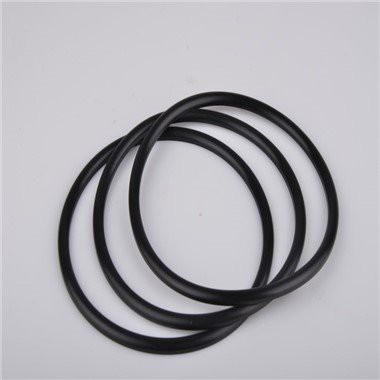

The compression ratio of a hollow O - ring is a crucial parameter that significantly impacts its performance in various applications. As a supplier of high - quality hollow O - rings, I've encountered numerous inquiries regarding this very topic. In this blog, I'll delve into the concept of the compression ratio of a hollow O - ring, its importance, factors affecting it, and how it relates to the overall functionality of these seals.
Understanding the Compression Ratio
The compression ratio of a hollow O - ring is defined as the percentage of deformation that the O - ring undergoes when it is installed between two mating surfaces. It is calculated by dividing the difference between the original cross - sectional diameter of the O - ring and the compressed cross - sectional diameter by the original cross - sectional diameter, and then multiplying by 100.
Mathematically, the formula for compression ratio (CR) is:
[CR=\frac{d_0 - d_1}{d_0}\times100%]
where (d_0) is the original cross - sectional diameter of the O - ring, and (d_1) is the compressed cross - sectional diameter.
For example, if a hollow O - ring has an original cross - sectional diameter of 5 mm and after installation, the compressed cross - sectional diameter is 4 mm, the compression ratio is (\frac{5 - 4}{5}\times100% = 20%).
Importance of the Compression Ratio
The compression ratio plays a vital role in determining the sealing effectiveness of a hollow O - ring. A proper compression ratio ensures that the O - ring can create a reliable seal against the leakage of fluids or gases.
- Sealing Performance: When a hollow O - ring is compressed to the appropriate ratio, it fills the gaps between the mating surfaces, preventing the passage of media. Insufficient compression may result in leakage, while excessive compression can lead to extrusion, which also compromises the seal.
- Longevity: A correct compression ratio helps to extend the service life of the O - ring. Over - compression can cause the O - ring to wear out quickly due to excessive stress, while under - compression may lead to premature failure due to inadequate sealing.
- Material Integrity: The compression ratio affects the integrity of the O - ring material. Different materials have different compression limits. For instance, some elastomers may lose their elasticity if compressed beyond a certain point, leading to permanent deformation.
Factors Affecting the Compression Ratio
Several factors influence the compression ratio of a hollow O - ring, and understanding these factors is essential for selecting the right O - ring for a specific application.
- Material Properties: The type of material used in the O - ring, such as nitrile rubber, silicone, or fluorocarbon, determines its compressibility. Each material has its own elastic modulus, which affects how it responds to compression. For example, silicone O - rings are generally more flexible and can tolerate higher compression ratios compared to some harder elastomers.
- Application Conditions: The operating temperature, pressure, and the type of fluid or gas being sealed all impact the compression ratio. High - pressure applications typically require a higher compression ratio to ensure a tight seal. Similarly, extreme temperatures can affect the material's properties, altering its compression behavior.
- Groove Design: The design of the groove where the O - ring is installed is crucial. The groove width and depth determine the amount of space available for the O - ring to compress. A well - designed groove will allow the O - ring to achieve the desired compression ratio without being over - or under - compressed.
Selecting the Right Compression Ratio
Choosing the appropriate compression ratio depends on the specific requirements of the application. Here are some general guidelines:
- Low - Pressure Applications: For applications with low pressure, such as those in consumer products or low - flow systems, a compression ratio of 10% - 15% may be sufficient. This lower compression ratio helps to preserve the O - ring's elasticity and reduces the risk of extrusion.
- Medium - Pressure Applications: In medium - pressure applications, like hydraulic systems with pressures ranging from 1000 to 3000 psi, a compression ratio of 15% - 25% is often recommended. This higher compression ratio ensures a reliable seal under moderate pressure.
- High - Pressure Applications: High - pressure applications, such as those in oil and gas or aerospace industries, may require a compression ratio of 25% - 35%. However, it's important to ensure that the O - ring material can withstand such high compression without failing.
Our Hollow O - Ring Offerings
As a leading supplier of hollow O - rings, we offer a wide range of products to meet diverse application needs. Our Walnut Hollow O - ring Replacements are designed to provide a perfect fit and reliable sealing performance. These replacements are made from high - quality materials and are available in various sizes and compression ratios.
Our Hollow Rubber O - rings are known for their excellent elasticity and chemical resistance. They can be used in a variety of applications, from automotive to industrial equipment.
We also offer Hollow Spliced O Rings, which are ideal for applications where continuous sealing is required. These spliced O - rings are easy to install and provide a seamless seal.
Conclusion
The compression ratio of a hollow O - ring is a critical factor that determines its sealing performance, longevity, and overall functionality. By understanding the concept of compression ratio, considering the factors that affect it, and selecting the right compression ratio for a specific application, you can ensure the optimal performance of your sealing system.
If you're in need of high - quality hollow O - rings, look no further. Our extensive product range and expertise in the field make us your ideal partner for all your sealing needs. Contact us today to discuss your requirements and explore how our hollow O - rings can enhance the performance of your applications.


References
- Brown, R. A. (2015). Sealing Technology Handbook. Elsevier.
- Campbell, C. (2018). Elastomer Seals: Design, Manufacturing, and Testing. CRC Press.