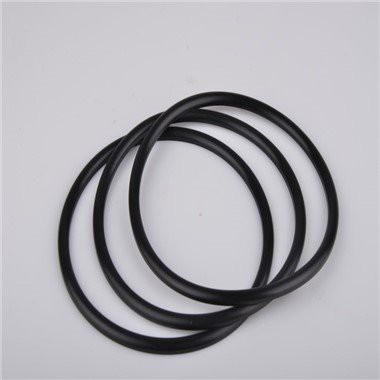

PTFE O-rings are widely recognized for their exceptional chemical resistance, low friction coefficient, and high-temperature stability. However, their performance in low-temperature conditions is a critical aspect that many industries, such as aerospace, cryogenics, and refrigeration, need to understand thoroughly. As a PTFE O-ring supplier, I've witnessed firsthand the importance of these seals in various low-temperature applications. In this blog, I'll delve into how PTFE O-rings behave under such conditions and share some insights based on our experiences.
Material Properties of PTFE at Low Temperatures
Polytetrafluoroethylene (PTFE) is a fluoropolymer known for its unique molecular structure. At low temperatures, PTFE retains many of its desirable properties, but there are also some notable changes. One of the key characteristics of PTFE is its high crystallinity, which can affect its behavior in cold environments.
As the temperature drops, the polymer chains in PTFE become more rigid. This increased rigidity leads to a decrease in the material's flexibility and elasticity. The glass transition temperature (Tg) of PTFE is around -120°C (-184°F). Below this temperature, the material transitions from a rubbery state to a glassy state, where it becomes more brittle and less able to deform under stress.
However, even at temperatures well below the Tg, PTFE still maintains its excellent chemical resistance. It is resistant to a wide range of chemicals, including solvents, acids, and bases, making it suitable for use in low-temperature chemical processing applications.
Sealing Performance in Low Temperatures
The sealing performance of PTFE O-rings in low-temperature conditions is a crucial factor to consider. When an O-ring is compressed between two mating surfaces, it forms a seal by deforming to fill any gaps or irregularities. In low temperatures, the reduced flexibility of PTFE can make it more challenging for the O-ring to achieve a proper seal.


One of the main issues is the loss of initial compression force. As the material becomes more rigid, it may not be able to maintain the same level of compression as it would at higher temperatures. This can lead to leaks, especially in applications where a tight seal is required.
Another concern is the potential for cold flow. Cold flow, also known as creep, is the tendency of a material to deform slowly under a constant load. In low temperatures, the rate of cold flow in PTFE is generally lower than at higher temperatures. However, if the O-ring is subjected to high pressures or long-term stress, cold flow can still occur, causing the seal to deteriorate over time.
To address these issues, some manufacturers offer Teflon Coated O-ring or O-ring with Teflon Coating. These products combine the low-friction and chemical resistance of PTFE with the flexibility and elasticity of a rubber core. The rubber core helps to maintain the compression force and provides better sealing performance in low-temperature applications.
Mechanical Properties and Durability
In addition to sealing performance, the mechanical properties and durability of PTFE O-rings in low temperatures are also important. The reduced flexibility of PTFE at low temperatures can make the O-rings more susceptible to damage during installation and operation.
For example, if an O-ring is stretched or bent during installation, it may crack or break due to the increased brittleness of the material. To minimize the risk of damage, it is important to handle PTFE O-rings with care and follow the manufacturer's installation guidelines.
The durability of PTFE O-rings in low-temperature applications also depends on the specific operating conditions. In applications where the O-ring is subjected to repeated cycling or vibration, the material may experience fatigue, which can lead to premature failure. To improve the durability of PTFE O-rings in these applications, it may be necessary to use a reinforced or filled PTFE material.
Applications in Low-Temperature Environments
PTFE O-rings are used in a variety of low-temperature applications across different industries. Here are some examples:
- Aerospace: In aerospace applications, PTFE O-rings are used in cryogenic fuel systems, where they need to maintain a seal at extremely low temperatures. The excellent chemical resistance and low friction coefficient of PTFE make it suitable for use in these harsh environments.
- Refrigeration: In refrigeration systems, PTFE O-rings are used to seal compressors, condensers, and evaporators. The low-temperature performance of PTFE helps to ensure the efficiency and reliability of these systems.
- Cryogenics: In cryogenic research and applications, PTFE O-rings are used to seal vacuum chambers, liquid nitrogen containers, and other equipment. The ability of PTFE to maintain its chemical resistance and sealing performance at low temperatures makes it an ideal choice for these applications.
Considerations for Design and Selection
When designing and selecting PTFE O-rings for low-temperature applications, several factors need to be considered:
- Temperature Range: Determine the minimum and maximum operating temperatures of the application. This will help to select a PTFE material with the appropriate temperature resistance.
- Sealing Requirements: Consider the type of seal required (e.g., static or dynamic), the pressure and fluid media, and the expected leakage rate. This will help to choose the right size and cross-section of the O-ring.
- Installation Conditions: Take into account the installation method, the mating surfaces, and any potential sources of stress or damage. This will help to ensure that the O-ring is installed correctly and can perform its intended function.
In some cases, it may be necessary to conduct testing or simulations to validate the performance of the PTFE O-rings in the specific low-temperature application. This can help to identify any potential issues and make any necessary adjustments to the design or selection process.
Conclusion
PTFE O-rings offer many advantages in low-temperature applications, including excellent chemical resistance and low friction. However, their performance can be affected by the reduced flexibility and elasticity of the material at low temperatures. By understanding the material properties, sealing performance, and mechanical behavior of PTFE O-rings in cold environments, it is possible to select the right product for the specific application and ensure reliable operation.
If you are looking for high-quality PTFE O-rings for your low-temperature applications, we are here to help. As a leading PTFE Coated O-ring supplier, we offer a wide range of products to meet your needs. Our experienced team can provide technical support and guidance to help you select the best solution for your application. Contact us today to discuss your requirements and start a procurement negotiation.
References
- "Handbook of Fluoropolymer Science and Technology" by Charles A. Wilkie and John Scheirs
- "Sealing Technology Handbook" by John H. Bickford
- "PTFE: Properties, Processing, and Applications" by J. K. Gillham and R. B. Prime