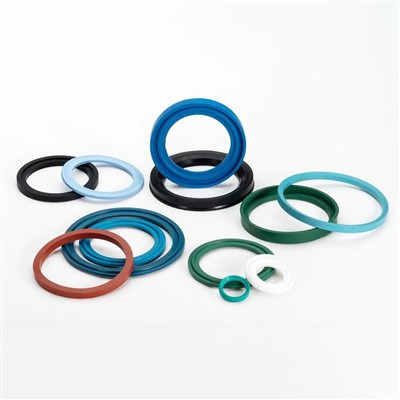
As offshore wind energy expansions accelerate globally in mid-2026, installation crews are deploying thousands of kilometers of high-voltage subsea cables. These subsea cables transmit electricity from offshore wind turbines to subsea junction boxes and land-based grids. To guarantee uninterrupted power delivery under extreme ocean conditions, engineers rely on heavy-duty elastomeric grommets and gaskets designed for deep-sea service.
Operating in deep water environments puts extreme pressure and chemical stress on cable entry seals and junction box gaskets. A minor leak can lead to catastrophic electrical grounding and turbine downtime. In this technical update, we examine the elastomer properties and designs necessary to survive 25 years on the ocean floor.

1. The Challenge: High Hydrostatic Pressure
Subsea power cable penetrations and junction boxes are commonly deployed at depths ranging from 30 to 50 meters. At these depths, the surrounding sea exerts a constant hydrostatic pressure of **3 to 5 bar** (approximately 43 to 72 psi).
Under continuous high pressure, water molecules seek any micro-gap in the seal interface:
- High Compression Force: Watertight integrity requires gaskets with high elastic recovery. The seal must exert a contact pressure higher than the surrounding water pressure to prevent ingress.
- Low Compression Set: Over decades of service, the seal must not relax or deform permanently. A high compression set would lead to seal leakage under temperature fluctuations.
2. Material Selection: Resisting Saltwater, UV, and Biofouling
Subsea cable seals operate in the splash zone (exposed to air, UV, and waves) and the deep benthic zone (submerged in cold, salt-rich water). Gaskets must resist corrosion and chemical attack:
- Marine-Grade EPDM: EPDM is the preferred material for underwater enclosures. Its saturated polymer backbone provides outstanding resistance to water absorption, salt ions, ozone, and UV radiation, ensuring the compound does not swell or dry-rot.
- Chloroprene (Neoprene): Neoprene exhibits excellent physical toughness, moderate oil resistance, and self-extinguishing properties, making it suitable for cable transit frames and outer sheath protector rings.
- Anti-Biofouling Design: Smooth seal surfaces prevent marine organisms (like barnacles and algae) from anchoring, protecting the sealing lip from mechanical damage during inspection cycles.
3. Dynamic Stress: Cable Bending and Strain Relief
Strong ocean currents and wave surges cause subsea cables to sway. Where the heavy cable passes through the rigid steel walls of a turbine foundation or junction box, stress concentrates.
To manage this dynamic load:
- Heavy-Duty Rubber Grommets: Thick-walled EPDM or Neoprene grommets are installed at penetrations. These grommets form a tight water seal and act as strain reliefs, absorbing mechanical bending stresses.
- Sheath Protection: The elastomeric sleeve prevents the metal edge of the entry plate from rubbing against and slicing the outer polyurethane cable jacket.
Marine Elastomer Selection Matrix
| Elastomer Class | Hydrostatic Rating | Ozone & UV Resistance | Key Marine Application |
|---|---|---|---|
| Marine-Grade EPDM | Excellent (>5 bar) | Outstanding | Submerged junction box flange gaskets, cable entry seals. |
| Neoprene (CR) | Good | Good | Heavy-duty strain relief grommets, riser clamp buffers. |
| Nitrile (NBR) | Moderate | Poor (requires coating) | Internal subsea oil-filled transformer seals. |
Marine Sealing Solutions from Xiamen Best Seal
At Xiamen Best Seal, we leverage our ISO & TÜV certified manufacturing facility to support global offshore wind and marine infrastructure installations:
- Thick-Wall Molding Capabilities: We mold large-format, thick-walled marine cable grommets up to 300mm in diameter, ensuring void-free rubber structure.
- Salt Spray & Aging Testing: Our labs conduct high-concentration salt fog testing (ASTM B117) and hot-water immersion testing to verify long-term resistance to ocean water.
- IATF 16949 Certified Quality: All infrastructure components are manufactured under strict dimensional control and undergo optical inspection to prevent flash or parting-line defects.
🛠️ Explore Related Marine & Industrial Products:
- IP67 Waterproof Rubber Grommets: Cable sealing under water exposure.
- Conical Anti-Vibration Mounts Guide: Shock and wave-motion dampening.
- FKM vs. EPDM Chemical Resistance: Compare temperature and environmental performance.
Sourcing custom subsea cable grommets or designing marine-grade waterproof enclosures? Contact Xiamen Best Seal today for engineering consultation, ASTM test datasheets, and custom molding quotes.
• Xiamen Best Seal • High-Reliability Subsea Cabling & Enclosure Seals •