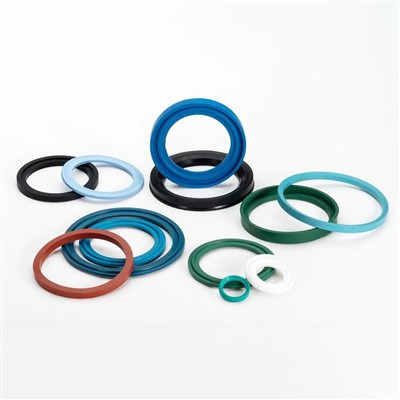
As record summer heatwaves continue throughout July 2026, electric vehicle (EV) safety is under intense scrutiny. High ambient temperatures combined with high-power fast-charging cycles (exceeding 350 kW) push EV battery packs to their thermal limits. To prevent thermal runaway propagation and ensure passenger safety, automotive OEMs are turning to high-performance UL 94-V0 flame-retardant elastomeric seals.
Lithium-ion battery packs require tight temperature control to prevent thermal events. The sealing system of a battery pack is its first line of defense, serving both to exclude external water and to contain hot gases in the event of cell failure. In this industry update, we analyze the physical demands on EV battery gaskets under extreme summer loads.

1. The Challenge: Summer Heat and High-Power Charging
EV batteries operate optimally between 20°C and 40°C. In the peak of summer, road temperatures can exceed 50°C. When an EV utilizes high-current fast charging, the internal resistance of the battery cells generates massive heat.
If the cooling system cannot keep pace, cell temperatures can spike. In extreme cases, a single defective or damaged cell can enter **thermal runaway**, venting flammable gases (exceeding 600°C) and triggering adjacent cells. The perimeter gasket of the battery pack enclosure must withstand this high internal pressure and temperature to prevent fire from breaching the passenger cabin.
2. UL 94-V0 Flame Retardancy: Containing the Fire
Standard elastomer seals burn when exposed to fire. For EV battery packs, standard rubbers are a safety risk. Gaskets and seal profiles must be formulated with flame-retardant additives to meet the **UL 94-V0 standard**:
- Self-Extinguishing: The rubber must stop burning within 10 seconds of flame contact, and it must not produce flaming drips that could ignite nearby components.
- Silicone Foam Gaskets: Lightweight silicone foam is widely used for cell-to-cell thermal barriers and pack lids. It provides excellent thermal insulation, dampens vibration, and acts as a reliable fire seal.
- EPDM Flame Retardant Gaskets: For heavy-duty perimeter joints, EPDM compounded with metal hydrates (like aluminum trihydroxide) provides UL 94-V0 performance while maintaining high mechanical strength.
3. IP67 and IP69K Sealing: Keeping Water Out
While containing internal thermal events is critical, the primary job of the battery seal is excluding external moisture. Road water, winter salt spray, and high-pressure underbody washes can introduce moisture into the pack, causing electrical short-circuits that trigger thermal runaway.
Perimeter seals must maintain high compression under all driving conditions:
- IP67 Protection: Prevents dust ingress and seals against water during temporary immersion (e.g., driving through deep puddles).
- IP69K Protection: Resists high-pressure, high-temperature steam cleaning jets directed at the battery enclosure underbody.
4. Compression Set: Ensuring a 15-Year Life Cycle
EV battery packs are designed to last the lifetime of the vehicle (typically 15 years or 240,000 km). During this lifespan, the pack undergoes constant thermal expansion and contraction.
The gasket must have an exceptionally **low compression set** (retaining its elastic recovery). If the elastomer takes a permanent set under hot summer conditions, it will lose its sealing force. When the weather turns cold, the gap will widen, leading to water ingress and seal failure.
EV Battery Enclosure Gasket Selection Guide
| Material Type | Flammability Rating | Temp Range | Key Advantage |
|---|---|---|---|
| Silicone Foam | UL 94-V0 | -50°C to +200°C | Excellent thermal insulation, light weight, very low compression set. |
| Flame-Retardant EPDM | UL 94-V0 | -40°C to +125°C | High mechanical tear strength, cost-effective for large perimeter seals. |
| Fluorosilicone (FVMQ) | UL 94-V0 / V1 | -60°C to +175°C | Resists chemical solvents, coolant fluids, and oils. |
Automotive Sealing Quality at Xiamen Best Seal
At Xiamen Best Seal, we partner with electric vehicle OEMs and battery pack manufacturers to deliver safety-critical components:
- IATF 16949 Certified Production: All automotive seals are manufactured in strict compliance with quality protocols, supported by full PPAP (Production Part Approval Process) documentation.
- UL-Certified Flame Retardancy: We compound raw elastomers in-house using specialized fire-retardant packages to meet UL 94-V0 requirements without sacrificing mechanical properties.
- In-House Lifecycle Testing: Our labs conduct long-term hot-air aging, oil swell, and compression set testing to verify 15-year service life performance.
🛠️ Explore Related Automotive Sealing Guides:
- EV Battery Gasket Safety Guide: In-depth analysis of battery seal designs.
- FKM vs. EPDM Chemical Resistance: Compare physical durability and environmental resistance.
- Calculate Rubber Seal Compression Force: Equations and formulas for O-ring and gasket compression.
Designing a next-generation EV battery enclosure or sourcing UL 94-V0 perimeter gaskets? Contact Xiamen Best Seal today for engineering assistance, compound testing data sheets, and custom tooling quotes.
• Xiamen Best Seal • High-Reliability EV Battery Enclosure Seals •