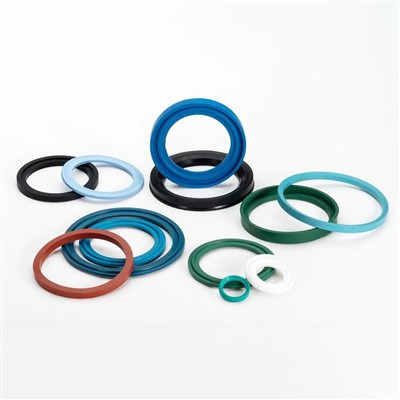
In pharmaceutical manufacturing, medical device assembly, and bioprocessing systems, component material purity is critical. Rubber seals, O-rings, and pump diaphragms that contact medical products must comply with USP Class VI. This standard guarantees that the elastomer will not leach toxic substances into process fluids or patient systems.
For procurement managers sourcing sanitary seals and design engineers building medical fluid pumps, understanding the distinction between food-grade compliance and true biocompatibility certification is essential. In this guide, we detail the testing requirements under USP Class VI, contrast it with standard FDA rules, and explore the best elastomers for biopharm use.

1. What is USP Class VI? (The Biocompatibility Testing)
The United States Pharmacopeia (USP) is a non-governmental organization that establishes standards for medicines and healthcare technologies. Under **USP Chapter <88> (Biological Reactivity Tests, in vivo)**, plastic and elastomer compounds are classified into six groups (Class I through VI).
**Class VI is the most stringent classification.** To achieve certification, the rubber compound must pass three *in vivo* biological reactivity tests using specific extract liquids (saline, alcohol in saline, polyethylene glycol, and vegetable oil):
- Systemic Injection Test: Extracts are injected into test subjects to evaluate systemic responses, checking for general toxicity or adverse physiological reactions.
- Intracutaneous Test: Extracts are injected into skin layers to assess localized skin reactions, checking for irritation, redness, or localized inflammation.
- Implantation Test: Physical samples of the elastomer are surgically implanted into muscle tissue for a minimum of 5 days. This directly tests the material's localized tissue compatibility, ensuring no cellular degradation or severe localized immune responses occur.
2. USP Class VI vs. FDA CFR 21 177.2600
Many engineers mistakenly assume that any FDA food-compliant rubber is suitable for medical or pharmaceutical lines. This is a critical misconception:
- FDA CFR 21 177.2600 (US Food Grade): Focuses on **chemical extraction limits**. It measures the weight of substances extracted from rubber using solvent simulants (water and n-hexane). It does *not* involve biological testing.
- USP Class VI (Medical Grade): Focuses on **biological reactivity and toxicity**. It guarantees that the chemical compound will not trigger systemic toxicity, cellular inflammation, or localized tissue rejection.
For process lines involving active pharmaceutical ingredients (APIs), bioprocess cell culture media, and medical injections, USP Class VI compliance is mandatory.
3. Key Elastomers for USP Class VI Compliance
Selecting the correct elastomer depends on chemical exposure and operating temperatures:
- Platinum-Cured Silicone (VMQ): The gold standard for pharmaceutical liquid lines and peristaltic pumps. Platinum curing leaves no chemical byproducts (unlike acid-releasing peroxide curing systems), resulting in a high-purity, transparent compound with low extractables.
- Peroxide-Cured EPDM: Excellent for Steam-In-Place (SIP) and Clean-In-Place (CIP) sterilization lines. EPDM resists high-temperature steam (up to 150°C) and hot wash chemicals, outperforming silicone in mechanical durability.
- Fluorocarbon (FKM / Viton): Utilized where processing lines contact aggressive organic solvents, active ingredients, or oils that degrade silicone and EPDM.
USP Class VI Material Selection Guide
| Elastomer Class | Recommended Cure | Steam Resistance | Typical Application |
|---|---|---|---|
| Silicone (VMQ) | Platinum-Cured | Moderate (autoclave ok) | Sanitary hose lines, peristaltic tubes, vial stoppers. |
| EPDM | Peroxide-Cured | Excellent (up to 150°C SIP) | Tri-Clamp gaskets, plate heat exchanger seals. |
| FKM (Viton) | Bisphenol / Peroxide | Good | Solvent storage seals, chemical dosing pump valves. |
Cleanroom Medical Manufacturing at Xiamen Best Seal
At Xiamen Best Seal, we support medical device OEMs and pharmaceutical plant engineers with certified biocompatible sealing components:
- ISO Class 7 & 8 Cleanroom Molding: To prevent airborne dust and particulate contamination on medical gaskets, we mold and package Class VI components in certified cleanroom environments.
- Certified USP Class VI Compounds: We compound raw materials that are fully certified by independent testing labs under USP <87> and <88> biocompatibility standards.
- Traceable Batch Documentation: We enforce strict raw material lot control and document management, providing full compliance certification and chemical traceability with every batch shipped.
🛠️ Explore Related Sanitary & Regulatory Guides:
- Sanitary-Grade Rubber Materials Guide: Comparison of FDA, 3-A Sanitary, and USP Class VI.
- FKM vs. EPDM Chemical Resistance: Compare physical durability and solvent compatibility.
- EU REACH PFAS Restriction Updates: Regulatory changes for fluoroelastomers (FKM/FFKM).
Sourcing USP Class VI gaskets or developing custom silicone components for medical systems? Contact Xiamen Best Seal today for engineering assistance, compound datasheets, and cleanroom prototype pricing.
• Xiamen Best Seal • Precision Biocompatible & Sanitary Sealing •