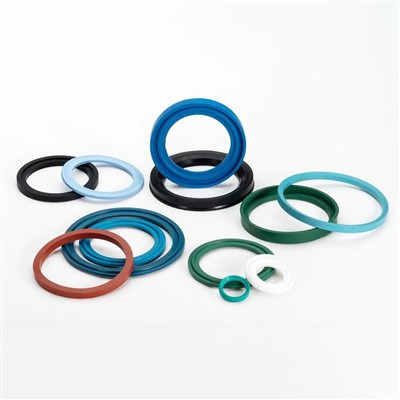
Best O-Ring Material for Oil Applications
Choosing the right O-ring material for oil applications is critical for preventing leaks, extending service life, and ensuring system reliability. Different oils require different O-ring materials based on their chemical composition, operating temperature, and pressure conditions.
Quick Answer: Top Materials for Oil
Best Overall: NBR (Nitrile Rubber) - Excellent oil resistance, cost-effective, most widely used
High Temperature: FKM (Viton) - Superior heat and chemical resistance
Extreme Conditions: HNBR (Hydrogenated Nitrile) - Enhanced temperature and oil resistance
Material Comparison Chart
| Material | Oil Resistance | Temperature Range | Cost | Best For |
|---|---|---|---|---|
| NBR (Nitrile) | Excellent | -40°C to +120°C | $ | Hydraulic oil, petroleum oil, mineral oil |
| FKM (Viton) | Excellent | -20°C to +230°C | $$$ | High temp oils, synthetic oils, fuels |
| HNBR | Excellent | -40°C to +150°C | $$ | Engine oils, hot oils, biodiesel |
| EPDM | Poor | -50°C to +150°C | $ | ❌ Not recommended for oil |
| Silicone | Poor | -60°C to +230°C | $$ | ❌ Not recommended for oil |
1. NBR (Nitrile Rubber) - The Industry Standard
Why NBR for Oil?
- Excellent oil resistance to petroleum-based oils
- Cost-effective for most applications
- Good mechanical properties and durability
- Wide availability in standard sizes
Common Applications
- Hydraulic systems
- Engine oil seals
- Fuel systems
- Gearboxes and transmissions
NBR Performance Ratings:
- Mineral oils: Excellent
- Hydraulic oils: Excellent
- Petroleum oils: Excellent
- Diesel fuel: Very Good
- Synthetic oils: Good (depends on type)
- Vegetable oils: Poor (use EPDM instead)
💡 Pro Tip: NBR comes in different grades based on acrylonitrile (ACN) content:
- Low ACN (18-25%): Better cold resistance, lower oil resistance
- Medium ACN (30-35%): Balanced performance, most common
- High ACN (40-50%): Best oil resistance, less flexible
For most oil applications, medium ACN NBR provides the best balance.
2. FKM (Viton) - For High Temperature & Aggressive Oils
When to Choose FKM:
- High temperatures: Operating above 120°C
- Synthetic oils: Silicone oils, ester-based oils
- Fuels: Gasoline, diesel, biodiesel
- Chemical exposure: Oils with additives or contaminants
- Long service life: Critical applications requiring extended durability
FKM Advantages:
- Superior heat resistance up to 230°C
- Excellent resistance to synthetic oils and fuels
- Outstanding chemical resistance
- Low compression set (maintains seal over time)
- Excellent aging resistance
FKM Limitations:
- ❌ Higher cost (3-5x more expensive than NBR)
- ❌ Poor low-temperature performance (not below -20°C)
- ❌ Not suitable for steam or hot water
- ❌ Requires careful handling during installation
3. HNBR - The Enhanced Alternative
HNBR (Hydrogenated Nitrile Butadiene Rubber) is essentially an upgraded version of NBR with enhanced properties through hydrogenation.
HNBR Key Benefits:
- Better heat resistance than NBR (up to 150°C continuous)
- Superior ozone and aging resistance
- Excellent tensile strength and tear resistance
- Good low-temperature flexibility
- Resistant to engine oils with additives
Ideal Applications for HNBR:
- Automotive engine seals (turbochargers, transmissions)
- Oil field equipment
- Biodiesel and alternative fuel systems
- Hot oil applications (100-150°C)
- High-performance hydraulics
Selection Guide by Oil Type
| Oil Type | 1st Choice | Alternative | Avoid |
|---|---|---|---|
| Mineral Oil | NBR | HNBR (if hot) | EPDM, Silicone |
| Hydraulic Oil | NBR | FKM (high temp) | EPDM |
| Engine Oil | HNBR | FKM, NBR | EPDM, Silicone |
| Transmission Fluid | HNBR | FKM | EPDM |
| Synthetic Oil (Ester) | FKM | HNBR | NBR, EPDM |
| Biodiesel | HNBR | FKM | NBR, EPDM |
| Gasoline/Diesel | FKM | NBR | EPDM, Silicone |
| Gear Oil | NBR | HNBR | EPDM |
Selection Decision Tree
Step 1: What's your operating temperature?
- Below 120°C → Consider NBR
- 120-150°C → Consider HNBR
- Above 150°C → Use FKM
Step 2: What type of oil?
- Petroleum/mineral oil → NBR is ideal
- Synthetic oil/fuel → FKM is better
- Engine oil with additives → HNBR recommended
Step 3: What's your budget?
- Cost-effective → NBR
- Medium budget → HNBR
- Premium/critical → FKM
Step 4: Service life expectations?
- Standard (1-3 years) → NBR
- Extended (3-5 years) → HNBR
- Maximum (5+ years) → FKM
Common Mistakes to Avoid
❌ Don't Use EPDM or Silicone for Oil
These materials swell excessively in oil and will fail quickly. They're excellent for water, steam, and weather resistance, but have poor oil compatibility.
❌ Don't Use NBR for High-Temperature Synthetic Oils
NBR will degrade rapidly above 120°C or in synthetic ester oils. Upgrade to HNBR or FKM for these applications.
❌ Don't Skimp on Quality for Critical Applications
In critical systems (aerospace, medical, safety equipment), the cost difference between NBR and FKM is negligible compared to failure costs.
❌ Don't Ignore Hardness Selection
Hardness (Shore A) affects sealing. Too soft may extrude under pressure, too hard may not seal properly. Typical range: 70-90 Shore A for oil applications.
Installation Tips for Oil Seals
- Use proper lubricant: Apply a thin layer of the oil being sealed during installation
- Avoid petroleum jelly: It can cause swelling in some rubber compounds
- Check groove design: Proper groove dimensions are critical for O-ring performance
- Inspect for damage: Never install a nicked, cut, or twisted O-ring
- Clean surfaces: Remove dirt, burrs, and old seal remnants
- Avoid stretching: Don't over-stretch the O-ring during installation (max 5-6%)
Summary
Quick Reference:
- For most oil applications: Choose NBR (Nitrile) - proven, cost-effective, widely available
- For high temperatures (>120°C): Choose FKM (Viton) - superior heat and chemical resistance
- For enhanced performance: Choose HNBR - better than NBR, cheaper than FKM
- Never use: EPDM or Silicone for petroleum oils
The right O-ring material selection ensures reliable sealing, prevents costly failures, and maximizes equipment uptime. When in doubt, consult with a seal specialist or test samples in your specific application conditions.
Keywords: O-ring for oil, NBR O-ring, Viton O-ring, oil seal material, hydraulic seal, oil-resistant rubber, FKM O-ring, HNBR O-ring
Last Updated: January 2026