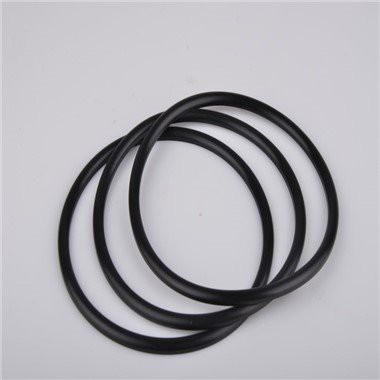

In the vast landscape of industrial components, rubber D ring seals hold a significant position. As a dedicated supplier of Rubber D Ring Seals, I've witnessed firsthand their diverse applications and the crucial role they play in ensuring the smooth operation of numerous systems. But what standards do these seemingly simple yet highly effective seals meet? This blog will delve into the various aspects of the standards governing rubber D ring seals.
Material Standards
The quality of the rubber material used in D ring seals is of paramount importance. Different applications require rubber with specific properties, and industry standards help in defining the appropriate materials.
One of the most common standards for rubber is the ASTM (American Society for Testing and Materials) standard. ASTM has a wide range of specifications for rubber materials, taking into account factors such as hardness, tensile strength, elongation at break, and heat resistance.
Hardness is typically measured using the Shore durometer scale. For rubber D ring seals, the hardness can vary depending on the application. A seal used in a high - pressure environment might require a harder rubber, typically with a Shore A hardness of around 70 - 90. Meanwhile, a seal for a more delicate application may use a softer rubber with a Shore A hardness of 30 - 60.
Tensile strength measures the maximum stress a rubber sample can withstand before breaking. ASTM provides clear guidelines on the minimum tensile strength requirements for different types of rubber. For general - purpose rubber D ring seals, the tensile strength should be in the range of 1500 - 3000 psi (pounds per square inch) to ensure durability and reliable performance.
Elongation at break indicates how much a rubber sample can stretch before it breaks. A good rubber D ring seal should have an elongation at break of at least 200 - 300%, which allows it to adapt to various operating conditions without failing.
Heat resistance is another crucial factor. Seals may be exposed to high temperatures in some applications, such as automotive engines or industrial ovens. According to ASTM standards, rubber materials used in high - temperature environments should be able to maintain their physical properties at temperatures ranging from 100°C to 250°C, depending on the specific application.
In addition to ASTM, the ISO (International Organization for Standardization) also provides international standards for rubber materials. ISO standards ensure that rubber D ring seals produced across different countries can meet a common quality benchmark. For example, ISO 1629 defines the nomenclature for rubber materials, making it easier for suppliers and customers worldwide to communicate about the specific type of rubber being used.
Dimensional Standards
Accurate dimensions are essential for rubber D ring seals to function properly. Any deviation in size can lead to improper sealing, leakage, or failure of the entire system.
The cross - sectional diameter of the D ring seal is a critical dimension. Precise control of the cross - sectional diameter ensures a proper fit within the sealing groove. Tolerances for the cross - sectional diameter are typically very tight, often in the range of ± 0.05 mm for high - precision applications. International standards like ISO 3601 and AS568 (American Standard Society) define the standard sizes and tolerances for O - rings and D ring seals. These standards provide a comprehensive list of available sizes, making it easier for customers to select the right seal for their specific needs.
The diameter of the ring itself also matters. The outer and inner diameters of the rubber D ring seal must meet the specified dimensions. For example, if a D ring seal is used in a hydraulic cylinder, the inner diameter should match the piston diameter, and the outer diameter should fit snugly within the cylinder bore. Any variation in these diameters can cause problems such as reduced sealing effectiveness or increased friction, which can lead to premature wear of the seal.
Performance Standards
Rubber D ring seals are designed to perform specific functions, and performance standards are in place to ensure they can meet these requirements.
Sealing performance is perhaps the most important aspect. A good rubber D ring seal should be able to prevent the leakage of fluids (liquids or gases) under various operating conditions. The sealing efficiency is often measured by the maximum pressure the seal can withstand without leaking. Industry standards typically specify the minimum pressure - resistance values for different types of applications. For example, in hydraulic systems, rubber D ring seals may need to withstand pressures of several thousand psi.
Chemical resistance is another key performance factor. Seals may be exposed to a variety of chemicals, such as fuels, oils, solvents, and acids. Rubber D ring seals need to be resistant to these chemicals to maintain their integrity and sealing performance. ASTM and ISO standards define the resistance levels of rubber materials to different chemicals. For example, a seal used in an automotive fuel system should be resistant to gasoline, diesel, and ethanol blends.
Compression set is a measure of the seal's ability to recover its original shape after being compressed. A low compression set is desirable for rubber D ring seals, as it ensures that the seal can maintain its sealing force over time. Standards typically require that the compression set of a well - functioning rubber D ring seal should be less than 10 - 20% after a certain period of compression at a specified temperature.
Application - Specific Standards
Rubber D ring seals are used in a wide range of applications, each with its own set of requirements and standards.
In the automotive industry, rubber D ring seals are used in engines, transmissions, and fuel systems. Automotive standards such as SAE (Society of Automotive Engineers) standards ensure that these seals can withstand the harsh conditions in vehicles, including high - temperature cycling, vibration, and exposure to automotive fluids. For example, SAE J200 defines the specifications for automotive gasoline, and rubber D ring seals used in the fuel system must be compatible with this type of gasoline.
In the aerospace industry, rubber D ring seals are subject to even more stringent standards. The seals used in aircraft engines, hydraulic systems, and environmental control systems need to meet strict safety and performance requirements. Standards like MIL - SPEC (Military Specification) and AS9100 (Aerospace Quality Management System) govern the production and quality control of rubber D ring seals for aerospace applications. These seals must be able to operate in extreme temperatures, high - altitude conditions, and be resistant to aerospace - grade fluids.
Rubber D-ring As Sealing Application showcases how rubber D ring seals are used in various sealing applications, highlighting their adaptability to different industry requirements. Rubber D Ring for Bumper Mount further illustrates the use of these seals in a specific automotive application, demonstrating their importance in providing shock absorption and sealing in bumper mount systems. And if you want to learn more about our high - quality Rubber D Ring Seal, you can visit this link for detailed product information.
Quality Control and Testing Standards
To ensure that rubber D ring seals meet all the above - mentioned standards, strict quality control and testing procedures are necessary.
Non - destructive testing methods, such as visual inspection and dimensional measurement, are commonly used during the production process. Visual inspection can detect surface defects such as cracks, bubbles, or inclusions, which can affect the performance of the seal. Dimensional measurement using precision instruments like calipers and micrometers ensures that the seals meet the specified size requirements.
Destructive testing methods are also used to verify the performance of rubber D ring seals. For example, pressure - testing machines can be used to simulate the operating conditions and check the sealing performance of the seal under pressure. Chemical analysis can be conducted to determine the chemical composition of the rubber and ensure its compatibility with the intended environment.
ISO 9001 is a widely recognized quality management system standard. Suppliers of rubber D ring seals who are ISO 9001 certified demonstrate their commitment to quality and continuous improvement. This certification ensures that the production process is standardized, and all products are subject to strict quality control measures.
As a supplier of Rubber D Ring Seals, I understand the importance of meeting these standards. We at [Company Omitted] are dedicated to providing our customers with high - quality rubber D ring seals that meet or exceed all relevant standards. Our seals are carefully manufactured using the best rubber materials, with strict control over dimensions and performance. If you are looking for reliable rubber D ring seals for your specific application, please feel free to contact us for more information. We are more than happy to have in - depth discussions about your requirements and help you select the most suitable seals. Our technical team is always ready to offer professional advice and support to ensure that you get the best sealing solutions.
Conclusion
Rubber D ring seals are subject to a wide range of standards, including material, dimensional, performance, and quality control standards. These standards ensure that the seals can perform their intended functions effectively, providing reliable sealing solutions in various industries. As a rubber D ring seal supplier, I am committed to adhering to these standards and continuously improving our products to meet the evolving needs of our customers. Whether you are in the automotive, aerospace, or any other industry, you can trust us to supply high - quality rubber D ring seals that will meet your specifications and help you achieve optimal performance in your systems.


References
- American Society for Testing and Materials (ASTM) standards for rubber materials and products.
- International Organization for Standardization (ISO) standards related to rubber, dimensions, and quality management.
- Society of Automotive Engineers (SAE) standards for automotive applications.
- Military Specification (MIL - SPEC) standards for aerospace and military applications.