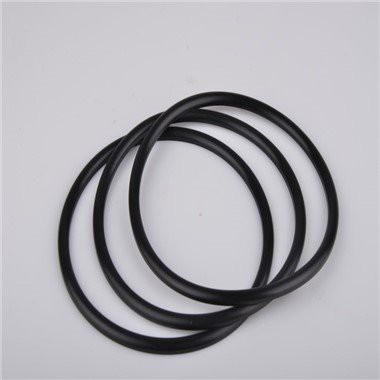

Hey there! As a supplier of Rubber V - rings, I often get asked about the heat resistance of these little but super - important components. So, I thought I'd sit down and write this blog to share all the info I've got on this topic.
First off, let's understand what Rubber V - rings are. They're V - shaped rubber rings used in a whole bunch of applications, like in machinery and automotive parts. They play a crucial role in sealing, preventing leaks of fluids and keeping contaminants out. You can check out some of our great products here: Shaft Seal V Ring, Rubber Silicone V - ring, and V Shaped Rubber Rings.
Now, when it comes to heat resistance, it's not a one - size - fits - all situation. Different types of rubber used to make V - rings have different heat - handling capabilities.
Natural Rubber V - rings
Natural rubber is one of the most commonly used materials for V - rings. It's got good flexibility and sealing properties, but its heat resistance is a bit limited. Natural rubber V - rings can generally handle temperatures up to around 60 - 80°C (140 - 176°F). If the temperature goes above this range, the rubber starts to break down. It can become brittle, lose its elasticity, and its sealing ability will take a nosedive. So, in high - heat applications, natural rubber V - rings might not be the best choice.
Nitrile Rubber V - rings
Nitrile rubber, also known as NBR, is another popular option. It's great for applications where there's contact with oil and fuel. In terms of heat resistance, nitrile rubber V - rings can usually withstand temperatures between - 40°C to 100 - 120°C (- 40°F to 212 - 248°F). This makes them suitable for a wide range of automotive and industrial applications where the temperature isn't extremely high but still above what natural rubber can handle.
Silicone Rubber V - rings
Silicone rubber is a real star when it comes to heat resistance. Rubber Silicone V - ring can operate in a much wider temperature range, typically from - 60°C to 230 - 260°C (- 76°F to 446 - 500°F). This is why silicone V - rings are often used in high - temperature applications like in ovens, aerospace equipment, and some industrial machinery. The silicone's molecular structure gives it this amazing ability to stay stable and maintain its sealing properties even under extreme heat.
Fluorocarbon Rubber V - rings
Fluorocarbon rubber, or FKM, is the heavy - hitter in terms of heat resistance. These V - rings can handle temperatures from - 20°C to 250 - 300°C (- 4°F to 482 - 572°F). They're commonly used in the chemical and aerospace industries, where they're exposed to both high temperatures and harsh chemicals. FKM V - rings are very durable, but they're also more expensive compared to other types of rubber V - rings.
Factors Affecting Heat Resistance
It's not just the type of rubber that affects heat resistance. There are other factors at play too.
Duration of Heat Exposure
Even if a rubber V - ring is rated for a certain temperature, the length of time it's exposed to that heat matters. A short - term spike in temperature might not cause too much damage, but continuous exposure to high heat can gradually degrade the rubber. For example, a nitrile rubber V - ring might be able to handle 120°C for a few hours, but if it's constantly at that temperature, its lifespan will be significantly reduced.


Chemical Environment
The chemicals the V - ring is exposed to can also impact its heat resistance. Some chemicals can react with the rubber, making it more susceptible to heat damage. For instance, if a V - ring is in contact with strong acids or bases, it might break down at a lower temperature than it would in a clean, dry environment.
Compression Set
Compression set is the ability of the rubber to return to its original shape after being compressed. High temperatures can increase the compression set of a rubber V - ring. If a V - ring can't return to its proper shape after being compressed, it won't be able to seal effectively. This is why it's important to choose a V - ring with good compression set resistance for high - heat applications.
Testing Heat Resistance
As a supplier, we take heat resistance testing seriously. We use a variety of methods to make sure our V - rings can handle the temperatures they're rated for.
One common test is the oven test. We put the V - rings in an oven set to a specific temperature for a set period of time. After that, we check for changes in the rubber's physical properties, like hardness, elasticity, and appearance. If the V - ring shows significant degradation, we know it might not be suitable for that temperature range.
We also use dynamic testing, where the V - ring is subjected to both heat and mechanical stress at the same time. This simulates real - world conditions more accurately. For example, we might rotate a shaft with a V - ring seal in a heated chamber to see how it performs under actual operating conditions.
Why Heat Resistance Matters
The heat resistance of Rubber V - rings is crucial for the proper functioning of the equipment they're used in. If a V - ring fails due to overheating, it can lead to leaks, which can cause all sorts of problems. In an automotive engine, a leaking V - ring can lead to oil loss, reduced engine performance, and even engine damage. In an industrial setting, a leaky V - ring can contaminate products, cause machinery breakdowns, and result in costly downtime.
So, when you're choosing a Rubber V - ring for your application, you need to consider the heat resistance carefully. Make sure you know the maximum temperature the V - ring will be exposed to, as well as the duration of that exposure and the chemical environment.
If you're in the market for high - quality Rubber V - rings with the right heat resistance for your needs, we're here to help. We've got a wide range of V - rings made from different types of rubber, each with its own unique heat - handling capabilities. Whether you need a Shaft Seal V Ring for a low - heat application or a Rubber Silicone V - ring for a high - heat environment, we've got you covered.
Feel free to reach out to us to discuss your specific requirements. We're always happy to help you find the perfect Rubber V - ring for your project. Let's work together to ensure your equipment runs smoothly and efficiently.
References
- "Handbook of Elastomers" by B. D. Croll and C. J. Maier
- "Rubber Technology" by Maurice Morton