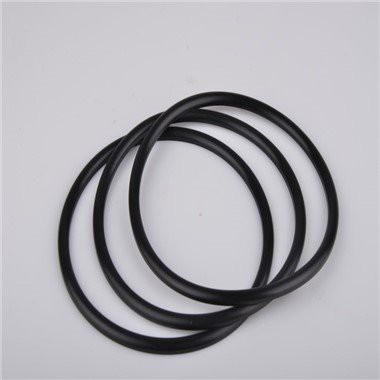
Gas permeability is a critical property when it comes to rubber seal rings. As a prominent supplier of rubber seal rings, I've witnessed firsthand the significance of understanding gas permeability in various industrial applications. In this blog, I'll delve into what gas permeability of a rubber seal ring is, its influencing factors, and its implications in real - world scenarios.
What is Gas Permeability?
Gas permeability refers to the ability of a gas to pass through a material. For a rubber seal ring, it is the rate at which gas molecules can diffuse through the rubber matrix. This property is usually expressed in units such as cm³/(m²·d·MPa), which indicates the volume of gas (in cm³) that can pass through a square - meter area of the rubber in one day under a pressure difference of one megapascal.
The process of gas permeation through a rubber seal ring involves three main steps: adsorption, diffusion, and desorption. First, gas molecules are adsorbed onto the surface of the rubber. Then, these molecules diffuse through the rubber matrix due to a concentration gradient. Finally, the gas molecules desorb from the opposite side of the rubber.
Factors Affecting Gas Permeability of Rubber Seal Rings
1. Rubber Material
Different rubber materials have different gas permeabilities. For example, natural rubber generally has relatively high gas permeability because of its non - polar structure and relatively large free volume between polymer chains. In contrast, butyl rubber has extremely low gas permeability. Butyl rubber has a highly saturated structure and a dense molecular arrangement, which makes it difficult for gas molecules to penetrate. Silicone rubber also has unique gas - permeation characteristics. It has a relatively high permeability to some gases like oxygen and nitrogen, which is beneficial in applications where gas exchange is required to a certain extent.
2. Temperature
Temperature has a significant impact on gas permeability. As the temperature increases, the kinetic energy of gas molecules rises, and the mobility of polymer chains in the rubber also increases. This leads to an increase in the free volume between polymer chains, making it easier for gas molecules to diffuse through the rubber. According to the Arrhenius - type relationship, the gas permeability of rubber generally follows an exponential increase with temperature.
3. Gas Type
The nature of the gas also affects its permeability through rubber. Smaller gas molecules, such as hydrogen and helium, can diffuse more easily through rubber compared to larger molecules like carbon dioxide. Additionally, polar gases may interact differently with the rubber matrix depending on the polarity of the rubber. For instance, polar rubber materials may have stronger interactions with polar gases, which can either enhance or reduce the gas - permeation rate depending on the specific situation.
4. Pressure
The pressure difference across the rubber seal ring also plays a role. A higher pressure difference usually leads to a higher gas - permeation rate. However, at very high pressures, the rubber may undergo compression, which can reduce the free volume between polymer chains and thus decrease the gas - permeation rate to some extent.
Importance of Gas Permeability in Applications
1. Automotive Industry
In the automotive industry, rubber seal rings are used in various components such as engines, fuel systems, and air - conditioning systems. In the fuel system, low - gas - permeability rubber seal rings are crucial to prevent fuel vapor leakage. A high - gas - permeability seal could lead to fuel loss, environmental pollution, and potential safety hazards. For example, in a gasoline - powered engine, a seal with high permeability to gasoline vapor may cause a decrease in fuel efficiency and increase the risk of fire.
2. Aerospace Industry
In aerospace applications, rubber seal rings are used in spacecraft and aircraft. These seals need to have extremely low gas permeability to maintain the pressure and gas composition inside the cabin or other critical compartments. For example, in a spacecraft, a seal with high gas permeability could lead to the loss of vital gases such as oxygen, which is essential for the survival of astronauts.
3. Packaging Industry
In the packaging industry, rubber seal rings are used to seal containers. The gas - permeation property of these seals can affect the shelf - life of the packaged products. For food packaging, low - gas - permeability seals are used to prevent the entry of oxygen, which can cause food spoilage. For pharmaceutical packaging, seals with appropriate gas - permeation characteristics are required to maintain the stability of the drugs.
How Our Rubber Seal Rings Perform in Terms of Gas Permeability
As a rubber seal ring supplier, we offer a wide range of products with different gas - permeation properties to meet the diverse needs of our customers. Our Rubber With Metal Seal products are designed to provide excellent sealing performance while also controlling gas permeability. The combination of rubber and metal in these seals helps to enhance the overall mechanical strength and reduce the risk of gas leakage.
Our Rubber Sealing Element products are carefully engineered to have specific gas - permeation rates according to the application requirements. We use advanced manufacturing techniques to ensure the uniformity and quality of the rubber, which is crucial for maintaining consistent gas - permeation properties.


Our Rubber Packing Seal products are suitable for a variety of industries where gas - tight sealing is essential. Whether it's for high - pressure or low - pressure applications, we can provide packing seals with the appropriate gas - permeation characteristics.
Conclusion
Gas permeability is a complex and important property of rubber seal rings. Understanding the factors that affect gas permeability and its implications in different applications is crucial for choosing the right rubber seal ring. As a supplier, we are committed to providing high - quality rubber seal rings with well - controlled gas - permeation properties.
If you are in need of rubber seal rings for your specific application, we encourage you to contact us for further discussions. Our team of experts can help you select the most suitable products based on your gas - permeability requirements.
References
- "Rubber Technology: Compounding, Mixing, and Testing" by Maurice Morton.
- "Handbook of Elastomers" edited by Brian M. Culbertson.
- Research papers on gas permeation in rubber materials published in journals such as "Journal of Applied Polymer Science".