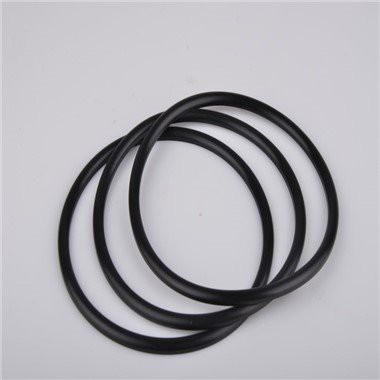

Hey there! As a supplier of small rubber O-rings, I often get asked about the creep resistance of these little but crucial components. So, let's dig into what creep resistance is and why it matters for small rubber O-rings.
What is Creep Resistance?
First off, let's understand what "creep" means in the context of rubber O-rings. Creep is the gradual deformation of a material over time when it's under a constant load. Picture this: you've got a small rubber O-ring sitting in a machine, and it's being squeezed between two parts. Over hours, days, or even months, that constant pressure can cause the O-ring to slowly change shape. It might start to flatten out or get pushed into gaps it wasn't meant to fill.
Creep resistance, then, is the ability of the rubber O-ring to resist this kind of deformation. A high creep-resistant O-ring will keep its original shape and size for a longer time under constant stress. This is super important because if an O-ring loses its shape, it can't do its job properly. It might not seal as well, which can lead to leaks, and that can cause all sorts of problems in the machinery it's part of.
Why Creep Resistance Matters for Small Rubber O - rings
Now, you might be wondering, "Why is creep resistance such a big deal for small O-rings?" Well, small O-rings are often used in tight spaces where precision is key. They're used in things like medical devices, electronics, and automotive engines. In these applications, even a tiny bit of deformation can have a huge impact.
For example, in a medical device, a leaky O-ring could contaminate a sample or let in harmful bacteria. In electronics, a poor seal could let in moisture or dust, which can damage sensitive components. And in an automotive engine, a leaking O-ring can lead to a loss of pressure, which can reduce the engine's performance and efficiency.
So, having small rubber O-rings with good creep resistance is essential for ensuring the reliability and safety of these applications.
Factors Affecting Creep Resistance
A bunch of things can affect the creep resistance of small rubber O-rings. The type of rubber material is a major one. Different rubber compounds have different properties, and some are naturally more resistant to creep than others.
- Nitrile Rubber (NBR): This is a common choice for O-rings because it's affordable and has good resistance to oil and fuel. But its creep resistance might not be the best, especially at high temperatures.
- Silicone Rubber: Silicone is known for its high-temperature resistance and flexibility. It has decent creep resistance, especially in applications where the temperature varies a lot.
- Fluorocarbon Rubber (FKM): FKM is a premium rubber material that offers excellent chemical resistance and high creep resistance, even at high temperatures. It's often used in harsh environments where other rubbers would fail.
The temperature is another important factor. As the temperature goes up, the rubber becomes softer and more prone to creep. So, if your O-ring is going to be used in a high-temperature environment, you'll need to choose a rubber material with good high-temperature creep resistance.
The duration and magnitude of the load also matter. The longer the O-ring is under stress and the higher the pressure, the more likely it is to creep. So, when designing a system that uses small rubber O-rings, it's important to consider how much stress the O-rings will be under and for how long.
Testing Creep Resistance
Testing the creep resistance of small rubber O-rings is crucial to make sure they meet the required standards. There are several ways to test this. One common method is the compression set test. In this test, the O-ring is compressed between two plates for a certain period of time at a specific temperature. After the test, the O-ring is removed from the plates, and its ability to return to its original shape is measured. A lower compression set means better creep resistance.
Another test is the stress relaxation test. In this test, the O-ring is compressed to a certain amount, and the force required to maintain that compression is measured over time. If the force decreases rapidly, it means the O-ring is creeping and losing its ability to maintain the seal.


Our Small Rubber O - Rings and Creep Resistance
At our company, we take creep resistance seriously. We offer a wide range of small rubber O-rings made from different materials, so you can choose the one that best suits your application. Whether you need an O-ring for a high-temperature environment or one that needs to withstand a lot of stress, we've got you covered.
We also use advanced testing methods to ensure that our O-rings have excellent creep resistance. Before we ship out any O-rings, they go through a series of tests to make sure they meet our high standards.
If you're looking for other types of O-rings, we also have Large Rubber O-ring options for applications that require bigger seals. And if you have a specific design in mind, we offer Custom Rubber O Ring services to create O-rings that are tailored to your exact needs. Plus, if you need help with sizing, you can check out our Standard As568 Usa O Ring Sizing Chart.
Conclusion
In conclusion, creep resistance is a crucial property for small rubber O-rings. It ensures that the O-rings can maintain their shape and seal effectively over time, which is essential for the proper functioning of the machinery they're used in. By understanding the factors that affect creep resistance and choosing the right rubber material, you can ensure that your small rubber O-rings perform well in your application.
If you're in the market for small rubber O-rings, we'd love to hear from you. Whether you have questions about creep resistance, need help choosing the right material, or want to place an order, feel free to reach out. We're here to help you find the perfect small rubber O-rings for your needs.
References
- ASTM D395 - Standard Test Methods for Rubber Property—Compression Set
- ISO 815 - Rubber, vulcanized or thermoplastic — Determination of compression set
- "Rubber Technology Handbook" by Werner Hofmann