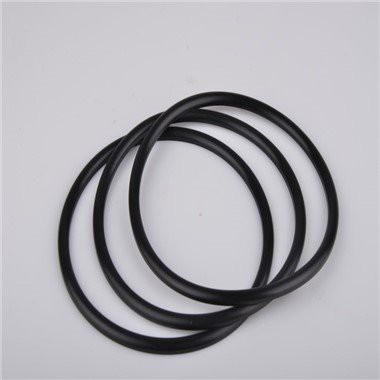

Selecting the right size of a solid O - ring is a critical decision that can significantly impact the performance and longevity of your equipment. As a trusted solid O - ring supplier, we understand the complexities involved in this process and are here to guide you through it.
Understanding the Basics of O - Ring Sizing
Before delving into the selection process, it's essential to grasp the fundamental concepts of O - ring sizing. The size of an O - ring is typically defined by two key dimensions: the inner diameter (ID) and the cross - sectional diameter (CS). The inner diameter determines the fit around a shaft or inside a bore, while the cross - sectional diameter affects the sealing effectiveness and the amount of compression applied.
Factors Influencing O - Ring Size Selection
Operating Conditions
The operating environment plays a crucial role in determining the appropriate O - ring size. Factors such as temperature, pressure, and the presence of chemicals can all impact the performance of an O - ring. For instance, in high - temperature applications, an O - ring may expand, requiring a larger initial size to maintain an effective seal. Conversely, in low - temperature environments, the O - ring may contract, and a smaller size might be necessary.


Equipment Design
The design of the equipment where the O - ring will be installed is another important consideration. The groove dimensions in which the O - ring sits are critical. The groove width should be slightly wider than the O - ring's cross - sectional diameter to allow for proper installation and compression. The groove depth also needs to be carefully calculated to ensure the O - ring is compressed to the right degree. If the groove is too shallow, the O - ring may not be compressed enough, leading to leaks. If it's too deep, the O - ring may be over - compressed, causing premature wear and failure.
Sealing Requirements
The level of sealing required depends on the application. In some cases, a tight seal is necessary to prevent the leakage of fluids or gases. In other situations, a looser seal may be acceptable. For high - pressure applications, a larger cross - sectional diameter O - ring may be needed to withstand the force and maintain a reliable seal.
Measuring for the Right O - Ring Size
Measuring the Inner Diameter
To measure the inner diameter of an existing O - ring or the bore where the O - ring will be installed, you can use a caliper. Place the caliper jaws inside the O - ring or bore and gently close them until they touch the opposite sides. Read the measurement on the caliper scale. Make sure to take multiple measurements at different points to account for any irregularities.
Measuring the Cross - Sectional Diameter
The cross - sectional diameter can also be measured using a caliper. Place the caliper jaws across the thickest part of the O - ring's cross - section. Again, take multiple measurements to ensure accuracy.
Using Standard Sizes vs. Custom Sizes
Standard Sizes
There are many standard O - ring sizes available in the market. These sizes are widely used and are often readily available. When choosing a standard size, you can refer to industry standards such as AS568 in the United States or ISO 3601 internationally. Standard sizes offer the advantage of easy replacement and compatibility with a wide range of equipment. You can explore our Metric Size O - ring options, which follow standard metric measurements.
Custom Sizes
In some cases, standard sizes may not meet your specific requirements. This is where custom - sized O - rings come in. Custom - molded O - rings can be designed to fit unique equipment designs or operating conditions. If you have a non - standard groove size or need an O - ring with specific performance characteristics, a custom - molded O - ring may be the best solution. Our Custom Molded Silicone Rubber O Ring service can provide you with O - rings tailored to your exact specifications.
Special Considerations for Different Applications
Automotive Applications
In the automotive industry, O - rings are used in various components such as engines, transmissions, and fuel systems. The operating conditions in automotive applications are often harsh, with high temperatures, pressures, and exposure to different chemicals. Therefore, the selection of the right O - ring size and material is crucial. For example, in fuel systems, the O - ring needs to be resistant to gasoline and other fuels. A proper fit is also essential to prevent fuel leaks, which can be a safety hazard.
Industrial Applications
Industrial equipment, such as pumps, valves, and hydraulic systems, also rely on O - rings for sealing. The size and material of the O - ring need to be carefully selected based on the specific requirements of the equipment. For high - pressure hydraulic systems, O - rings with a larger cross - sectional diameter and high - strength materials are often required. In industrial settings where there may be exposure to abrasive particles, the O - ring needs to be able to withstand wear and tear.
Home Applications
Even in home applications, such as plumbing fixtures and appliances, O - rings play an important role. For example, in a faucet, a properly sized O - ring can prevent water leaks. When replacing an O - ring in a home application, it's important to measure the existing O - ring accurately or the dimensions of the groove where it will be installed. Our Rubber O - ring For Bunnings products are suitable for a variety of home and light - industrial applications.
Verifying the Fit
Once you have selected an O - ring size, it's important to verify the fit before final installation. Try inserting the O - ring into the groove. It should fit snugly but not be too tight. If the O - ring is difficult to install, it may be too large. If it is loose or does not stay in place, it may be too small. Make any necessary adjustments to the size based on the fit test.
Conclusion
Choosing the right size of a solid O - ring is a multi - faceted process that requires careful consideration of various factors. By understanding the operating conditions, equipment design, and sealing requirements, you can make an informed decision. Whether you opt for a standard size or a custom - molded O - ring, we, as your solid O - ring supplier, are committed to providing you with high - quality products that meet your needs.
If you have any questions or need assistance in selecting the right O - ring size for your application, please feel free to contact us. We are here to help you ensure a reliable and long - lasting seal for your equipment. Our team of experts can provide you with detailed guidance and support throughout the selection process.
References
- "Sealing Technology Handbook" by LeRoy R. Radel and Allan R. Anderson
- "O - Ring Handbook" by Carl A. Kluepfel