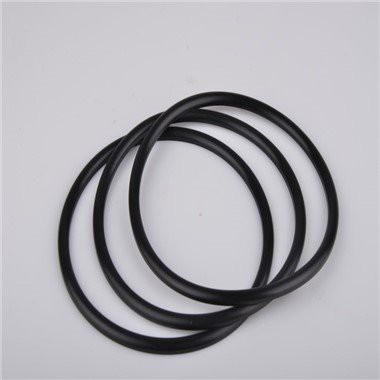

Hey there, folks! As a solid O - ring supplier, I've been asked a lot about the compression ratio of solid O - rings. So, let's dive right into it and break it down.
First off, what exactly is a solid O - ring? You might already have an idea: it's a simple, circular sealing device, usually made of rubber or other elastomeric materials. These little guys are everywhere – from your car engine to household appliances. They're super important for keeping fluids and gases from leaking out.
Now, onto the main topic: the compression ratio of a solid O - ring. In simple terms, the compression ratio is the percentage of the original cross - sectional diameter of the O - ring that gets compressed when it's installed in a groove. For example, if you have an O - ring with a cross - sectional diameter of 0.1 inches and it gets squished down to 0.08 inches when installed, the compression amount is 0.02 inches. To calculate the compression ratio, we use this formula: Compression Ratio = (Original Diameter - Installed Diameter) / Original Diameter * 100. In our example, it would be ((0.1 - 0.08) / 0.1) * 100 = 20%.
But why is the compression ratio so crucial? Well, it has a huge impact on how well the O - ring seals. If the compression ratio is too low, like under 10%, the O - ring may not make a tight enough seal. This can lead to leaks, which can be a real headache in systems where the containment of fluids or gases is critical. On the other hand, if the compression ratio is too high, say over 30%, the O - ring can get damaged. It might get squeezed out of the groove, or the material can experience excessive stress, which can cause it to crack or wear out quickly.
There are several factors that can affect the ideal compression ratio for a solid O - ring. The type of material the O - ring is made of is a big one. Different rubber materials, like nitrile, silicone, or Viton, have different properties. For instance, nitrile O - rings are known for their good resistance to oils and fuels, and they usually have a recommended compression ratio in the range of 15 - 25%. Silicone O - rings, which are more flexible and have better temperature resistance, can often work well with a slightly lower compression ratio, around 10 - 20%. Viton O - rings, which are super resistant to high - temperature and chemicals, might need a bit more compression, typically 20 - 30%.
The operating conditions also play a major role. If the O - ring is going to be exposed to high temperatures, high pressures, or harsh chemicals, it might need a different compression ratio. For high - pressure applications, a higher compression ratio is often needed to ensure a tight seal. However, at extremely high pressures, the O - ring material might need to be specially selected to withstand the stress. In high - temperature environments, the material can become softer, which means the compression ratio might need to be adjusted accordingly.
In addition to the material and operating conditions, the design of the groove where the O - ring is installed matters too. The shape, depth, and width of the groove can all influence the compression ratio. A well - designed groove should provide enough space for the O - ring to be compressed without being over - stressed or coming out of place.
As a solid O - ring supplier, we offer a wide variety of O - rings to meet different needs. We have the High Performance Rubber O Ring, which is great for applications that require high - quality sealing and durability. These O - rings are made of top - notch materials that can handle tough operating conditions.
Our Seals O Rings Rubber are also a popular choice. They are available in different sizes and materials, so you can find the perfect match for your specific sealing requirements. Whether you need them for industrial machinery or consumer products, we've got you covered.
And if you're looking for something a bit more visually appealing, we have Colored Rubber O Rings. These not only serve the same sealing purpose as regular O - rings but also add a splash of color. They can be useful for color - coding systems or for applications where appearance matters.
When it comes to choosing the right compression ratio for your solid O - ring, it's not always easy. That's where our expertise comes in. We've been in the business for a while, and our team of experts can help you determine the best compression ratio based on your specific application. We can also assist you in selecting the right material and size of the O - ring.
If you're in the market for solid O - rings and want to learn more about compression ratios or just need some advice on which O - ring to choose, don't hesitate to get in touch. We're here to help you make the best decision for your sealing needs. Whether you're a small business owner or a large - scale manufacturer, we can provide you with high - quality O - rings at competitive prices.
So, if you're ready to start a discussion about your O - ring requirements, reach out to us. We're excited to work with you and help you find the perfect sealing solution. Let's make sure your systems run smoothly and leak - free with our top - notch solid O - rings.


References:
- "Sealing Technology Handbook" by various industry experts
- Manufacturer specifications of different rubber materials used in O - rings
- Technical papers on O - ring design and performance from leading engineering institutions