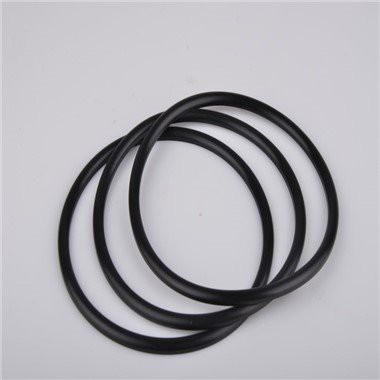

Hey there! I'm a supplier of Rubber X - rings, and I know how crucial it is to ensure the quality of these little but mighty components. In this blog, I'll share with you some practical ways to test the quality of a Rubber X - ring.
Visual Inspection
The first step in testing a Rubber X - ring is a simple visual check. You don't need any fancy equipment for this one. Just grab the X - ring and take a good look at it.
First, check for any visible defects. Look for cracks, cuts, or tears on the surface of the X - ring. These can seriously compromise its sealing ability. Even a tiny crack can lead to leaks over time. Also, keep an eye out for any uneven surfaces or bumps. A smooth and uniform surface is a good sign of a well - made X - ring.
Color consistency is another aspect to consider. If the X - ring has an inconsistent color, it might indicate problems with the manufacturing process. For example, improper mixing of the rubber compound can result in color variations. A uniformly colored X - ring is more likely to have consistent material properties.
Dimension Measurement
Accurate dimensions are key for a Rubber X - ring to work properly. You'll need a few basic measuring tools like a caliper.
Measure the outer diameter (OD), inner diameter (ID), and cross - sectional diameter of the X - ring. These measurements should match the specifications provided by the manufacturer. Even a small deviation from the standard dimensions can cause fitting issues. For example, if the cross - sectional diameter is too large, the X - ring might not fit into the groove properly, and if it's too small, it won't create a proper seal.
It's also important to measure the dimensions at multiple points around the X - ring. This helps to ensure that the ring is circular and that there are no oval or irregular shapes. Any ovality can lead to uneven sealing pressure and potential leaks.
Hardness Testing
The hardness of a Rubber X - ring is a critical property. It affects the ring's ability to seal and its resistance to deformation.
You can use a durometer to measure the hardness of the X - ring. The durometer measures the indentation resistance of the rubber. Different applications require different hardness levels. For example, in high - pressure applications, a harder X - ring might be needed to withstand the pressure without deforming too much. On the other hand, in applications where flexibility is more important, a softer X - ring could be the better choice.
When testing the hardness, make sure to follow the correct testing procedure. Press the durometer onto the X - ring at a consistent pressure and for a specific amount of time. Take multiple measurements at different points on the X - ring to get an accurate average hardness value.
Tensile Strength and Elongation Testing
Tensile strength and elongation are important indicators of a Rubber X - ring's durability.
To test the tensile strength, you'll need a tensile testing machine. This machine applies a pulling force to the X - ring until it breaks. The maximum force the X - ring can withstand before breaking is its tensile strength. A higher tensile strength means the X - ring is more resistant to tearing and stretching forces.
Elongation is measured as the percentage increase in length of the X - ring before it breaks. A good X - ring should be able to stretch to a certain extent without breaking. This property is important because in some applications, the X - ring might be subjected to stretching forces during installation or use.
Compression Set Testing
Compression set is the measure of a Rubber X - ring's ability to recover its original shape after being compressed.
To perform a compression set test, you compress the X - ring between two flat plates for a specific period of time at a certain temperature. After the compression time is up, you release the pressure and measure how much the X - ring has recovered its original shape. A low compression set value indicates that the X - ring can maintain its sealing properties over time, even after being compressed repeatedly.
This test is particularly important in applications where the X - ring is constantly under compression, such as in hydraulic systems. If the X - ring has a high compression set, it will lose its ability to seal properly over time, leading to leaks.
Chemical Resistance Testing
Depending on the application, a Rubber X - ring might be exposed to various chemicals. Chemical resistance is crucial to ensure the long - term performance of the X - ring.
You can perform a simple immersion test. Take a sample of the X - ring and immerse it in the chemical it will be exposed to for a certain period of time. Then, check for any changes in the X - ring's appearance, dimensions, or hardness. For example, if the X - ring swells or becomes brittle after being immersed in a chemical, it might not be suitable for that particular application.


It's also important to consider the temperature and concentration of the chemical. Higher temperatures and concentrations can accelerate the chemical reaction with the rubber, so make sure to test under the actual operating conditions as closely as possible.
Sealing Performance Testing
Ultimately, the most important test for a Rubber X - ring is its sealing performance.
You can set up a simple test rig to simulate the actual operating conditions. For example, if the X - ring is used in a fluid - sealing application, you can create a test chamber with a fluid and apply pressure to see if the X - ring can prevent the fluid from leaking.
Monitor the pressure and check for any signs of leakage over a period of time. You can also vary the pressure and temperature to see how the X - ring performs under different conditions. A good X - ring should be able to maintain a seal under the specified operating conditions.
Conclusion
Testing the quality of a Rubber X - ring is a multi - step process that involves visual inspection, dimension measurement, hardness testing, tensile strength and elongation testing, compression set testing, chemical resistance testing, and sealing performance testing. By performing these tests, you can ensure that the X - rings you use or supply meet the required standards and will perform reliably in their intended applications.
If you're in the market for high - quality Rubber X - rings, we've got you covered. We offer a wide range of Rubber Quad Ring, O - ring X - ring Rubber, and X Ring Rubber Bullets. Our X - rings are rigorously tested to ensure the best quality. If you're interested in purchasing our products or have any questions, feel free to get in touch with us for a purchase negotiation.
References
- ASTM D2000 - Standard Classification System for Rubber Products in Automotive Applications
- ISO 3601 - International Standard for O - rings and Rubber Sealing Rings
- Rubber World Magazine - Various articles on rubber testing and properties