
Hey there! As a supplier of hollow O-rings, I've been getting a lot of questions lately about how the hardness of these little guys affects their performance. So, I thought I'd take a deep dive into this topic and share what I've learned over the years.
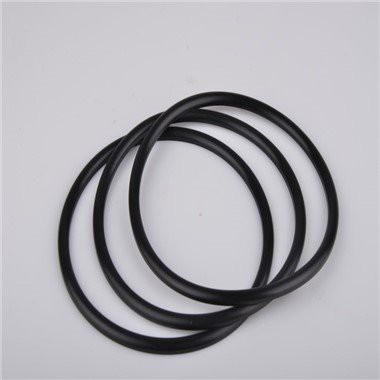
First off, let's talk about what a hollow O-ring is. A hollow O-ring is a type of sealing ring that has a hollow center. This design gives it some unique properties compared to solid O-rings. You can check out different types of hollow O-rings on our website, like the Hollow O Ring Seal Ring, Metal Hollow O-ring Gasket, and Hollow Spliced O Rings.


Now, onto the hardness. The hardness of a hollow O-ring is usually measured on the Shore scale. The Shore scale goes from 0 to 100, with lower numbers indicating a softer material and higher numbers indicating a harder material. The hardness you choose can have a big impact on how the O-ring performs in different applications.
Sealing Performance
One of the most important aspects of an O-ring's performance is its ability to create a seal. A softer hollow O-ring (lower Shore hardness) is generally better at conforming to irregular surfaces. When you install a soft O-ring, it can easily deform and fill in any tiny gaps or imperfections in the mating surfaces. This means it can create a tight seal even when the surfaces aren't perfectly smooth.
For example, in applications where there are rough or uneven surfaces, like in some industrial machinery, a soft O-ring can be a great choice. It'll mold itself to the shape of the surfaces and prevent leaks. However, there's a downside. Soft O-rings are more prone to extrusion. Extrusion happens when the O-ring gets squeezed into a gap under pressure, and it can lead to the O-ring getting damaged and losing its sealing ability.
On the other hand, a harder hollow O-ring (higher Shore hardness) is more resistant to extrusion. It can withstand higher pressures without getting pushed into gaps. This makes it a good choice for high-pressure applications, like in hydraulic systems. But a hard O-ring might not conform as well to irregular surfaces. If the mating surfaces have small bumps or dents, a hard O-ring might not be able to fill them in completely, which could result in a less effective seal.
Wear Resistance
Another factor to consider is wear resistance. In applications where the O-ring is going to be in constant contact with moving parts, wear resistance is crucial. A harder hollow O-ring generally has better wear resistance than a softer one.
Hard O-rings can withstand more friction and abrasion without getting worn down quickly. For instance, in a piston seal application where the O-ring is constantly sliding against a cylinder wall, a hard O-ring will last longer. It won't get scratched or torn as easily as a soft O-ring.
But again, there's a trade-off. Because hard O-rings are less flexible, they might not be able to adapt as well to the movement of the parts. This could lead to increased stress on the O-ring and potentially cause it to fail prematurely.
Chemical Resistance
The hardness of a hollow O-ring can also affect its chemical resistance. Different materials used to make O-rings have different levels of chemical resistance, and hardness can play a role in how well the O-ring holds up against chemicals.
In general, harder O-rings tend to have better chemical resistance. The molecules in a hard material are more tightly packed, which makes it more difficult for chemicals to penetrate the O-ring. So, if you're using the O-ring in an environment where it'll be exposed to harsh chemicals, like acids or solvents, a harder O-ring might be the way to go.
However, some soft O-rings are made from materials that are specifically designed to have good chemical resistance. So, it's not always a straightforward relationship between hardness and chemical resistance. You need to consider the specific material of the O-ring as well.
Temperature Resistance
Temperature can have a big impact on the performance of a hollow O-ring. Both high and low temperatures can affect the hardness and properties of the O-ring.
At high temperatures, a soft O-ring can become even softer and lose its shape. This can lead to a loss of sealing ability and increased wear. A hard O-ring, on the other hand, is more likely to maintain its shape and performance at high temperatures. It can withstand the heat without deforming too much.
Conversely, at low temperatures, a hard O-ring can become brittle and crack. A soft O-ring is more flexible at low temperatures and is less likely to crack. So, if you're using the O-ring in a cold environment, a softer O-ring might be a better choice.
Compression Set
Compression set is another important factor. Compression set is the permanent deformation of the O-ring after it's been compressed for a long time. A lower compression set means the O-ring will return to its original shape better after the compression is removed.
Soft hollow O-rings usually have a higher compression set. When they're compressed for a long time, they tend to stay in the compressed shape and don't bounce back as well. This can lead to a loss of sealing force over time. Hard O-rings, on the other hand, generally have a lower compression set. They can maintain their shape better after being compressed and will continue to provide a good seal.
Choosing the Right Hardness
So, how do you choose the right hardness for your application? Well, it depends on a few things. First, think about the sealing requirements. If you need a good seal on irregular surfaces and the pressure is relatively low, a soft O-ring might be best. But if you're dealing with high pressures and need to prevent extrusion, a hard O-ring is probably the way to go.
Next, consider the wear and chemical resistance requirements. If the O-ring will be in contact with moving parts or harsh chemicals, choose a hardness that offers the right balance of wear resistance and chemical resistance. Also, think about the temperature range of the application. Make sure the O-ring can perform well at both the highest and lowest temperatures it'll be exposed to.
As a hollow O-ring supplier, I've seen a lot of different applications, and I can tell you that there's no one-size-fits-all answer. It's all about finding the right balance for your specific needs.
Conclusion
In conclusion, the hardness of a hollow O-ring has a significant impact on its performance. Whether it's sealing performance, wear resistance, chemical resistance, temperature resistance, or compression set, each aspect is affected by the hardness of the O-ring.
If you're still not sure which hardness is right for your application, don't hesitate to reach out. We're here to help you make the best choice for your needs. We can provide you with samples and technical advice to ensure you get the perfect hollow O-ring for your project. So, if you're in the market for hollow O-rings, let's start a conversation and find the right solution together.
References
- "Sealing Technology Handbook" by John H. Bickford
- "Rubber Technology" by Maurice Morton