
Hey there! As a supplier of Hollow O-rings, I often get asked a bunch of questions about these nifty little rubber bits. One question that pops up quite a lot is, "Are hollow O-rings affected by UV radiation?" Well, let's dive right into it and find out.
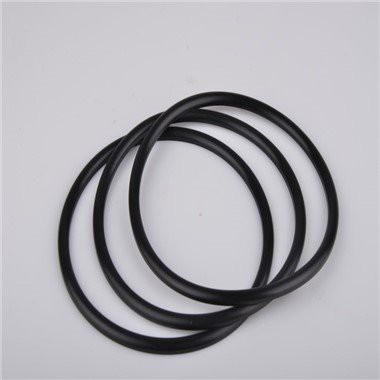
First off, let's talk a bit about what hollow O-rings are. They're basically circular seals made of rubber, and as the name suggests, they've got a hollow center. These things are used in all sorts of industries, from automotive to aerospace, because they can provide a great seal in a variety of applications. You can check out some of our different types of hollow O-rings, like Hollow O-ring Replacements, Spliced Hollow O-ring, and Hollow Rubber O-ring.
Now, back to the main question. UV radiation is a form of electromagnetic radiation that comes from the sun. It's the stuff that gives you a tan (or a sunburn if you're not careful). When it comes to rubber materials, UV radiation can have some pretty significant effects.
One of the main ways UV radiation affects rubber is by causing oxidation. Oxidation is a chemical reaction that happens when the rubber molecules react with oxygen in the air, and UV radiation can speed this process up. When oxidation occurs, the rubber can start to break down. It might become brittle, crack, or lose its elasticity. This is a big deal for hollow O-rings because their ability to seal properly depends on their flexibility and integrity.


Let's take a closer look at how these changes can impact the performance of hollow O-rings. If a hollow O-ring becomes brittle due to UV exposure, it's more likely to crack under pressure. Cracks in the O-ring mean that it won't be able to form a tight seal, which can lead to leaks. And in many applications, leaks can be a huge problem. For example, in a hydraulic system, a leaky O-ring can cause a loss of pressure, which can affect the performance of the entire system.
Another issue is the loss of elasticity. Hollow O-rings rely on their ability to stretch and conform to the surfaces they're sealing against. When UV radiation causes the rubber to lose its elasticity, the O-ring might not be able to fit snugly into place. This can also result in poor sealing and potential leaks.
But here's the good news. Not all hollow O-rings are equally affected by UV radiation. The type of rubber used to make the O-ring plays a big role in its resistance to UV. Some types of rubber, like EPDM (ethylene propylene diene monomer), are known for their excellent UV resistance. EPDM has a chemical structure that makes it less prone to oxidation when exposed to UV radiation. So, if you're in an environment where your hollow O-rings will be exposed to a lot of sunlight, choosing an EPDM O-ring might be a smart move.
Silicone rubber is another option that has good UV resistance. Silicone has a high level of stability, which means it can withstand UV radiation without significant degradation. However, silicone O-rings might not be suitable for all applications, as they have different chemical and physical properties compared to other types of rubber.
On the other hand, some rubbers, like natural rubber, are much more susceptible to UV damage. Natural rubber has a relatively simple chemical structure that makes it more vulnerable to oxidation. So, if you're using natural rubber hollow O-rings in a UV-exposed environment, you might run into problems pretty quickly.
There are also some steps you can take to protect your hollow O-rings from UV radiation. One option is to use a protective coating. There are special coatings available that can act as a barrier between the rubber and the UV rays. These coatings can help slow down the oxidation process and extend the lifespan of the O-rings.
Another thing you can do is to keep the O-rings out of direct sunlight as much as possible. If they're being used in an outdoor application, you might be able to install some sort of shielding or cover to block the UV rays.
So, to sum it up, yes, hollow O-rings can be affected by UV radiation. But the degree of the impact depends on the type of rubber used and the steps you take to protect them. If you're in the market for hollow O-rings and you're concerned about UV exposure, it's important to choose the right type of rubber and consider using protective measures.
At our company, we offer a wide range of hollow O-rings made from different types of rubber, so you can find the one that's best suited for your specific needs. Whether you need an O-ring that can withstand UV radiation or one that's designed for a different application, we've got you covered.
If you're interested in learning more about our hollow O-rings or have any questions about UV resistance, don't hesitate to reach out. We're here to help you make the right choice for your project. Contact us today to start the conversation about your procurement needs, and let's work together to find the perfect hollow O-rings for you.
References
- "Rubber Technology Handbook" by Werner Hofmann
- "Elastomers and Rubber Compounding Materials" by B. K. Gupta