


Hey there! As a supplier of rubber rings, I often get asked about a super important factor: the fatigue resistance of a rubber ring. So, today, I'm gonna break it all down for you.
What is Fatigue Resistance in Rubber Rings?
Fatigue resistance, in simple terms, is how well a rubber ring can handle repeated stress and strain over time without breaking down. You see, rubber rings are used in loads of applications, from engines and pipelines to household appliances. In these places, they're constantly being pushed, pulled, squeezed, and stretched.
Imagine a rubber ring in an engine. Every time the engine starts and stops, the ring goes through a cycle of pressure changes. Or think about a rubber ring in a faucet. Every time you turn the water on and off, it experiences different levels of stress. This repeated action can cause microscopic cracks to form in the rubber. Fatigue resistance is all about how long the ring can withstand these cracks from spreading and causing the ring to fail completely.
Why is Fatigue Resistance So Crucial?
Well, first off, it's all about reliability. If a rubber ring has poor fatigue resistance, it's gonna fail much sooner than expected. In an industrial setting, that could mean costly downtime. For example, in a manufacturing plant, if a rubber ring in a production machine fails, the whole process might have to stop while the ring is replaced. This not only costs time but also money in terms of lost production.
In a more consumer - oriented scenario, like in a household appliance, a failing rubber ring can lead to leaks. If your dishwasher has a rubber ring that fails due to low fatigue resistance, water might start leaking out, causing damage to your kitchen floor or even other parts of the appliance.
Factors Affecting Fatigue Resistance
A bunch of things can impact how well a rubber ring can resist fatigue.
Material Composition
The type of rubber used is a huge factor. Different rubbers have different properties. For instance, silicone rubber is known for its high - temperature resistance and can have good fatigue resistance in certain applications. Nitrile rubber, on the other hand, is great for applications where oil resistance is needed, and it can also offer decent fatigue resistance. The specific additives and fillers in the rubber can also make a big difference. For example, some fillers can help strengthen the rubber, making it more resistant to cracking under repeated stress.
Temperature
Temperature plays a massive role. At high temperatures, rubber can become softer and more prone to damage. If a rubber ring is used in an environment where it's constantly exposed to high heat, like in an engine exhaust system, its fatigue resistance can be significantly reduced. On the flip side, extremely low temperatures can make the rubber brittle, which also makes it more likely to crack under stress.
Stress Level
The amount of stress the rubber ring experiences matters a whole lot. If it's being stretched way beyond its normal limits or squeezed with excessive force on a regular basis, it's not going to last long. For example, in a hydraulic system, if the pressure is set too high, the rubber rings in the system are going to face a lot more stress, and their fatigue life will be shorter.
Testing Fatigue Resistance
We, as a rubber ring supplier, take fatigue resistance seriously. We use a bunch of different tests to make sure our rubber rings can stand up to the real - world conditions they'll face.
One common test is the cyclic fatigue test. In this test, the rubber ring is put through a series of repeated cycles of stress, like stretching and compressing it. The test records how many cycles the ring can go through before it shows signs of significant damage or failure.

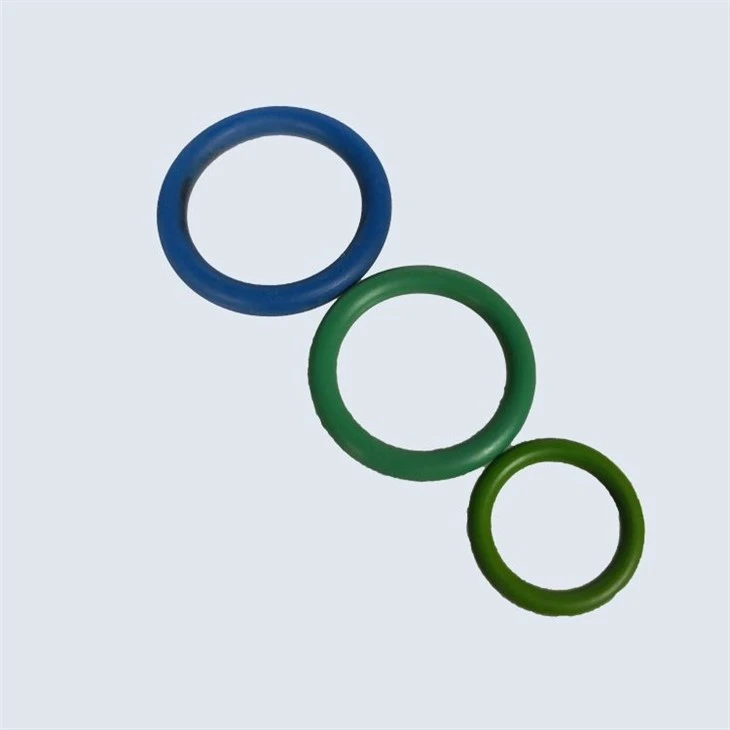
Another test is the flex fatigue test. This simulates the kind of bending and flexing that a rubber ring might experience in an application. The ring is bent repeatedly at a certain angle and speed, and we monitor how long it takes for cracks to form and grow.
Our Product Range
We offer a wide variety of rubber rings with excellent fatigue resistance. Check out our Airtight Rubber Seal Ring. These are designed to provide a tight seal and are made with materials that have been carefully selected to offer high fatigue resistance. Whether you need them for a gas - sealing application or to keep moisture out, these rings are up to the task.
If you have specific requirements, we also have OEM Seal Ring options. We can work with you to design and manufacture rubber rings that fit your exact needs. Our team of experts will ensure that the materials and design are optimized for the best possible fatigue resistance in your specific application.
And for those who need something truly unique, we offer Customized Rubber Ring. You tell us your specifications, and we'll create a rubber ring that's tailor - made for you. We'll use our knowledge of rubber materials and manufacturing processes to ensure that the customized ring has top - notch fatigue resistance.
Conclusion
So, there you have it. Fatigue resistance is a key factor when it comes to rubber rings. Whether you're in an industrial setting, a consumer products manufacturer, or just looking for a reliable rubber ring for a DIY project, understanding the fatigue resistance of the ring you choose is crucial.
We're here as your rubber ring supplier, ready to help you find the perfect solution. If you're interested in our products or have any questions about fatigue resistance and rubber rings, don't hesitate to reach out. Let's start a conversation about how we can meet your rubber ring needs and ensure the long - term performance of your applications.
References
- Rubber Technology Handbook by Werner Hofmann
- The Science and Technology of Rubber by James E. Mark, Burak Erman, and Christopher L. Ahmad


