1. What Is a Rubber Bellow?
A Rubber Bellow (also known as a rubber bellows or elastomer bellows) is a flexible, accordion-shaped rubber component designed to protect mechanical parts, compensate for movement, and isolate vibration. It is widely used in machinery, automotive systems, industrial equipment, and fluid handling systems where flexibility and protection are required.
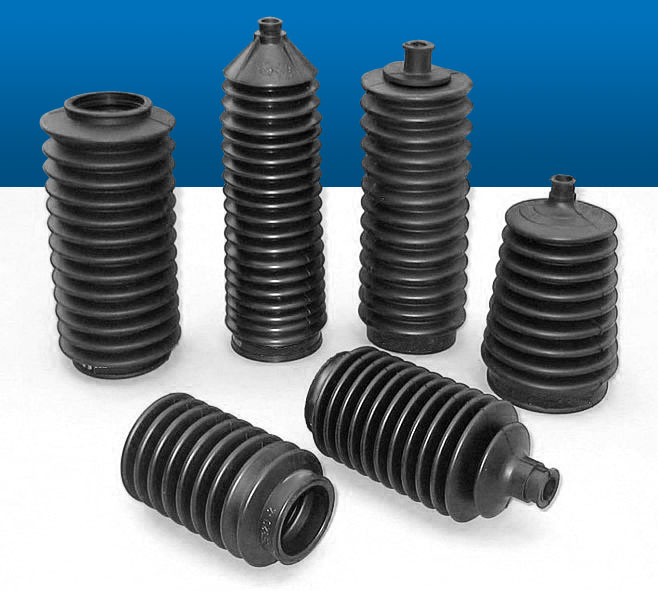
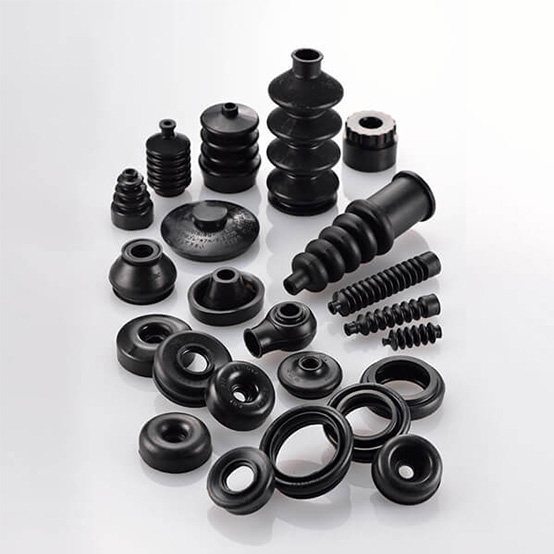
Rubber bellows can accommodate axial movement, lateral offset, and angular misalignment, while forming a protective barrier against dust, moisture, chemicals, and debris.
2. Key Functions of Rubber Bellows
Rubber bellows serve multiple critical functions in industrial applications:
Protection: Shields shafts, rods, joints, and moving parts from dust, dirt, oil, and water
Flexibility & Motion Compensation: Absorbs expansion, contraction, vibration, and misalignment
Sealing: Prevents contaminants from entering sensitive mechanical systems
Noise & Vibration Reduction: Dampens vibration and reduces operating noise
Pressure Compensation: Allows controlled volume changes in sealed systems
3. Common Materials Used
The performance of a rubber bellow depends heavily on material selection. Common materials include:
- NBR (Nitrile Rubber)
Excellent oil and fuel resistance, commonly used in hydraulic and pneumatic systems - EPDM Rubber
Superior resistance to weathering, ozone, hot water, and steam - Silicone Rubber (VMQ)
Wide temperature range, food-grade options available, good flexibility at low temperatures - FKM (Viton®)
High temperature and chemical resistance, suitable for harsh industrial environments - Neoprene (CR)
Balanced mechanical strength with moderate oil and weather resistance
4. Typical Applications
Rubber bellows are used across a wide range of industries:
- Automotive: Steering systems, suspension components, CV joints
- Industrial Machinery: Linear guides, actuators, lead screws
- Pumps & Valves: Shaft protection and sealing
- HVAC Systems: Vibration isolation and expansion compensation
- Medical & Food Equipment: Clean, flexible protective covers
- Railway & Heavy Equipment: Dust and debris protection under extreme conditions
5. Design Considerations
When selecting or designing a rubber bellow, several factors must be evaluated:
Stroke length & movement type (compression, extension, lateral movement)
Operating temperature range
Exposure media (oil, chemicals, water, UV, ozone)
Pressure requirements (vacuum or positive pressure)
Installation space & mounting method
Cycle life & fatigue resistance
A well-designed rubber bellow ensures long service life and stable performance under repeated motion.
6. Molded vs. Fabric-Reinforced Bellows
-
Molded Rubber Bellows
Suitable for general protection, moderate movement, and cost-effective applications
-
Fabric-Reinforced Rubber Bellows
Enhanced strength and pressure resistance, used in heavy-duty or high-cycle environments
7. Custom Rubber Bellows
Many applications require custom-designed rubber bellows due to unique dimensions or operating conditions. Customization may include:
- Special shapes and diameters
- Integrated flanges or mounting beads
- Material formulation adjustments
- Reinforcement layers
- Color and surface finish options
Custom rubber bellows ensure optimal sealing performance and long-term durability.
8. Summary
Rubber bellows are essential components that combine flexibility, protection, and sealing in one solution. By choosing the correct material, structure, and design, rubber bellows significantly improve equipment reliability, reduce maintenance costs, and extend service life.
Understanding rubber bellows from an industry perspective helps engineers and buyers make informed decisions for both standard and custom applications.