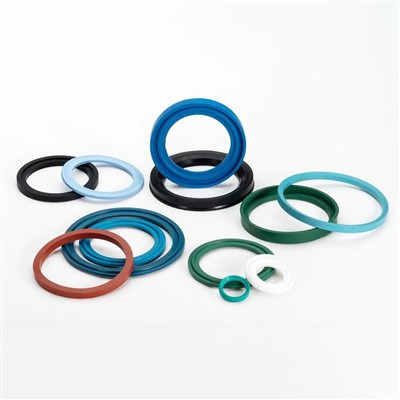
1. What Are Hollow O-Rings?
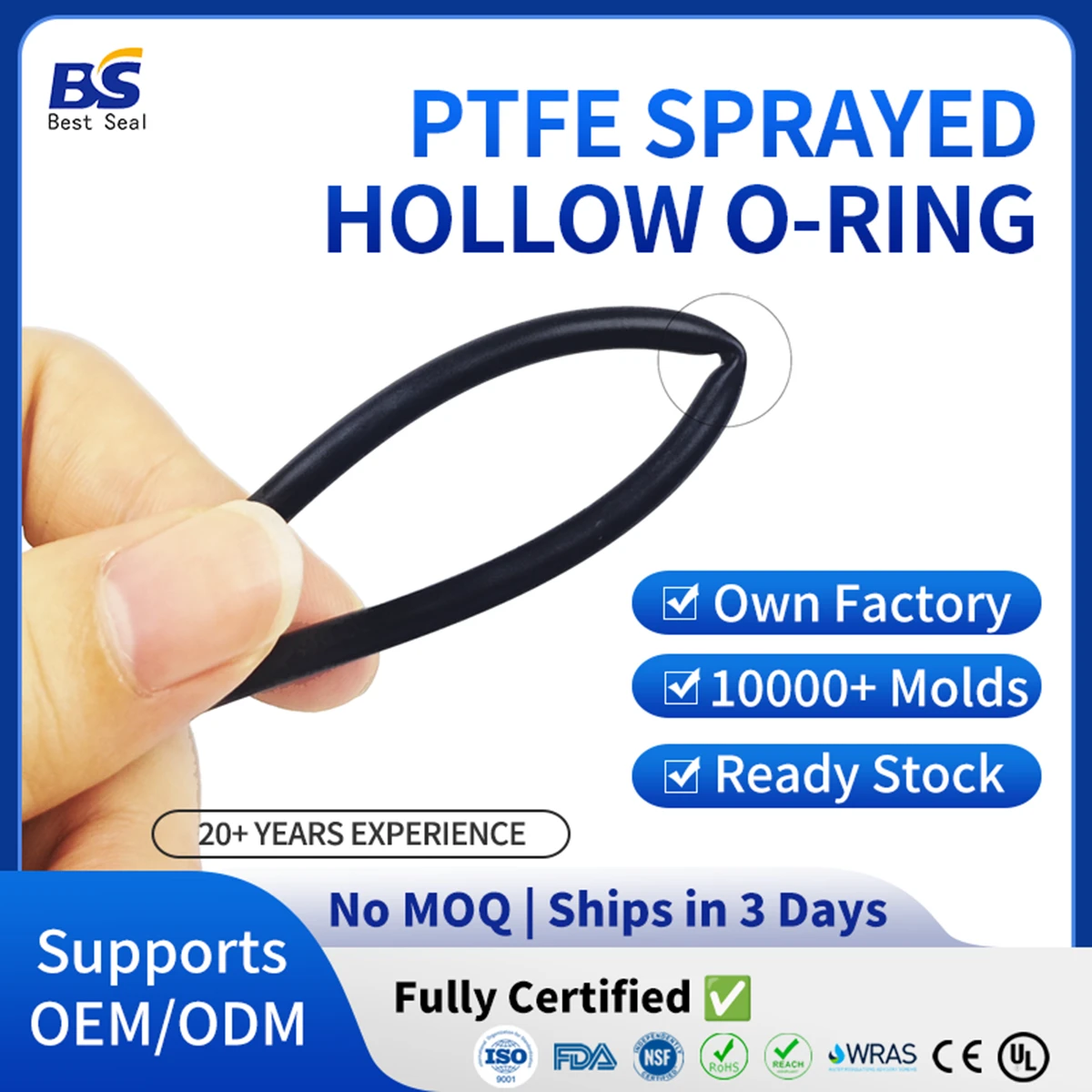
Hollow O-rings are made by extruding a rubber cord with a hollow center. This hollow core allows for easier compression, providing low closure force without reducing material hardness. They are ideal for static sealing applications where:
Low assembly force is required
Surface tolerances are large
Large-diameter seals are needed
The hollow design reduces stress on mating components and ensures better compression set recovery, making them suitable for lids, doors, electrical enclosures, and low-pressure industrial equipment.
Key Features of Hollow O-Rings:
- Low closure force for sensitive assemblies
- Easy installation in grooves
- Long-term static sealing performance
- Customizable size and hardness
Performance Table
| Aspect | Hollow O-Rings |
|---|---|
| Movement Type | Static |
| Pressure Handling | Low |
| Compression Force | Low |
| Best Use | Static seals with large tolerances |
| Material Options | NBR, EPDM, FKM, VMQ, HNBR, FFKM |
2. What Are Solid O-Rings?
Solid O-rings are made from a full cross-section of elastomer. They offer higher sealing force, better chemical and temperature resistance, and greater durability than hollow O-rings. Solid O-rings are commonly used for:
High-pressure sealing
Dynamic applications (rotating or reciprocating equipment)
Chemical and oil-resistant environments
Key Features of Solid O-Rings:
- High mechanical strength and durability
- Suitable for dynamic and high-pressure applications
- Wide material selection for temperature and chemical resistance
- Reliable long-term performance
Performance Table
| Aspect | Solid O-Rings |
|---|---|
| Movement Type | Static & dynamic |
| Pressure Handling | Medium to high |
| Compression Force | High |
| Best Use | Pumps, hydraulic systems, valves |
| Material Options | NBR, EPDM, FKM, FFKM, VMQ |
3. Hollow vs Solid O-Rings: Core Differences
| Feature | Hollow O-Rings | Solid O-Rings |
|---|---|---|
| Compression Force | Low | High |
| Joint/Seam | Extruded or spliced | Molded or vulcanized |
| Ideal Applications | Static, low-pressure, large seals | Static & dynamic, medium/high pressure |
| Cost | Generally lower | Higher due to material usage |
| Installation Ease | Easier to compress |
Requires more assembly force |
4. When to Choose Hollow O-Rings
Hollow O-rings are best for large-diameter static seals, low-pressure applications, or where cost and assembly flexibility are priorities. They are excellent replacements for foam gaskets and are widely used in HVAC, electrical enclosures, and industrial lids.

5. When to Choose Solid O-Rings
Solid O-rings should be selected for critical sealing applications where pressure, chemical exposure, or dynamic movement are factors. They provide better reliability in hydraulic systems, pumps, valves, and automotive engines.
6. Conclusion
Choosing between hollow and solid O-rings depends on pressure, motion, material compatibility, and sealing requirements. Hollow O-rings offer cost-effective, low-force sealing for static applications, while solid O-rings provide robust, high-pressure sealing for demanding environments.
Understanding the differences allows engineers and procurement specialists to avoid seal failures, reduce downtime, and optimize equipment performance.