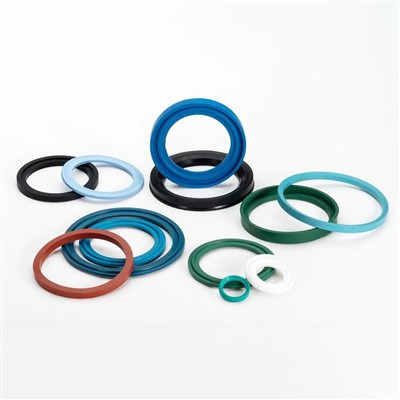
Selecting the correct material for your hydraulic seals is the single most important factor in preventing leaks and ensuring long system life. A seal made from the wrong material can fail in hours due to chemical incompatibility, heat degradation, or extrusion.
This guide compares the most common hydraulic seal materials-NBR, FKM, PU, PTFE, and EPDM-to help you make an informed decision for your specific application requirements.
3 Key Factors to Consider Before Choosing
- 1. Temperature Range: Does your system operate in freezing cold or extreme heat? Operating outside a material's range causes hardening (cold) or degradation (heat).
- 2. Fluid Compatibility: The seal must be chemically compatible with your hydraulic fluid (mineral oil, water-glycol, synthetic, etc.) to prevent swelling or dissolving.
- 3. System Pressure: High-pressure systems require harder, more robust materials like Polyurethane or PTFE to prevent extrusion gaps.
Common Hydraulic Seal Materials Explained
1. Nitrile Rubber (NBR / Buna-N)
The Standard Industry Workhorse. NBR is the most widely used material for general-purpose hydraulic seals due to its excellent resistance to mineral oils and low cost.
✎ Pros:
|
✁ Cons:
|
Temp Range: -40°C to +100°C (-40°F to +212°F)
2. Fluoroelastomer (FKM / Viton®)
The High-Temp Specialist. Developed for applications where standard rubber fails. It withstands extreme heat and aggressive chemicals.
✎ Pros:
|
✁ Cons:
|
Temp Range: -20°C to +200°C (-4°F to +392°F)
3. Polyurethane (PU / TPU)
The High-Pressure Performer. Known for its incredible toughness, PU is often used for piston and rod seals where high pressure and abrasion are factors.
✎ Pros:
|
✁ Cons:
|
Temp Range: -40°C to +90°C (-40°F to +194°F)
4. PTFE (Teflon®)
The Low-Friction Solution. PTFE is a plastic, not a rubber. It offers the lowest friction of any seal material and near-universal chemical resistance. Used often for guide rings and energetic seals.
✎ Pros:
|
✁ Cons:
|
Temp Range: -200°C to +260°C (-328°F to +500°F)
5. EPDM Rubber
The Water & Steam Expert. Specifically for brake fluids, steam, and water-based applications.
Temp Range: -50°C to +150°C (-58°F to +302°F)
Quick Comparison Chart
| Material | Oil Resistance | Heat Resistance | Pressure Rating | Cost |
|---|---|---|---|---|
| NBR | ⭐⭐⭐⭐ | ⭐⭐ | ⭐⭐⭐ | $ |
| FKM | ⭐⭐⭐⭐⭐ | ⭐⭐⭐⭐⭐ | ⭐⭐⭐ | $$$ |
| PU (Polyurethane) | ⭐⭐⭐⭐ | ⭐⭐ | ⭐⭐⭐⭐⭐ | $$ |
| PTFE | ⭐⭐⭐⭐⭐ | ⭐⭐⭐⭐⭐ | ⭐⭐⭐⭐ | $$$ |
Frequently Asked Questions
Q: Can I use FKM seals instead of NBR?
A: Yes, FKM is generally a superior upgrade to NBR, offering better heat and chemical resistance. However, it is more expensive and has poorer low-temperature flexibility.
Q: Why did my seal dissolve?
A: This is usually due to chemical incompatibility. For example, using EPDM seals with mineral oil, or using standard NBR with phosphate ester fluids.
Related Products