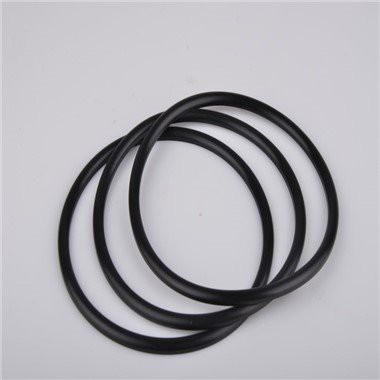

Hey there! I'm a supplier of small rubber O-rings, and I often get asked about what materials these little guys are made of. So, I thought I'd take a moment to break it down for you.
Natural Rubber
Let's start with natural rubber. It's one of the oldest materials used for making O-rings. Natural rubber comes from the latex of rubber trees. It's got some pretty cool properties. For one, it has excellent elasticity. That means it can stretch a whole lot and then go back to its original shape without any issues. This is super important for O-rings because they often need to fit snugly in different grooves and seals.
Another great thing about natural rubber is its good resistance to water. So, if you're using O-rings in a water-based system, like a Rubber O-ring For Faucet, natural rubber can be a solid choice. However, it does have its drawbacks. It's not very resistant to oils, solvents, and ozone. So, in environments where these substances are present, natural rubber might not last very long.
Nitrile Rubber (NBR)
Next up is nitrile rubber, also known as NBR. This is one of the most commonly used materials for small rubber O-rings. Nitrile rubber is a synthetic rubber that's made by copolymerizing butadiene and acrylonitrile. What makes it so popular? Well, it has excellent resistance to oils and fuels. That's why you'll often find nitrile O-rings in automotive applications, like in engines and fuel systems.
Nitrile rubber also has good mechanical properties. It's tough and durable, which means it can withstand a fair amount of wear and tear. And it has a relatively wide temperature range, usually from -40°C to 120°C. This makes it suitable for a variety of different environments. If you're looking for a reliable O-ring for general industrial use, Metric Size Rubber O-ring made of nitrile rubber could be just what you need.
But like all materials, nitrile rubber isn't perfect. It's not very resistant to ozone and some chemicals, especially those with high aromatic content. So, in environments where ozone or certain chemicals are present, you might want to consider other options.
Ethylene Propylene Diene Monomer (EPDM)
EPDM is another synthetic rubber that's commonly used for small rubber O-rings. It's made from ethylene, propylene, and a diene monomer. One of the biggest advantages of EPDM is its excellent resistance to weathering, ozone, and UV radiation. This makes it a great choice for outdoor applications.
EPDM also has good resistance to water, steam, and many chemicals. So, it's often used in plumbing and HVAC systems. For example, a Rubber O-ring For Bunnings made of EPDM could be used in a variety of household plumbing fixtures.
However, EPDM isn't very resistant to oils and fuels. So, in applications where contact with these substances is likely, you'll need to look elsewhere.
Fluorocarbon Rubber (FKM)
Fluorocarbon rubber, or FKM, is a high-performance synthetic rubber. It's known for its excellent resistance to high temperatures, oils, fuels, and chemicals. FKM can withstand temperatures up to 200°C or even higher in some cases. This makes it suitable for use in extreme environments, like in aerospace and chemical processing industries.


FKM also has good resistance to ozone and weathering. So, it can be used in outdoor applications where other materials might break down quickly. But all these great properties come at a cost. FKM is more expensive than other rubber materials, so it's usually only used in applications where its unique properties are absolutely necessary.
Silicone Rubber
Silicone rubber is another interesting option for small rubber O-rings. It has excellent flexibility over a wide temperature range, from -60°C to 230°C. This makes it suitable for use in both cold and hot environments.
Silicone rubber also has good resistance to weathering, ozone, and UV radiation. It's often used in food and beverage applications because it's non-toxic and meets FDA requirements. However, it's not very resistant to oils and fuels, and it has relatively low tear strength compared to other rubber materials.
Choosing the Right Material
So, how do you choose the right material for your small rubber O-rings? Well, it all depends on the application. You need to consider factors like the temperature range, the chemicals and substances the O-ring will come into contact with, the pressure, and the mechanical requirements.
If you're not sure which material is best for your needs, don't hesitate to reach out to me. As a supplier of small rubber O-rings, I've got a lot of experience in this area, and I'd be more than happy to help you make the right choice. Whether you need a Rubber O-ring For Faucet, a Metric Size Rubber O-ring, or a Rubber O-ring For Bunnings, I can provide you with high-quality products at competitive prices.
In conclusion, there are many different materials available for making small rubber O-rings, each with its own unique properties and advantages. By understanding these materials and their applications, you can make an informed decision and choose the right O-rings for your specific needs. If you're interested in purchasing small rubber O-rings or have any questions, feel free to contact me. I'm here to help you find the perfect solution for your sealing needs.
References
- "Handbook of Elastomers" by Bhupendra K. Gupta
- "Rubber Technology: Compounding, Testing, and Processing" by T. K. Ghosh