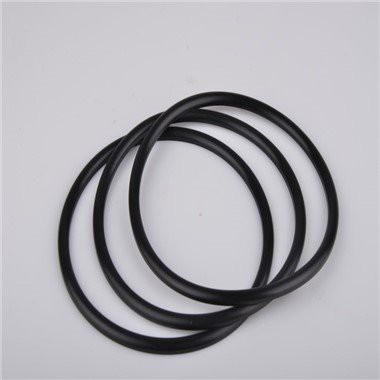

When it comes to the world of industrial sealing solutions, EPDM rubber rings stand out as a reliable and versatile option. As a dedicated EPDM Rubber Ring supplier, I've had the privilege of working closely with various industries, witnessing firsthand the critical role these rings play in ensuring the smooth operation of countless applications. One question that frequently arises in our discussions with clients is, "What is the maximum pressure an EPDM rubber ring can withstand?" In this blog post, I'll delve into this topic, exploring the factors that influence the pressure resistance of EPDM rubber rings and offering insights to help you make informed decisions for your sealing needs.
Understanding EPDM Rubber
Before we dive into the maximum pressure capabilities of EPDM rubber rings, let's take a moment to understand what EPDM rubber is and why it's such a popular choice for sealing applications. EPDM, or ethylene propylene diene monomer, is a synthetic rubber known for its exceptional resistance to weathering, ozone, and a wide range of chemicals. This makes it an ideal material for outdoor and industrial applications where exposure to harsh environmental conditions is common.
In addition to its excellent chemical resistance, EPDM rubber also exhibits good mechanical properties, such as high tensile strength and elongation at break. These properties allow EPDM rubber rings to maintain their shape and integrity under pressure, ensuring a reliable seal even in demanding applications.
Factors Affecting the Maximum Pressure Resistance of EPDM Rubber Rings
The maximum pressure an EPDM rubber ring can withstand is influenced by several factors, including:
Material Hardness
The hardness of an EPDM rubber ring, typically measured on the Shore A scale, plays a significant role in its pressure resistance. Generally, harder rubber compounds (e.g., Shore A 70-90) can withstand higher pressures than softer compounds (e.g., Shore A 40-60). This is because harder rubber has a higher modulus of elasticity, which means it can resist deformation under pressure more effectively.
However, it's important to note that using a harder rubber compound may not always be the best solution. In some applications, a softer rubber compound may be required to provide a better seal, especially when sealing against irregular surfaces or in applications where flexibility is important.
Cross-Sectional Design
The cross-sectional design of an EPDM rubber ring can also affect its pressure resistance. Rings with a larger cross-sectional area generally have a higher pressure resistance than those with a smaller cross-sectional area. This is because a larger cross-sectional area provides more material to resist deformation under pressure.
In addition to the cross-sectional area, the shape of the cross-section can also play a role in the pressure resistance of the ring. For example, O-rings, which have a circular cross-section, are commonly used in high-pressure applications because their shape allows them to distribute pressure evenly around the circumference of the ring.
Temperature
The temperature at which an EPDM rubber ring operates can have a significant impact on its pressure resistance. As the temperature increases, the rubber becomes softer and more pliable, which can reduce its ability to resist deformation under pressure. Conversely, at lower temperatures, the rubber becomes harder and more brittle, which can also affect its performance.
Most EPDM rubber compounds are designed to operate within a specific temperature range. It's important to choose a rubber compound that is suitable for the operating temperature of your application to ensure optimal performance and pressure resistance.
Fluid Compatibility
The fluid or gas that the EPDM rubber ring is in contact with can also affect its pressure resistance. Some fluids or gases may react with the rubber, causing it to swell, shrink, or degrade over time. This can reduce the integrity of the seal and ultimately affect the pressure resistance of the ring.
Before selecting an EPDM rubber ring for your application, it's important to consider the compatibility of the rubber with the fluid or gas it will be in contact with. Our team of experts can help you choose the right rubber compound based on your specific application requirements.
Determining the Maximum Pressure Rating of an EPDM Rubber Ring
Given the many factors that can influence the maximum pressure resistance of an EPDM rubber ring, it's not possible to provide a single, definitive answer to the question of what the maximum pressure is. Instead, the maximum pressure rating of an EPDM rubber ring is typically determined through a combination of testing and engineering analysis.
At our company, we use a variety of testing methods to evaluate the pressure resistance of our EPDM rubber rings. These tests include hydrostatic pressure testing, which involves subjecting the ring to a controlled pressure in a hydraulic press, and dynamic pressure testing, which simulates the conditions of real-world applications.
In addition to testing, we also use engineering analysis to predict the performance of our EPDM rubber rings under different conditions. This involves using computer models to simulate the behavior of the rubber under pressure and taking into account factors such as material properties, cross-sectional design, and temperature.
Based on the results of our testing and engineering analysis, we can provide our customers with a maximum pressure rating for our EPDM rubber rings. However, it's important to note that this rating is based on specific test conditions and may not necessarily reflect the performance of the ring in your particular application.
Applications of EPDM Rubber Rings in High-Pressure Environments
Despite the challenges of determining the maximum pressure rating of an EPDM rubber ring, these rings are widely used in a variety of high-pressure applications. Some common examples include:
Automotive Industry
In the automotive industry, EPDM rubber rings are used in a variety of applications, including engine seals, transmission seals, and brake system seals. These applications often require seals that can withstand high pressures and temperatures, as well as exposure to a variety of fluids and chemicals.
Aerospace Industry
The aerospace industry also relies on EPDM rubber rings for sealing applications. In aircraft engines, for example, EPDM rubber rings are used to seal fuel lines, hydraulic systems, and pneumatic systems. These applications require seals that can withstand extreme pressures and temperatures, as well as exposure to harsh environmental conditions.
Industrial Machinery
In industrial machinery, EPDM rubber rings are used in a variety of applications, including pumps, valves, and compressors. These applications often require seals that can withstand high pressures and temperatures, as well as exposure to a variety of fluids and chemicals.
Custom Solutions for Your Sealing Needs
As a leading EPDM Rubber Ring supplier, we understand that every application is unique, and that's why we offer a wide range of custom solutions to meet your specific sealing needs. Whether you need a standard O-ring or a custom-molded gasket, our team of experts can work with you to design and manufacture the perfect solution for your application.
We offer a variety of custom options, including Custom Size Silicone Rubber O Ring, Custom Molded O-Rings, and Seals O Rings Rubber. Our state-of-the-art manufacturing facilities and experienced team of engineers ensure that we can produce high-quality, precision-engineered seals that meet your exact specifications.
Contact Us for Your EPDM Rubber Ring Needs
If you're looking for a reliable EPDM Rubber Ring supplier, look no further. Our team of experts is here to help you find the perfect solution for your sealing needs. Whether you have a specific application in mind or need help designing a custom solution, we're happy to assist you.
Contact us today to learn more about our EPDM rubber rings and how we can help you with your sealing needs. We look forward to working with you!


References
- "Rubber Sealing Technology," by John H. Bickel
- "Handbook of Elastomers," edited by James E. Mark, Burak Erman, and Charles L. Roth
- "Sealing Technology: A Guide to Selecting the Right Seals for Your Application," by David A. Dini