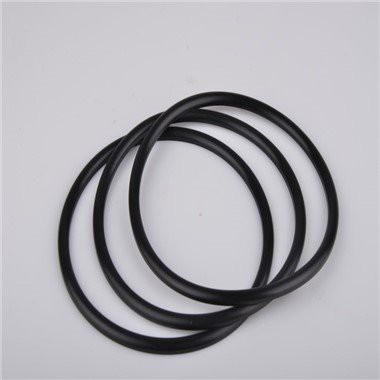

Gas permeability is a crucial property when it comes to the performance of hollow O - rings. As a leading supplier of hollow O - rings, I've witnessed firsthand the importance of understanding this characteristic in various industrial applications. In this blog, we'll delve into what gas permeability of a hollow O - ring is, its influencing factors, and why it matters in real - world scenarios.


What is Gas Permeability?
Gas permeability refers to the ability of a material to allow gases to pass through it. For a hollow O - ring, it is the rate at which a gas can permeate through the material of the O - ring wall and enter or exit the hollow interior. This property is typically quantified by the permeability coefficient, which is a measure of how easily a gas can diffuse through a specific material under a given set of conditions such as temperature, pressure, and gas type.
The unit of gas permeability is often expressed in Barrers (1 Barrer = 1×10⁻¹⁰ cm³(STP)·cm/(cm²·s·cmHg)), where STP stands for standard temperature and pressure. A higher permeability coefficient means that the gas can pass through the material more readily.
Factors Affecting Gas Permeability of Hollow O - Rings
Material Composition
The material of the hollow O - ring plays a significant role in determining its gas permeability. Different polymers have different molecular structures, which affect how easily gas molecules can diffuse through them. For example, elastomers like silicone rubber have relatively high gas permeability due to their flexible and open molecular chains. These chains allow gas molecules to move through the material more freely. On the other hand, materials like fluorocarbon rubber have lower gas permeability because of their more rigid and tightly - packed molecular structures.
We offer a wide range of Hollow Rubber O - rings made from various materials, each with its own unique gas permeability characteristics. Customers can choose the material according to their specific gas - sealing requirements.
Temperature
Temperature has a profound impact on gas permeability. As the temperature increases, the kinetic energy of gas molecules also increases. This makes the gas molecules move more rapidly and penetrate the material of the O - ring more easily. According to the Arrhenius equation, the relationship between gas permeability and temperature can be described as an exponential function. In general, for every 10°C increase in temperature, the gas permeability of an elastomeric material can double.
Pressure
The pressure difference across the O - ring is another important factor. A higher pressure difference creates a greater driving force for gas molecules to move from the high - pressure side to the low - pressure side. When the pressure on one side of the O - ring is significantly higher than the other, the gas will try to equalize the pressure by permeating through the O - ring. However, at very high pressures, the material of the O - ring may be compressed, which can reduce the free volume within the material and thus decrease the gas permeability to some extent.
Gas Type
Different gases have different molecular sizes and solubilities in the O - ring material, which affect their permeability. Smaller gas molecules, such as hydrogen and helium, can diffuse through the material more easily than larger molecules like nitrogen or carbon dioxide. Additionally, gases that are more soluble in the O - ring material will have a higher permeability because they can dissolve into the material and then diffuse through it.
Importance of Gas Permeability in Applications
Sealing Applications
In many industrial applications, the primary function of a hollow O - ring is to provide a seal against gas leakage. For example, in the aerospace industry, O - rings are used to seal fuel systems and hydraulic systems. If the gas permeability of the O - ring is too high, it can lead to gas leakage, which can compromise the safety and performance of the system. On the other hand, in some applications where a controlled gas exchange is required, such as in certain chemical reactors, an O - ring with a specific gas permeability may be needed.
Environmental Protection
In environmental protection applications, such as in waste treatment plants or air purification systems, the gas permeability of O - rings can affect the efficiency of the system. If the O - ring allows harmful gases to leak out, it can cause environmental pollution. Therefore, choosing an O - ring with low gas permeability is crucial to ensure the proper functioning of these systems.
Our Product Range and Gas Permeability
We not only offer Hollow Rubber O - rings but also Hollow Spliced O Rings and Metal Hollow O - ring Gasket. Each product is designed to meet different gas - sealing requirements.
Our engineers have conducted extensive research on the gas permeability of our products. We can provide detailed technical data on the gas permeability of different materials under various conditions. This allows our customers to make informed decisions when selecting the most suitable O - ring for their applications.
Conclusion
Understanding the gas permeability of a hollow O - ring is essential for ensuring its proper performance in various applications. By considering factors such as material composition, temperature, pressure, and gas type, customers can choose the O - ring that best meets their needs.
As a trusted supplier of hollow O - rings, we are committed to providing high - quality products with well - understood gas permeability characteristics. If you have any questions about gas permeability or need to select the right O - ring for your application, please feel free to contact us for further discussion and procurement negotiation. We look forward to working with you to find the optimal sealing solution.
References
- Croll, S. G. (1982). "Gas Permeability of Elastomers". Rubber Chemistry and Technology, 55(3), 401 - 434.
- Park, C. B., & Paul, D. R. (1993). "Polymer Blends and Composites for Gas Separation". Journal of Membrane Science, 83(1), 1 - 80.
- Thomas, A. G. (1999). "Gas Permeability of Polymers". In Polymer Science: A Comprehensive Reference, Volume 8. Elsevier.