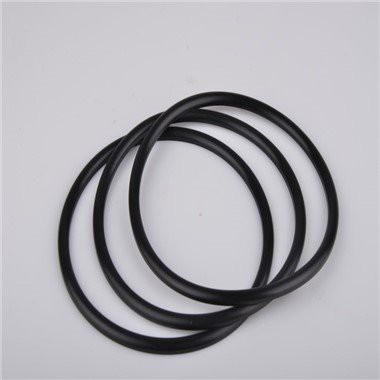

Hey there! As a supplier of hollow O-rings, I often get asked about the difference between solid O-rings and hollow O-rings. So, I thought I'd take a few minutes to break it down for you.
Let's start with the basics. An O-ring is a simple yet incredibly useful sealing device. It's a loop of elastomer with a round cross-section, and it's used to prevent the leakage of fluids or gases in a wide range of applications. Whether it's in your car's engine, a household appliance, or industrial machinery, O-rings play a crucial role.
Solid O-Rings
Solid O-rings are the more traditional type. They're made from a single piece of elastomeric material, like rubber or silicone, and they have a solid cross-section. This means that the entire ring is filled with the elastomer, giving it a uniform structure.
One of the biggest advantages of solid O-rings is their durability. Because they're solid, they can withstand a lot of pressure and wear and tear. They're also great for applications where you need a high level of sealing performance. For example, in hydraulic systems, solid O-rings can handle the high pressures and prevent fluid leakage effectively.
Another benefit of solid O-rings is their simplicity. They're easy to manufacture, which means they're often more affordable than other types of O-rings. You can find solid O-rings in a wide range of sizes and materials, making them suitable for just about any application.
However, solid O-rings do have some limitations. One of the main drawbacks is their lack of flexibility. Because they're solid, they can be a bit stiff, which can make them difficult to install in some situations. They also don't conform as well to irregular surfaces as hollow O-rings do.
Hollow O-Rings
Now, let's talk about hollow O-rings. As the name suggests, these O-rings have a hollow center. This gives them some unique properties that make them a great choice for certain applications.
One of the biggest advantages of hollow O-rings is their flexibility. Because they have a hollow center, they can compress more easily than solid O-rings. This means they can conform better to irregular surfaces, providing a better seal. For example, if you're sealing a surface that's not perfectly flat, a hollow O-ring can adapt to the shape and prevent leakage.
Hollow O-rings are also great for applications where you need a low compression force. Because they're easier to compress, you don't need to apply as much pressure to get a good seal. This can be especially useful in applications where you're dealing with delicate components or where you need to minimize stress on the system.
Another benefit of hollow O-rings is their ability to absorb shock and vibration. The hollow center acts as a cushion, which can help protect the system from damage. This makes them a great choice for applications in automotive, aerospace, and other industries where shock and vibration are common.
However, hollow O-rings do have some limitations. One of the main drawbacks is their lower pressure resistance compared to solid O-rings. Because they're hollow, they can't handle as much pressure as solid O-rings. This means they're not suitable for applications where you need a high level of pressure sealing.
Applications
So, when should you use a solid O-ring, and when should you use a hollow O-ring? Well, it really depends on the specific application.
If you're working on a high-pressure application, like a hydraulic system or a high-pressure pipeline, a solid O-ring is probably your best bet. Solid O-rings can handle the pressure and provide a reliable seal.
On the other hand, if you're working on an application where you need a flexible seal or where you're dealing with irregular surfaces, a hollow O-ring might be a better choice. Hollow O-rings can conform to the shape of the surface and provide a better seal.
Here are some specific applications where hollow O-rings are commonly used:
- Sealing irregular surfaces: As I mentioned earlier, hollow O-rings are great for sealing surfaces that are not perfectly flat. For example, in the automotive industry, they're often used to seal engine gaskets, which can have irregular shapes.
- Low-compression applications: If you're working on an application where you need to minimize the compression force, like in a delicate electronic device, a hollow O-ring can be a good option.
- Shock and vibration absorption: In industries like aerospace and automotive, where shock and vibration are common, hollow O-rings can help protect the system from damage.
Our Hollow O-Ring Offerings
As a supplier of hollow O-rings, we offer a wide range of products to meet your needs. You can check out our Hollow O Ring Seal Ring for general sealing applications. These O-rings are made from high-quality materials and are designed to provide a reliable seal.


If you're looking for replacements for your walnut hollow O-rings, we have Walnut Hollow O-ring Replacements that are a perfect fit. These replacements are made to the same specifications as the original O-rings, so you can be sure they'll work just as well.
We also have a variety of Hollow Rubber O-rings available. These O-rings are made from rubber, which gives them excellent flexibility and sealing performance.
Contact Us for Purchasing
If you're interested in purchasing our hollow O-rings, we'd love to hear from you. Whether you have a specific application in mind or you're just looking for more information, our team of experts is here to help. We can provide you with detailed product specifications, pricing, and delivery options. So, don't hesitate to reach out and start a conversation with us about your O-ring needs.
References
- "Sealing Technology Handbook" by John S. Campbell
- "Elastomers and Rubber Technology" by Brian M. Walker