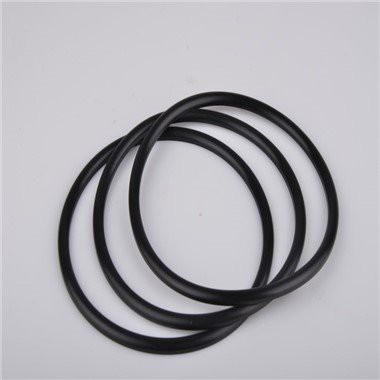

Polytetrafluoroethylene (PTFE), commonly known by the brand name Teflon, is a synthetic fluoropolymer with remarkable properties. PTFE O-rings are increasingly popular in various industries due to their unique combination of chemical resistance, low friction, and high-temperature stability. One of the critical properties of PTFE O-rings is their creep resistance, which significantly impacts their performance and longevity in sealing applications. As a PTFE O-rings supplier, understanding and communicating the creep resistance of these products is essential for our customers to make informed decisions.
What is Creep?
Creep is a time-dependent deformation that occurs in materials under a constant load or stress. When a PTFE O-ring is installed in a sealing application, it is subjected to a certain amount of compression force. Over time, this force can cause the O-ring to gradually deform and lose its original shape. This deformation can lead to a reduction in the sealing performance of the O-ring, potentially resulting in leaks and system failures.
The creep behavior of a material is influenced by several factors, including temperature, stress level, and time. Higher temperatures generally accelerate the creep process, as the increased thermal energy allows the polymer chains in the PTFE to move more freely. Similarly, higher stress levels can cause more rapid deformation, as the material is under greater pressure to change shape. The duration of the applied stress also plays a crucial role, as creep is a time-dependent phenomenon.
Creep Resistance of PTFE O-Rings
PTFE has relatively good creep resistance compared to many other polymers. This is due to its unique molecular structure, which consists of long chains of carbon atoms surrounded by fluorine atoms. The strong carbon-fluorine bonds in PTFE provide excellent chemical stability and resistance to deformation. Additionally, the fluorine atoms create a smooth surface that reduces friction and wear, further enhancing the material's performance in sealing applications.
However, the creep resistance of PTFE O-rings can be affected by several factors. One of the most significant factors is the type of PTFE used. There are different grades of PTFE available, each with its own set of properties and performance characteristics. Some grades of PTFE are specifically formulated to have improved creep resistance, while others may be more suitable for applications where other properties, such as chemical resistance or low friction, are more important.
Another factor that can affect the creep resistance of PTFE O-rings is the manufacturing process. The way the O-rings are molded or machined can have a significant impact on their internal structure and mechanical properties. For example, improper molding techniques can result in voids or inhomogeneities in the O-ring, which can weaken the material and reduce its creep resistance.
Importance of Creep Resistance in Sealing Applications
In sealing applications, creep resistance is crucial for maintaining a reliable seal over an extended period. When a PTFE O-ring is compressed between two surfaces, it creates a barrier that prevents the leakage of fluids or gases. However, if the O-ring creeps over time, it may lose its ability to maintain the necessary sealing force, leading to leaks.
This is particularly important in applications where the sealing environment is harsh or demanding. For example, in high-temperature or high-pressure applications, the O-ring is subjected to greater stress and thermal energy, which can accelerate the creep process. In these cases, using PTFE O-rings with high creep resistance is essential to ensure the long-term performance and reliability of the sealing system.
Applications of PTFE O-Rings with Good Creep Resistance
PTFE O-rings with good creep resistance are used in a wide range of industries and applications. Some of the most common applications include:
- Chemical Processing: In the chemical industry, PTFE O-rings are used to seal valves, pumps, and other equipment that comes into contact with corrosive chemicals. The high chemical resistance and creep resistance of PTFE make it an ideal material for these applications, as it can withstand the harsh chemical environment and maintain a reliable seal over time.
- Food and Beverage Processing: PTFE O-rings are also used in the food and beverage industry, where they are required to meet strict hygiene and safety standards. The low friction and non-stick properties of PTFE make it easy to clean and maintain, while its creep resistance ensures a long-lasting seal that prevents contamination.
- Aerospace and Aviation: In the aerospace and aviation industries, PTFE O-rings are used in critical applications where reliability and performance are of utmost importance. The high-temperature stability and creep resistance of PTFE make it suitable for use in engines, hydraulic systems, and other components that operate under extreme conditions.
- Semiconductor Manufacturing: PTFE O-rings are used in semiconductor manufacturing equipment to seal vacuum chambers and other components. The low outgassing properties of PTFE make it ideal for these applications, as it helps to prevent contamination of the semiconductor wafers.
How to Choose PTFE O-Rings with Good Creep Resistance
When choosing PTFE O-rings for a specific application, it is important to consider several factors to ensure that the O-rings have the appropriate creep resistance. Some of the key factors to consider include:
- Application Requirements: Understand the specific requirements of the application, including the temperature, pressure, and chemical environment. This will help you to select the appropriate grade of PTFE and the design of the O-ring.
- PTFE Grade: Choose a PTFE grade that is specifically formulated for the application. Some grades of PTFE are designed to have improved creep resistance, while others may be more suitable for applications where other properties, such as chemical resistance or low friction, are more important.
- Manufacturing Quality: Ensure that the O-rings are manufactured using high-quality materials and processes. Look for a supplier that has a reputation for producing reliable and consistent products.
- Testing and Certification: Ask the supplier for test data and certification to verify the creep resistance of the PTFE O-rings. This will help you to ensure that the O-rings meet the required standards and specifications for your application.
Our PTFE O-Rings and Creep Resistance
As a PTFE O-rings supplier, we offer a wide range of high-quality PTFE O-rings with excellent creep resistance. Our O-rings are manufactured using the latest technology and processes to ensure consistent quality and performance. We use only the highest grades of PTFE, which are specifically formulated to have improved creep resistance and other properties.
We also offer custom-designed PTFE O-rings to meet the specific requirements of our customers. Our experienced engineers can work with you to develop the ideal O-ring design for your application, taking into account factors such as temperature, pressure, and chemical compatibility.
In addition to our standard PTFE O-rings, we also offer Teflon Coated O-ring, PTFE Coating O Ring Seal, and PTFE Coated O-ring. These products offer additional benefits, such as improved chemical resistance and reduced friction, while maintaining excellent creep resistance.


Contact Us for PTFE O-Rings
If you are looking for high-quality PTFE O-rings with excellent creep resistance, look no further. Our team of experts is ready to assist you in selecting the right O-rings for your application. Whether you need standard O-rings or custom-designed solutions, we have the knowledge and experience to meet your needs.
Contact us today to discuss your requirements and get a quote for our PTFE O-rings. We look forward to working with you to provide the best sealing solutions for your business.
References
- Billmeyer, F. W. (1984). Textbook of Polymer Science. Wiley-Interscience.
- ASTM D2990 - 17. Standard Test Methods for Tensile, Compressive, and Flexural Creep and Creep-Rupture of Plastics.
- Teflon® Fluoropolymers Technical Guide. Chemours Company.