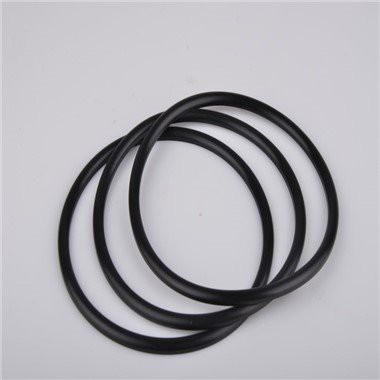

In the world of industrial sealing solutions, PTFE coated O - rings have emerged as a game - changer. As a leading PTFE Coated O - ring supplier, I am constantly asked about the abrasion resistance index of these remarkable components. In this blog post, we will delve deep into what the abrasion resistance index of PTFE coated O - rings is, why it matters, and how it impacts various applications.
Understanding PTFE Coated O - rings
Before we discuss the abrasion resistance index, let's briefly understand what PTFE coated O - rings are. PTFE, or polytetrafluoroethylene, is a synthetic fluoropolymer known for its excellent chemical resistance, low friction coefficient, and high temperature tolerance. When applied as a coating to an O - ring, it enhances the performance of the O - ring in multiple ways. You can find more information about PTFE Coated O - ring on our website.
The base material of the O - ring is typically made of rubber, which provides the necessary elasticity for sealing. The PTFE coating acts as a protective layer, shielding the rubber from harsh environments, chemicals, and mechanical wear. This is where the abrasion resistance comes into play.
What is the Abrasion Resistance Index?
The abrasion resistance index is a quantitative measure that indicates how well a material can withstand the wearing action caused by friction, rubbing, or scraping against another surface. For PTFE coated O - rings, this index is crucial as it determines the longevity and reliability of the seal in applications where there is significant movement or contact with other components.
A higher abrasion resistance index means that the PTFE coated O - ring can endure more cycles of abrasion before showing signs of wear and tear. This is measured through standardized testing methods, such as the Taber Abrasion Test or the DIN Abrasion Test. In the Taber Abrasion Test, a specimen of the PTFE coated O - ring is subjected to a rotating abrasive wheel under a specific load for a set number of cycles. The weight loss of the specimen after the test is then used to calculate the abrasion resistance index.
Why Abrasion Resistance Matters
The abrasion resistance of PTFE coated O - rings is of utmost importance in a wide range of industries. In the automotive industry, for example, O - rings are used in engines, transmissions, and fuel systems. These components are constantly in motion, and the O - rings are exposed to high - pressure fluids and mechanical stress. A PTFE coated O - ring with a high abrasion resistance index can prevent leaks and ensure the smooth operation of the vehicle.


In the chemical processing industry, O - rings are used to seal pipes, valves, and pumps that handle corrosive chemicals. The PTFE coating not only provides chemical resistance but also protects the O - ring from abrasion caused by the flow of the chemicals. This helps to maintain the integrity of the seal and prevent costly spills and downtime.
In the aerospace industry, where reliability is non - negotiable, PTFE coated O - rings with excellent abrasion resistance are essential for sealing hydraulic systems, fuel tanks, and pneumatic components. The harsh operating conditions, including high altitudes, extreme temperatures, and rapid pressure changes, require O - rings that can withstand significant wear.
Factors Affecting the Abrasion Resistance Index
Several factors can influence the abrasion resistance index of PTFE coated O - rings. The quality of the PTFE coating is one of the most critical factors. A well - applied, uniform coating with good adhesion to the base O - ring material will provide better abrasion resistance. The thickness of the coating also plays a role; a thicker coating can offer more protection, but it may also affect the flexibility of the O - ring.
The base material of the O - ring is another important factor. Different types of rubber have different hardness levels and mechanical properties, which can affect how well the O - ring can resist abrasion. For example, a harder rubber may have better abrasion resistance in some applications, but it may also be more brittle and less flexible.
The operating conditions, such as temperature, pressure, and the type of contact surface, also impact the abrasion resistance. High temperatures can cause the PTFE coating to soften, reducing its abrasion resistance. Similarly, high - pressure applications can increase the stress on the O - ring, leading to more rapid wear.
Measuring and Improving the Abrasion Resistance Index
As a PTFE Coated O - ring supplier, we take great care in measuring and improving the abrasion resistance index of our products. We use state - of - the - art testing equipment to ensure that our O - rings meet or exceed industry standards. By conducting regular quality control tests, we can identify any potential issues and make adjustments to our manufacturing processes.
To improve the abrasion resistance index, we focus on optimizing the coating process. This includes carefully selecting the PTFE material, ensuring proper surface preparation of the base O - ring, and controlling the coating thickness and uniformity. We also work with our customers to understand their specific application requirements and recommend the most suitable PTFE coated O - ring for their needs.
Real - World Applications and Case Studies
Let's take a look at some real - world applications of PTFE coated O - rings with high abrasion resistance. In a manufacturing plant that produces heavy machinery, PTFE coated O - rings are used in the hydraulic cylinders. These cylinders are constantly extending and retracting, subjecting the O - rings to significant abrasion. By using our PTFE coated O - rings with a high abrasion resistance index, the plant was able to reduce the frequency of O - ring replacement, resulting in cost savings and increased productivity.
In a marine application, PTFE coated O - rings are used in the propulsion systems. The O - rings are exposed to saltwater, which is highly corrosive, as well as mechanical wear from the moving parts. Our PTFE coated O - rings provided excellent resistance to both corrosion and abrasion, ensuring the reliable operation of the propulsion system.
Further Reading and Related Products
If you are interested in learning more about PTFE coated O - rings, you can visit our website to explore PTFE Coating O Ring Seal and Teflon Coated O - ring. These links provide detailed information about our different product offerings and their specific features.
Conclusion
In conclusion, the abrasion resistance index of PTFE coated O - rings is a critical parameter that determines their performance and longevity in various applications. As a PTFE Coated O - ring supplier, we are committed to providing high - quality products with excellent abrasion resistance. Our in - depth understanding of the factors affecting the abrasion resistance index allows us to manufacture O - rings that meet the most demanding requirements.
If you are in need of PTFE coated O - rings for your application, we invite you to contact us for a detailed discussion. Our team of experts will be happy to assist you in selecting the right product and providing technical support. We look forward to the opportunity to work with you and help you find the perfect sealing solution for your needs.
References
- ASTM D4060 - Standard Test Method for Abrasion Resistance of Organic Coatings by the Taber Abrader.
- DIN 53516 - Determination of abrasion resistance of rubber, test pieces revolving on a drum - shaped (cylindrical) abrasive sheet.
- Mertz, D. (2018). PTFE Coatings: Properties, Applications, and Future Developments. Wiley - VCH.