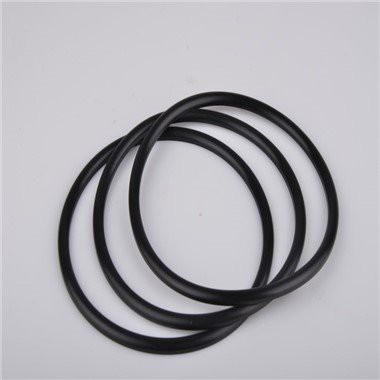

Hey there! As a supplier of EPDM rubber rings, I've got a ton to share about the quality control measures we take during production. EPDM rubber rings are widely used in various industries due to their excellent resistance to weather, ozone, and chemicals. Ensuring top - notch quality is not just a goal; it's a must - do for us.
Let's start with raw material inspection. Before we even begin the production process, the EPDM rubber compounds we source go through a thorough check. We make sure that the rubber meets all the necessary specifications. This includes checking the hardness, which is usually measured on the Shore A scale. A consistent hardness is crucial as it affects the ring's sealing performance. If the hardness is off, the ring might not fit properly or provide an effective seal. We also test the chemical composition of the rubber. This helps us ensure that it has the right balance of elements to offer the desired resistance properties. For example, the presence of certain additives can enhance the rubber's resistance to heat or oxidation.
Another important aspect of raw material inspection is the visual check. We look for any signs of contamination, like dirt, debris, or foreign particles in the rubber. Even a small piece of foreign matter can cause weak spots in the final product, leading to potential failures. We use magnifying glasses and other inspection tools to spot these issues early on.
Once the raw materials pass inspection, we move on to the mixing process. In this stage, we carefully control the temperature and the mixing time. The temperature affects the chemical reactions that take place during mixing, and getting it right is key to achieving a homogeneous compound. If the temperature is too high, the rubber might start to degrade, while a too - low temperature could result in an uneven mixture.
We also pay close attention to the mixing time. Over - mixing can break down the rubber molecules, reducing its strength and elasticity. On the other hand, under - mixing means that the additives and other components won't be evenly distributed, leading to inconsistent properties in the final product. We use state - of - the - art mixing equipment that allows us to precisely control these parameters.
After mixing, it's time for the molding process. This is where the rubber takes the shape of the ring. We use high - precision molds that are designed to create rings with accurate dimensions. Tolerances are extremely important here. For example, if a ring is supposed to have an inner diameter of 10 mm with a tolerance of ±0.1 mm, we need to make sure that every ring we produce falls within that range.
We use advanced measurement tools, like calipers and micrometers, to check the dimensions of the rings during and after the molding process. Any rings that are out of tolerance are immediately flagged for further inspection or rejection. The molding temperature and pressure also need to be carefully controlled. Incorrect temperature or pressure can cause issues like flash (excess rubber around the edges of the ring), warping, or incomplete filling of the mold.
Once the rings are molded, they go through a post - molding treatment. This usually involves a curing process. Curing is essential as it helps to fully develop the rubber's properties, such as its strength, elasticity, and resistance. We control the curing time and temperature very precisely. If the curing is not done correctly, the ring might not reach its full potential in terms of performance.
After curing, we conduct a series of performance tests. One of the most important tests is the sealing test. We simulate real - world conditions to see how well the ring can seal. For example, we might test the ring's ability to seal against a certain amount of pressure or fluid. If the ring fails the sealing test, it's a clear sign that there's a problem with its quality.
We also test the ring's resistance to different environmental factors. This includes exposing the rings to high and low temperatures, humidity, and various chemicals. By doing so, we can ensure that the rings will perform well in different applications. For instance, if a ring is going to be used in an automotive engine, it needs to be able to withstand high temperatures and the presence of engine oil.


In addition to these tests, we also conduct a visual inspection of the finished rings. We look for any surface defects, like cracks, bubbles, or uneven surfaces. These defects can not only affect the appearance of the ring but also its performance.
Now, I'd like to mention some of the other types of rubber rings we offer. If you're interested in different options, you can check out our Buna Nitrile O Rings. These rings are known for their excellent oil resistance and are widely used in many industries.
We also have Medical Grade Silicone & NBR70 Mini Rubber O - Ring Seal. These are specifically designed for medical applications, where high - quality and biocompatibility are crucial.
And if you're looking for a more diverse range of rubber materials, our Factory Silicone NBR FKM Rubber O - ring offers a great option with different rubber types combined.
At the end of the day, our goal is to provide our customers with the highest - quality EPDM rubber rings and other rubber products. We believe that strict quality control measures are the key to achieving this. If you're in the market for EPDM rubber rings or any of our other products, don't hesitate to reach out for a procurement discussion. We're always happy to talk about your specific needs and how we can meet them.
References:
- Rubber Technology Handbook, Werner Hofmann
- Elastomers and Rubber Compounding Materials, Maurice Morton