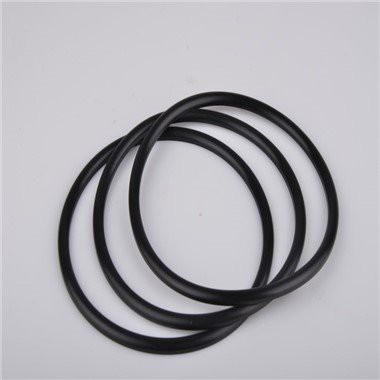
As a seasoned supplier of hollow O - rings, I've witnessed firsthand the diverse applications and the importance of cross - sectional shapes in these essential sealing components. Hollow O - rings are used in a wide range of industries, from automotive to aerospace, and their cross - sectional shapes play a crucial role in determining their performance. In this blog, we'll explore the common cross - sectional shapes of hollow O - rings and their respective advantages.
Circular Cross - Section
The circular cross - section is perhaps the most common shape for hollow O - rings. This shape offers several benefits that make it a popular choice across various applications.
One of the primary advantages of a circular cross - section is its uniform stress distribution. When a circular hollow O - ring is compressed between two surfaces, the pressure is evenly spread around the circumference. This uniform stress distribution helps to prevent local over - stressing, which can lead to premature failure of the O - ring. For example, in hydraulic systems, where high pressures are common, a circular hollow O - ring can maintain a reliable seal without being damaged by uneven pressure.
Another benefit is its ease of installation. The circular shape allows the O - ring to fit smoothly into standard grooves and mating surfaces. It can be easily inserted and centered, reducing the risk of misalignment during installation. This is particularly important in high - volume manufacturing processes, where quick and accurate installation is essential for efficiency.
Circular cross - section hollow O - rings also have good flexibility. They can conform to irregularities in the mating surfaces, providing a tight seal even in less - than - perfect conditions. This property makes them suitable for applications where the mating surfaces may have slight variations in shape or finish.
You can find a variety of circular cross - section Hollow Rubber O - rings on our website, which are made from high - quality rubber materials to ensure long - term performance.
Square Cross - Section
Square cross - section hollow O - rings are another common option. They offer unique characteristics that make them well - suited for specific applications.


One of the main advantages of a square cross - section is its ability to provide a larger sealing area compared to a circular cross - section. The flat sides of the square shape allow for more contact with the mating surfaces, which can improve the sealing performance, especially in applications where a high - pressure seal is required. For instance, in some industrial valves, a square cross - section hollow O - ring can effectively prevent leakage under high - pressure conditions.
Square cross - section O - rings are also more resistant to twisting and rotation within the groove. The flat sides of the square provide better stability, reducing the risk of the O - ring moving out of position during operation. This is important in applications where the O - ring is subject to dynamic forces, such as in reciprocating motion systems.
However, the installation of square cross - section hollow O - rings can be a bit more challenging compared to circular ones. They require more precise groove dimensions to ensure a proper fit. But with the right installation procedures, they can offer excellent sealing performance.
If you're interested in square cross - section hollow O - rings, you can check out our Hollow O Ring Seal Ring products, which are designed to meet the highest quality standards.
Rectangular Cross - Section
Rectangular cross - section hollow O - rings are similar to square cross - sections but with different aspect ratios. They are often used in applications where a non - standard sealing geometry is required.
Rectangular cross - section O - rings can be customized to fit specific groove dimensions and sealing requirements. For example, in some electronic devices, where space is limited, a rectangular cross - section hollow O - ring can be designed to fit into a narrow and long groove, providing an effective seal in a compact space.
The rectangular shape also allows for different sealing forces to be applied in different directions. This can be useful in applications where the sealing requirements vary depending on the orientation of the O - ring. For instance, in some mechanical joints, a rectangular cross - section O - ring can be designed to provide a stronger seal in one direction while allowing for some flexibility in another.
Our company offers a range of Hollow Spliced O Rings with rectangular cross - sections, which can be tailored to your specific needs.
Oval Cross - Section
Oval cross - section hollow O - rings are less common than circular, square, or rectangular ones, but they have their own unique advantages.
The oval shape allows for a variable sealing force around the circumference. This can be beneficial in applications where the pressure distribution is not uniform. For example, in some automotive engine components, an oval cross - section hollow O - ring can be used to provide a better seal in areas where the pressure is higher.
Oval cross - section O - rings can also be used to compensate for misalignment between the mating surfaces. The elongated shape can flex and adjust to small angular or linear misalignments, ensuring a proper seal.
However, the manufacturing and installation of oval cross - section hollow O - rings can be more complex compared to other shapes. They require precise tooling and careful handling to ensure the correct shape and performance.
Factors Affecting Cross - Section Shape Selection
When choosing the cross - sectional shape of a hollow O - ring, several factors need to be considered.
- Pressure Requirements: High - pressure applications may require a square or rectangular cross - section to provide a larger sealing area and better pressure resistance. In contrast, low - pressure applications may be suitable for circular cross - sections.
- Temperature: Different cross - sectional shapes may perform differently at various temperatures. For example, some materials used in circular cross - section O - rings may be more flexible at low temperatures, while square cross - section O - rings may maintain their shape better at high temperatures.
- Mating Surface Geometry: The shape and finish of the mating surfaces can influence the choice of cross - section. Irregular or non - standard mating surfaces may require a more flexible cross - section, such as a circular or oval one.
- Installation Constraints: If the installation process is complex or requires quick and easy installation, a circular cross - section may be the best choice. On the other hand, if the O - ring needs to be precisely positioned, a square or rectangular cross - section may be more appropriate.
Conclusion
In conclusion, the cross - sectional shape of a hollow O - ring is a critical factor that affects its performance and suitability for different applications. Circular, square, rectangular, and oval cross - sections each have their own unique advantages and disadvantages. As a supplier of hollow O - rings, we understand the importance of providing high - quality products with the right cross - sectional shapes to meet our customers' needs.
If you're in the market for hollow O - rings, we invite you to contact us for a detailed discussion about your specific requirements. Our team of experts can help you select the most appropriate cross - sectional shape and material for your application. We look forward to working with you to provide the best sealing solutions.
References
- Smith, J. (2018). Sealing Technology Handbook. Elsevier.
- Jones, A. (2019). Rubber Seals and Gaskets: Design and Applications. CRC Press.