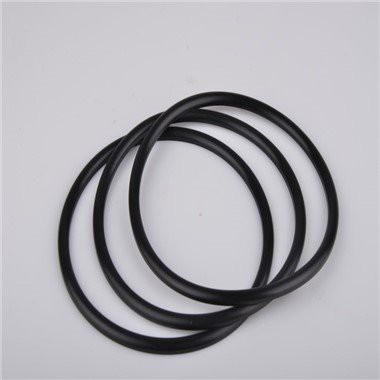

Calculating the torque required to install rubber O - rings in threaded connections is a crucial aspect in various industries where reliable sealing is essential. As a leading Rubber O Rings supplier, we understand the importance of getting this calculation right to ensure optimal performance and longevity of the seals. In this blog, we will delve into the key factors involved in calculating the torque and provide a step - by - step guide to help you achieve accurate results.
Understanding the Basics of Rubber O - Rings in Threaded Connections
Rubber O - rings are widely used in threaded connections to prevent leakage of fluids or gases. They work by creating a tight seal between two mating surfaces when compressed. However, improper installation, including incorrect torque application, can lead to issues such as under - compression or over - compression of the O - ring. Under - compression may result in leakage, while over - compression can cause damage to the O - ring, leading to premature failure.
Factors Affecting the Torque Required
1. O - Ring Material
Different rubber materials have varying degrees of hardness, elasticity, and compression set. For example, a silicone O - ring is generally softer and more elastic compared to a nitrile rubber O - ring. Softer materials typically require less torque to achieve the desired compression. Our Precision Rubber O - Rings For Machinery & Equipment Seals come in a variety of materials, each with its own unique properties that influence the torque requirements.
2. O - Ring Size
The size of the O - ring, including its cross - sectional diameter and inner diameter, plays a significant role in determining the torque. Larger O - rings usually require more torque to compress evenly. This is because a larger surface area needs to be deformed to create an effective seal.
3. Thread Design
The pitch, thread angle, and surface finish of the threaded connection affect the frictional forces during installation. A fine - pitched thread may require less torque compared to a coarse - pitched thread, as the fine pitch allows for more gradual compression. Additionally, a smooth thread surface reduces friction, which can lower the overall torque needed.
4. Application Environment
The temperature, pressure, and chemical exposure in the application environment can also impact the torque requirements. High - temperature applications may cause the rubber to expand or become more pliable, potentially reducing the torque needed. On the other hand, applications with high pressure may require additional torque to maintain a reliable seal. Our FDA Approved Food Grade Rubber O - Ring Set is designed to withstand specific environmental conditions, and the torque calculations should take these factors into account.
Step - by - Step Guide to Calculate the Torque
Step 1: Determine the Desired Compression
The first step is to decide on the appropriate compression percentage for the O - ring. This is typically in the range of 10% - 30% of the O - ring's cross - sectional diameter. The specific compression percentage depends on the application requirements, such as the pressure and the type of fluid or gas being sealed.
Step 2: Calculate the Compressive Force
Once the desired compression is determined, you can calculate the compressive force required to achieve this compression. This can be done using the following formula:
[F = k \times A \times \Delta h]
where (F) is the compressive force, (k) is the modulus of elasticity of the rubber material, (A) is the cross - sectional area of the O - ring, and (\Delta h) is the change in height due to compression.
Step 3: Account for Frictional Forces
Frictional forces in the threaded connection can significantly increase the torque required. To account for these forces, you need to estimate the coefficient of friction ((\mu)) between the threads. The frictional force ((F_f)) can be calculated using the formula:
[F_f=\mu\times F_n]
where (F_n) is the normal force, which is equal to the compressive force in most cases.
Step 4: Calculate the Torque
The torque ((T)) required to install the O - ring can be calculated using the following formula:
[T=(F + F_f)\times r]
where (r) is the effective radius of the threaded connection.
Practical Tips for Accurate Torque Application
- Use a Torque Wrench: A torque wrench is an essential tool for accurate torque application. It allows you to apply the exact amount of torque required, ensuring consistent and reliable sealing.
- Lubrication: Applying a suitable lubricant to the threads can reduce friction and lower the torque requirements. However, make sure the lubricant is compatible with the O - ring material.
- Inspect the O - Ring: Before installation, carefully inspect the O - ring for any defects or damage. A damaged O - ring may require different torque settings or may not provide an effective seal at all.
Custom - Made Solutions
At our company, we understand that every application is unique. That's why we offer Custom - Made Rubber Grommets tailored to your specific requirements. Our team of experts can assist you in calculating the appropriate torque for your custom - made O - rings, taking into account all the relevant factors.
Conclusion
Calculating the torque required to install rubber O - rings in threaded connections is a complex but essential process. By considering the factors such as O - ring material, size, thread design, and application environment, and following the step - by - step guide provided, you can ensure proper installation and reliable sealing. As a trusted Rubber O Rings supplier, we are committed to providing high - quality products and expert advice to help you achieve the best results in your applications.


If you have any questions or need assistance with calculating the torque for your O - ring installation, or if you are interested in purchasing our rubber O - rings, please feel free to contact us for a detailed discussion and procurement negotiation.
References
- Elastomer Technology Handbook, Smith, J. (2018)
- Sealing Technology for Engineers, Johnson, R. (2020)
- Rubber Materials and Their Applications, Brown, A. (2019)