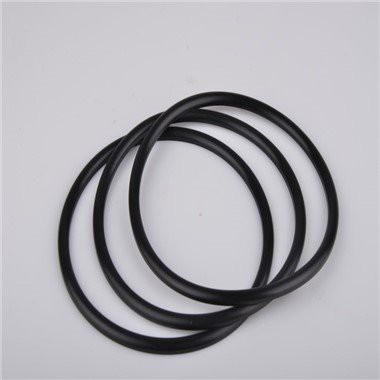

Do small rubber O - rings have a specific compression rate?


As a supplier of small rubber O - rings, I've often been asked whether these tiny yet crucial components have a specific compression rate. The answer is both yes and no, and it depends on a variety of factors.
Let's first understand what compression rate means in the context of rubber O - rings. Compression rate refers to the percentage reduction in the cross - sectional height of the O - ring when it is installed in a groove and compressed. This compression is essential as it creates a seal between two mating surfaces, preventing the leakage of fluids or gases.
One of the most important factors influencing the compression rate of small rubber O - rings is the application environment. Different applications have different requirements for sealing performance. For example, in high - pressure hydraulic systems, a higher compression rate is usually needed to ensure a reliable seal. The high pressure can easily force fluids past a poorly compressed O - ring. In such cases, a compression rate of 15% - 30% might be appropriate. On the other hand, in low - pressure applications like household appliances, a lower compression rate of around 5% - 15% could be sufficient.
The type of rubber material also plays a significant role. Different rubber compounds have different physical properties, such as hardness, elasticity, and chemical resistance. For instance, High Performance Rubber O Ring is designed to withstand extreme conditions. These O - rings are often made from materials with high hardness and excellent resilience. Due to their superior properties, they can maintain a good seal with a relatively lower compression rate compared to softer rubber materials.
Silicone rubber is another popular choice for O - rings. Silicone Rubber O - ring is known for its high - temperature resistance and flexibility. However, it is relatively soft, which means it may require a higher compression rate to form an effective seal. A compression rate of 20% - 35% might be necessary for silicone O - rings in some applications.
Neoprene rubber is widely used for its good chemical resistance and mechanical properties. Neoprene Rubber O Rings typically have a compression rate in the range of 10% - 25%, depending on the specific application requirements.
The size of the O - ring is also a factor. Smaller O - rings may have different compression characteristics compared to larger ones. In general, smaller O - rings can be more difficult to compress evenly. This is because the forces acting on them are more concentrated, and any small variations in the groove dimensions or installation can have a greater impact on the compression rate. Therefore, more precise control is needed when dealing with small rubber O - rings.
Manufacturing processes can also affect the compression rate. High - quality manufacturing ensures that the O - rings have consistent dimensions and properties. For example, precision - molded O - rings are more likely to have a uniform cross - section, which helps in achieving a more accurate compression rate. In contrast, O - rings with inconsistent manufacturing may have uneven compression, leading to potential sealing failures.
Installation is yet another critical aspect. Improper installation can cause the O - ring to be compressed unevenly or over - compressed. For example, if the O - ring is stretched during installation or if the groove is not properly machined, the compression rate will be affected. It is essential to follow the correct installation procedures to ensure that the O - ring is compressed to the desired rate.
To determine the specific compression rate for a particular application, it is often necessary to conduct tests. These tests can involve measuring the pressure - sealing performance of the O - ring under different compression rates. By analyzing the test results, we can find the optimal compression rate that provides the best sealing performance while also considering factors such as the longevity of the O - ring and the cost of the application.
In conclusion, while there is no one - size - fits - all specific compression rate for small rubber O - rings, we can narrow down the range based on the application environment, rubber material, size, manufacturing process, and installation method. As a supplier, we have the expertise and experience to help our customers select the right O - rings and determine the appropriate compression rate for their specific needs.
If you are in need of small rubber O - rings for your project, we are here to assist you. Our team of experts can provide detailed technical support and guidance to ensure that you get the best - performing O - rings for your application. Whether you have a high - pressure industrial application or a simple household device, we can offer solutions tailored to your requirements. Contact us to start a procurement discussion and find the perfect small rubber O - rings for your needs.
References
- Engineering Handbook of Sealing Technology, various authors
- Rubber Material Properties and Applications, industry research reports