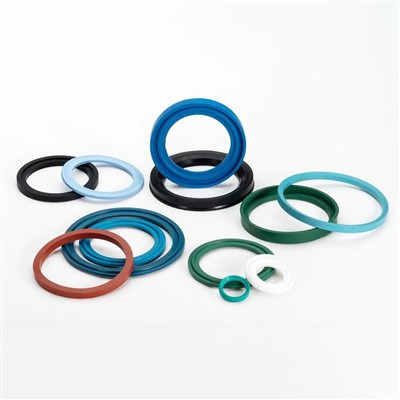
With the "Shadow War" in the Persian Gulf erupting into active maritime friction this April 2026, naval superiority is no longer just about hull numbers-it's about the reliability of the sensors and drones that maintain the perimeter. In these ultra-saline, ultra-dense waters, the sealing component is the ultimate point of failure.
As of April 15, 2026, the Strait of Hormuz has seen the densest concentration of Unmanned Underwater Vehicles (UUVs) in history. Both US-allied forces and Iranian maritime units are deploying autonomous surveillance units to monitor critical transit lanes. These electronic-heavy platforms are operating at depths and in conditions that accelerate the degradation of standard industrial materials.
The industry is seeing an immediate pivot toward Subsea Defense-Grade Elastomers. Unlike standard seals, these components must resist both the high-pressure dynamics of the deep sea and the corrosive chemical profile of the Persian Gulf, where temperatures and salinity spikes can cause traditional rubber to swell and fail within weeks.
The Saltwater Barrier: Why FKM is Non-Negotiable
In the current conflict landscape, Fluorocarbon (FKM) and specialized Fluorosilicone (FVMQ) have replaced standard Nitrile (NBR) as the new baseline for naval electronics.
- Anti-Permeation Design: For underwater drones, seals must prevent moisture from permeating through the rubber over months of deployment. Standard rubber is too porous for 2026 stealth requirements.
- Thermal Stability: The Persian Gulf's surface temperatures often exceed 35°C (95°F), coupled with the internal heat of high-energy sonar arrays. Seals must maintain their mechanical properties without hardening.
Supply Chain Resilience: Bypassing Regional Risk
As global logistics hubs in the Middle East face increased operational risk, the major defense OEMs are shifting their procurement to verified, safe-haven hubs. Xiamen Best Seal has seen a concentrated surge in orders from US and EU-allied contractors seeking zero-defect precision components engineered specifically for maritime electronic warfare.
🚢 Mission-Critical Navy & Marine Solutions: When failure is not an option, rely on materials built for the frontlines.
- Miniature Precision Seals: Ultra-compact tolerances for UUV sensor housing.
- Water-Tight Connector Seals: Ensuring signal integrity in high-salinity naval electronics.
- High-Pressure FKM Solutions: Built for engine rooms and deep-sea propulsion units.
Looking Forward: Zero-Failure Tolerance
April 2026 marks a turning point in how maritime components are sourced. It is no longer about price per unit-it is about the "Mean Time Between Failure" (MTBF) in a combat zone. Defense contractors are now requiring 100% material traceability and automated inspection logs for every sealing batch delivered.
At Xiamen Best Seal, our dedicated defense manufacturing line is operating at peak capacity to ensure that our partners can maintain the operational readiness required for this evolving geopolitical era.
Are your maritime systems ready for the challenges of 2026? Don't let a standard seal be your weakest link. Contact our Naval Defense Team today to discuss custom material formulations for saltwater environments.
• Xiamen Best Seal • Strategic Partners in Global Maritime Defense •