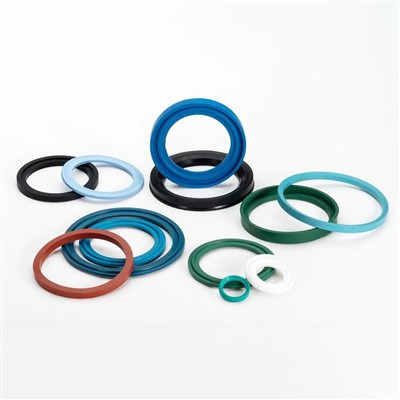

Rubber products play a crucial role in modern industry and daily life. From car tires to seals, rubber materials are widely used due to their excellent elasticity and wear resistance. However, during use, rubber products are affected by various environmental factors and gradually age, thereby affecting their performance and lifespan. This article will delve into the causes, manifestations, and effective protection measures of rubber product aging.
1. Manifestations of Rubber Aging
Rubber aging manifests in diverse ways, specifically as follows:
Surface Cracking: Under the action of ozone and mechanical stress, fine cracks will appear on the surface of rubber products, a common phenomenon in tires and seals.
Hardening and Brittleness: Due to factors such as thermal oxidation, the elasticity of rubber decreases, gradually hardens, and ultimately becomes brittle and prone to breakage.
Discoloration: Photoaging and oxidation cause the color of rubber materials to change, such as black rubber turning gray or brown.
Loss of Elasticity: During the aging process, rubber loses its original elasticity, becomes stiff, and cannot return to its original state.
Adhesion and Dissolution: In certain environments, rubber materials may become sticky and even dissolve when in contact with specific chemical media.
Volume Change: Rubber may expand or contract in volume during the aging process, affecting its dimensional accuracy and function.
2. Causes of Rubber Product Aging
Rubber aging refers to the process in which the performance of rubber materials gradually declines under the action of physical or chemical factors. The causes of aging are complex and diverse, mainly including the following aspects:
Thermal Aging: Rubber materials will accelerate the aging process in a high-temperature environment. High temperatures can cause the decomposition, cross-linking, or oxidation of rubber molecules, leading to material hardening, brittleness, and even breakage.
Oxidative Aging: Rubber reacts chemically with oxygen in the air to form peroxides, triggering chain scission or cross-linking reactions. Oxidative aging is usually manifested as surface discoloration and loss of elasticity of rubber.
Ozone Aging: Ozone is an allotrope of oxygen with extremely high activity, which can cause the breakage of rubber molecular chains, resulting in cracks on the surface of rubber products, especially when in a stretched state.
Photoaging: Ultraviolet rays are the main cause of photoaging. The double bonds in rubber are prone to photochemical reactions under ultraviolet irradiation, forming free radicals, which in turn cause material degradation.
Hydrolytic Aging: In a humid environment, water molecules will penetrate into rubber materials, leading to changes in their internal structure and performance degradation. Especially under acidic and alkaline conditions, the hydrolysis reaction will intensify.
Mechanical Stress Aging: Long-term mechanical stress (such as tension, compression, bending) will cause the slippage and breakage of rubber molecular chains, thereby accelerating aging.
Chemical Medium Corrosion: Certain chemicals (such as oils, solvents, acids, and alkalis) will react with rubber, changing its molecular structure and leading to material hardening and embrittlement.
3. Factors Affecting Rubber Aging
Environmental Temperature: High temperatures will accelerate the decomposition and oxidation of rubber, while low temperatures may cause rubber hardening.
Environmental Humidity: A high-humidity environment increases the risk of hydrolytic aging, while a dry environment helps delay aging.
Ozone Concentration: The higher the ozone concentration, the faster the rubber ages, especially in outdoor environments.
Light Intensity: The intensity of ultraviolet rays directly affects the speed of photoaging, and rubber products in outdoor environments age faster than those indoors.
Mechanical Stress: Repeated mechanical stress will cause damage to the rubber molecular structure and accelerate aging.
Chemical Environment: Rubber products in contact with acids, bases, oils, or solvents usually age faster.
4. Protection Measures against Rubber Product Aging
Adding Antioxidants: Antioxidants can capture free radicals and inhibit the occurrence of oxidation reactions, an important means to prevent rubber aging. Commonly used antioxidants include phenols, amines, etc.
Using Anti-aging Agents: The main function of anti-aging agents is to prevent ozone aging and photoaging. Common anti-aging agents include paraffin wax, benzoates, etc.
Optimizing the Formula: By optimizing the rubber formula and selecting appropriate fillers, plasticizers, and cross-linking agents, the aging resistance of rubber products can be significantly improved.
Physical Shielding: Coating a protective layer, such as paraffin wax or metal oxide coating, on the surface of rubber products can effectively block the intrusion of oxygen, ozone, and ultraviolet rays.
Controlling the Environment: When storing and using rubber products, the environmental temperature and humidity should be controlled as much as possible, and direct exposure to strong light or high-ozone environments should be avoided.
Avoiding Prolonged Mechanical Stress: In the design and use of rubber products, they should be avoided from being in a stretched or compressed state for a long time to reduce the impact of mechanical stress on aging.
Selecting Appropriate Rubber Materials: Different rubber materials have significant differences in aging resistance. For example, the aging resistance of fluororubber and silicone rubber is better than that of natural rubber. Therefore, in applications requiring high durability, materials with better aging resistance should be preferentially selected.
The aging of rubber products is an inevitable natural process, but through scientific and reasonable protection measures, the aging speed can be significantly delayed and the service life can be extended. In future research and applications, new anti-aging materials and technologies should continue to be explored to provide a more solid guarantee for the long-term use of rubber products.