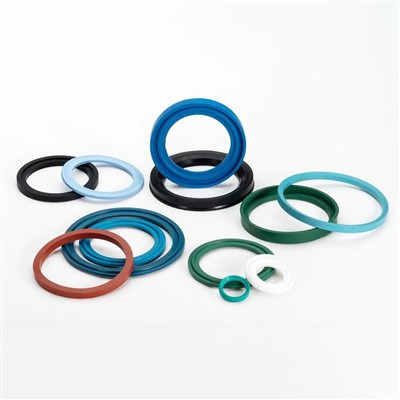

Thermal properties of rubber
Thermal conductivity: rubber is a poor conductor of heat, and its thermal conductivity coefficient is about 2.2~6.28 W/m 2.0K when the thickness is 25 mm. It is an excellent heat insulation material. If the rubber is made into microporous or sponge state, its heat insulation effect will be further improved, so that the thermal conductivity will be reduced to 0.4~2.0 watts. Any rubber parts may generate heat due to hysteresis loss in use, so heat dissipation shall be paid attention to.
Thermal expansion: because there is a large free volume between rubber molecular chains, the internal rotation of its chain segments becomes easier when the temperature rises, which will make its volume larger. The linear expansion coefficient of rubber is about 20 times that of steel. This must be considered in the vulcanization model design of rubber products, because the linear size of rubber products will be 1.2~3.5% smaller than the model. For the same type of rubber, the hardness of the rubber compound and the content of raw rubber also have a greater impact on the shrinkage of the rubber compound. The shrinkage is inversely proportional to the hardness and is proportional to the rubber content. The order of shrinkage of various rubbers in theory is: fluororubber>silicone rubber>butyl rubber>nitrile rubber>neoprene>styrene butadiene rubber>natural rubber. When rubber products are used at low temperature, special attention should be paid to the influence of volume shrinkage. For example, oil seals will leak due to shrinkage, and rubber and metal bonded products will cause excessive stress due to shrinkage, leading to early damage.