Introduction
Rubber mold design is a crucial process in the production of rubber parts, directly affecting product accuracy, consistency, and production efficiency. A well-designed mold ensures stable quality, reduces waste, and prolongs the service life of both the mold and the final product.

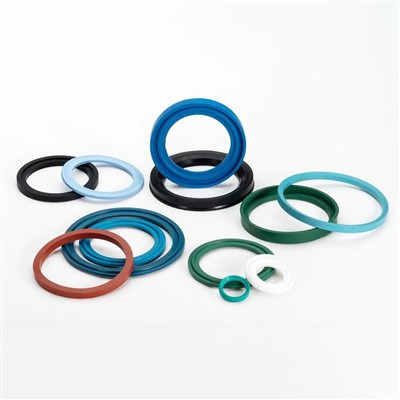
As rubber products become more complex and precise-such as O-rings, gaskets, oil seals, and custom-shaped seals-the demand for professional mold design and high-performance materials has grown significantly. This article will introduce the essential knowledge of rubber mold design, including its basic concepts, design principles, key components, and maintenance guidelines.
Basic Concepts of Rubber Molds
A rubber mold is a specialized tool used to shape rubber materials into specific forms under heat and pressure. It generally consists of a mold base, mold core, cavity, positioning system, and gating system.
The mold design must take into account the rubber's flowability, shrinkage rate, elasticity, and the shape and precision of the product. Proper design ensures smooth demolding, dimensional accuracy, and a clean product surface.
Preparation Before Mold Design
1. Understanding Product Requirements
Before designing a mold, engineers must fully understand the product's dimensions, tolerance, structure, and working environment. Whether the rubber component will be exposed to oil, chemicals, or high temperature determines the design direction and the choice of material.
2. Material Selection
Different rubber materials-such as NBR, EPDM, FKM, Silicone, and FFKM-have distinct mechanical and chemical properties. The right selection is vital for achieving the required hardness, wear resistance, and durability. For example, FKM is ideal for high-temperature oil environments, while Silicone performs well in food and medical applications.
3. Equipment Compatibility
The mold design must match the specifications and capabilities of the molding equipment. Proper sizing, structural balance, and clamping force must all be considered to ensure efficient and safe production.
Mold Structure Design

Mold Base
The mold base provides the foundation for all components. It must have sufficient strength, stiffness, and dimensional stability to withstand high pressure and temperature during the vulcanization process.
Mold Core and Cavity
The mold core defines the internal shape of the rubber part, while the cavity forms the external shape. High-precision machining and surface finishing are essential to guarantee product accuracy and prevent surface defects such as burrs or flash.
Positioning System
Accurate alignment between the upper and lower molds ensures stable molding quality. Common positioning methods include guide pins, bushings, and locating rings to maintain precision even under repeated production cycles.
Gating and Venting System
The gating system-comprising the sprue, runner, and gate-controls rubber flow into the cavity. It must be designed to minimize air entrapment and ensure even material distribution. At the same time, proper venting channels are needed to release trapped gases and avoid defects during curing.

Mold Manufacturing Process
1.Material Preparation – Choose high-quality steel or alloy materials with excellent machinability and heat resistance.
2.Machining and Finishing – Use CNC machining, EDM, and precision grinding to achieve high dimensional accuracy.
3.Assembly and Testing – Assemble all components and conduct trial molding to verify product quality, sealing performance, and demolding efficiency.
A successful mold design not only ensures accurate product dimensions but also reduces cycle time and improves overall productivity.
Mold Maintenance and Care
Regular maintenance is key to extending mold life and maintaining consistent product quality.
- Inspection: Check for wear, cracks, or deformation after each production cycle.
- Cleaning: Remove residues and prevent contamination of the cavity or runners.
- Lubrication and Protection: Apply anti-rust oil and keep moving parts well-lubricated.
Proper care helps prevent downtime, lowers repair costs, and ensures the mold continues to produce high-quality parts.
Design Optimization and Innovation
With the continuous advancement of technology, rubber mold design is evolving toward higher precision, automation, and sustainability. Modern designers use CAD/CAE simulation and 3D modeling to predict flow behavior and optimize gate design before production.
Innovations such as flash-free molds, multi-cavity structures, and automatic demolding systems can greatly improve efficiency, reduce labor, and minimize material waste.
Conclusion

Rubber mold design is both a science and an art-it combines material understanding, mechanical design, and production experience. A well-designed mold ensures product quality, stability, and efficiency, forming the backbone of modern rubber manufacturing.
At Xiamen Best Seal, we specialize in custom rubber mold design and manufacturing for a wide range of products, includingO-rings, gaskets, rubber molded parts, and special-shaped rubber components.
Our experienced engineering team provides one-stop solutions-from design and prototyping to mass production-helping clients achieve the perfect balance between performance and cost.
Contact us today to start your next custom rubber mold project and experience professional precision in every detail.