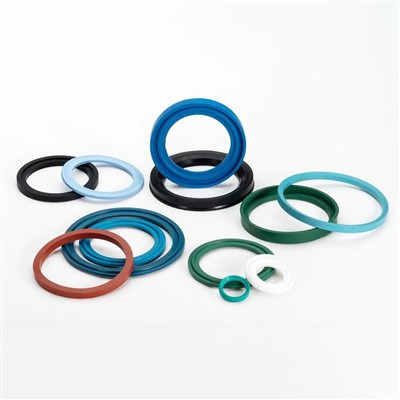
Rotary shaft seals come in various profiles. Understanding the fundamental differences in lip design and casing material is critical for ensuring long-lasting performance and preventing catastrophic leaks.
When sourcing oil seals for gearboxes, pumps, or automotive engines, you are often confronted with cryptic two- or three-letter codes: TC, TB, TCY, and SC. These codes, widely adopted across the industry, describe the physical construction of the seal.

The differences primarily boil down to two factors: the Lip Design (whether it has a secondary dust lip) and the Outer Diameter (O.D.) Material (rubber-covered vs. exposed metal). Here is a breakdown of what each code means and where it should be used.

1. TC Oil Seal (Dual-Lip, Rubber Cased)
The TC profile is by far the most common and standard oil seal used globally.
- Design: It features a dual-lip design: a spring-loaded primary sealing lip to retain oil, and an auxiliary (dust) lip to keep out dirt and moisture. The entire outer metal case is completely covered in rubber.
- Advantages: The rubber coating allows the seal to adapt to slight imperfections or thermal expansion in the housing bore, ensuring a tight static seal.
- Applications: Engines, transmissions, and general industrial machinery operating in moderately dusty environments.
2. TB Oil Seal (Dual-Lip, Metal Cased)
The TB profile shares the same internal lip geometry as the TC, but the exterior is different.
- Design: It is a dual-lip seal with an exposed, bare metal outer case (no rubber coating).
- Advantages: The metal-to-metal contact provides a highly rigid and secure fit. It also offers superior heat dissipation compared to rubber-coated seals.
- Applications: Heavy-duty gearboxes and cast-iron housings. Note: The housing bore must be meticulously machined and smooth, otherwise, fluid may leak past the metal outer edge.
3. TCY Oil Seal (Double Metal Case / High Pressure)
When conditions get extreme, the TCY profile is required. It is an upgraded, heavy-duty variant.
- Design: A dual-lip seal reinforced with an additional inner metal case. This double-metal construction makes it structurally massive.
- Advantages: It can withstand significantly higher internal pressures without the lips blowing out or deforming.
- Applications: High-pressure hydraulic pumps, heavy compressors, and severe-duty applications where standard TC seals would fail under pressure.
4. SC Oil Seal (Single-Lip, Rubber Cased)
The SC profile is the simpler cousin of the TC seal, designed for "clean" environments.
- Design: It has the same rubber-covered outer diameter as the TC, but it is a single-lip design. It lacks the secondary dust lip.
- Advantages: Without the extra lip rubbing against the shaft, the SC seal generates less friction and runs cooler. It is also more cost-effective.
- Applications: Ideal for enclosed, very clean systems (like electric motors or household appliances) where dirt ingress is not a concern but low friction is desired.
Quick Reference Guide
| Seal Type | Lip Design | Outer Diameter | Best Use Case |
|---|---|---|---|
| TC | Double (Main + Dust) | Rubber Coated | General Purpose, Automotive, Dusty Environments |
| TB | Double (Main + Dust) | Bare Metal | Rigid Housings, High Heat Dissipation |
| TCY | Double (Main + Dust) | Double Metal Case | High-Pressure Hydraulic Systems |
| SC | Single (Main Only) | Rubber Coated | Clean Environments, Low Friction Needs |
Selecting the exact seal profile is just as important as choosing the right material (such as NBR, FKM, or Silicone). If you are unsure which profile fits your machinery's requirements, contact Xiamen Best Seal for expert engineering support.
• Xiamen Best Seal Engineering Knowledge Base •