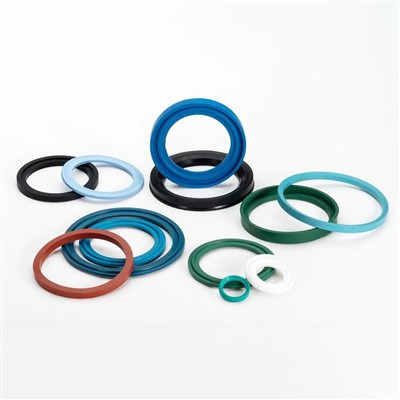
Rubber Washer Performance Testing and Maintenance Guide
Rubber washers are widely used in bolted joints, plumbing systems, and mechanical assemblies to provide sealing, vibration damping, and load distribution. However, improper testing or poor maintenance can lead to leakage, loosening, and premature failure. This guide focuses on the key performance tests that determine washer quality and best maintenance practices to extend service life.

1. Key Performance Requirements of Rubber Washers
- Sealing capability under bolt preload
- Elastic recovery after compression
- Resistance to media (water, oil, chemicals)
- Dimensional stability over time
- Durability under temperature and vibration
Engineering Insight: Unlike O-rings, rubber washers rely heavily on bolt load distribution. Their performance is strongly affected by material behavior under sustained compression.
2. Critical Performance Tests for Rubber Washers
2.1 Compression Set Test
Purpose: Evaluates the washer's ability to recover thickness after long-term compression.
Compression Set (%) = (H₀ − H₂) / (H₀ − H₁) × 100
- Lower value = better sealing retention
- Critical for static bolted joints
2.2 Hardness (Shore A) Test
- Measures resistance to indentation
- Affects sealing force and extrusion resistance
- Typical washer range: 50–80 Shore A
Note: Excessive hardness reduces conformity to flange surfaces and may cause micro-leakage.
2.3 Tensile Strength & Elongation
These tests evaluate material integrity during installation and service:
- Prevents cracking during bolt tightening
- Indicates compound quality and aging resistance
2.4 Fluid & Chemical Resistance Test
| Medium | Recommended Material | Test Focus |
|---|---|---|
| Water / Steam | EPDM | Swelling, hardness change |
| Oil / Fuel | NBR, HNBR | Volume change |
| Chemicals | FKM, FFKM | Mass & tensile retention |
2.5 Aging & Temperature Resistance
- Heat aging (70–150°C)
- Ozone and UV exposure
- Hardness and compression set change after aging
3. Common Failure Modes of Rubber Washers
- Permanent flattening due to high compression set
- Surface cracking from ozone or heat aging
- Swelling or softening due to incompatible fluids
- Leakage caused by bolt relaxation
Root Cause: Most washer failures are material-selection issues rather than dimensional defects.
4. Rubber Washer Maintenance Best Practices
4.1 Installation Guidelines
- Avoid over-tightening bolts
- Ensure smooth, clean mating surfaces
- Use washers with proper inner/outer diameter fit
4.2 Periodic Inspection
- Check for hardening or cracks
- Inspect for leakage or loosening
- Replace washers during scheduled maintenance
4.3 Storage & Handling
- Store away from heat and direct sunlight
- Avoid contact with oils or solvents unless compatible
- Do not stack under heavy loads
Maintenance Tip: Replacing low-cost washers proactively can prevent expensive system downtime.
Conclusion
Proper performance testing and maintenance are essential for ensuring rubber washer reliability. Compression set, hardness, chemical resistance, and aging behavior should be evaluated together to achieve stable long-term sealing performance.