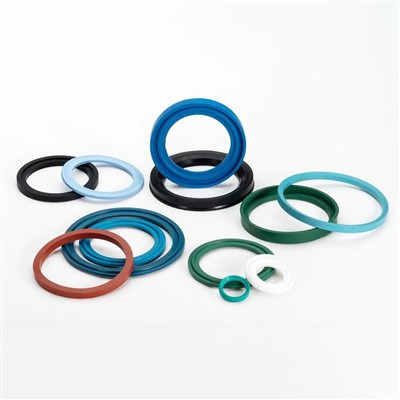
1. Definition and Basic Structure
A PTFE (Polytetrafluoroethylene) washer is a small, circular component typically used for sealing, spacing, or distributing loads. It is made of PTFE, a synthetic fluoropolymer of tetrafluoroethylene.
The structure of a PTFE washer is relatively simple. It usually has a flat, circular shape with a central hole. The thickness can vary depending on the specific application requirements, ranging from a few millimeters to thinner gauges.
2. Properties of PTFE Washers
*Chemical Resistance
PTFE is renowned for its exceptional chemical resistance. PTFE washers can withstand a wide range of chemicals, including strong acids (such as hydrochloric acid, sulfuric acid), strong bases (like sodium hydroxide), and various organic solvents (for example, toluene, acetone). This property makes them suitable for use in chemical processing equipment, where they can prevent leaks and protect other components from chemical corrosion.
They are also resistant to oxidative chemicals and can maintain their integrity even in harsh chemical environments over long periods.
*Temperature Resistance
PTFE washers have excellent temperature - resistance capabilities. They can operate in a wide temperature range, from extremely low temperatures (down to - 200°C or even lower in some cases) to relatively high temperatures (up to 260°C).
This wide temperature range allows them to be used in applications such as cryogenic systems and high - temperature industrial processes, like in some food - processing ovens or certain types of industrial dryers.
*Low Friction Coefficient
PTFE has one of the lowest friction coefficients among solid materials. PTFE washers, as a result, offer smooth surfaces that reduce friction between the surfaces they separate.
This property is highly beneficial in applications where parts need to move or rotate against each other. For example, in mechanical equipment such as bearings and shafts, PTFE washers can reduce wear and energy loss due to friction.
*Non - Stick Properties
The non - stick characteristic of PTFE is well - known. PTFE washers do not adhere to most substances.
This makes them ideal for applications where cleanliness and easy release of substances are important. In food - processing equipment, for instance, PTFE washers can prevent food particles from sticking, ensuring hygiene and easy cleaning of the equipment.
3. Applications
*Plumbing and Pipe Fittings
In plumbing systems, PTFE washers are often used as seals in pipe joints. They can prevent water or other fluids from leaking between pipes and fittings. For example, in faucet assemblies, PTFE washers are placed between the valve and the body to ensure a watertight seal and smooth operation of the faucet handle.
In gas piping systems, they can also be used to seal connections and prevent gas leakage, providing a reliable and long - lasting seal even under different pressures.
*Automotive Industry
PTFE washers are used in various automotive components. In the engine compartment, they can be found in fuel systems, where they help to seal fuel lines and prevent fuel leakage.
They are also used in the braking system. For example, in some brake caliper assemblies, PTFE washers are used to provide a smooth and reliable seal, ensuring the proper functioning of the brakes and reducing the risk of fluid leaks.
*Electrical Equipment
In electrical enclosures and connectors, PTFE washers can act as insulating seals. They prevent the ingress of moisture and dust, which could otherwise cause electrical short - circuits or damage to the electrical components.
Their chemical resistance also makes them suitable for use in equipment that may be exposed to corrosive substances in industrial or outdoor electrical installations.
4. Manufacturing Processes
PTFE washers are typically manufactured through processes such as compression molding or machining.
Compression Molding
In compression molding, PTFE powder is placed in a mold cavity with the desired shape of the washer (including the central hole). The mold is then subjected to high pressure and temperature. The pressure forces the powder to conform to the shape of the mold, and the heat causes the PTFE to sinter and form a solid washer.
This process allows for the production of washers with consistent dimensions and properties, and it is suitable for mass - production.
Machining
Machining involves taking a pre - formed PTFE block or rod and using techniques such as turning, milling, or drilling to shape it into a washer. This method is more suitable for custom - made or small - batch production, where precise dimensions and unique geometries may be required. However, it can be more time - consuming and costly compared to compression molding for large - scale production.