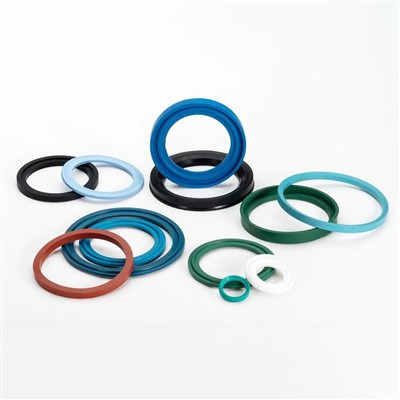
In the actual production process of the rubber industry, it is not always necessary to use complex equipment to test whether a rubber product is over - vulcanized or under - vulcanized. Experienced technicians and engineers can usually make a preliminary judgment through sensory observation, manual testing, and simple operations. This method is particularly important for on - site quality control during production. It enables quick judgments and timely adjustments to the vulcanization process, reducing the production of defective products. The following are some common and effective empirical judgment methods.
1. Judgment by Hand Feeling and Touch
Hand feeling is the simplest and most direct method. By touching and pressing the rubber product with hands, we can judge its hardness, elasticity, surface condition, etc.
(1) Pressing Test
Gently press the surface of the rubber product with a finger or a tool (such as a fingernail or a small knife):
Under - vulcanized rubber: It feels soft. The indentation left after pressing recovers slowly and may not even recover completely.
Over - vulcanized rubber: It feels hard. There is almost no deformation after pressing, or it recovers extremely quickly. It may even have no elasticity and shows strong brittleness.
(2) Touch Elasticity Test
Gently press the rubber with your hand and release it quickly:
Normally vulcanized rubber: It has good elasticity and can quickly return to its original shape.
Under - vulcanized rubber: The rebound is slow and may even feel sluggish.
Over - vulcanized rubber: It hardly deforms or deforms very little. It may even give a plastic - like feeling.
(3) Friction Sensation Test
Rub your finger on the surface of the rubber:
Under - vulcanized rubber: The surface may be slightly sticky, feel soft, and have obvious friction resistance.
Over - vulcanized rubber: The surface is dry and may feel hard and lack flexibility.
2. Judgment by Bending Test
The bending test is a simple way to judge the degree of cross - linking of rubber and can effectively identify under - vulcanized or over - vulcanized phenomena.
(1) Gentle Bending Test
Gently bend the rubber product with your hand:
Under - vulcanized rubber: It is easy to bend and may even lack toughness like plasticine.
Normally vulcanized rubber: After bending, it can maintain a certain rigidity and has no obvious cracks.
Over - vulcanized rubber: It is difficult to bend and may have an obvious hard - brittle feeling. Fine cracks may appear, or it cannot rebound.
(2) Forceful Bending Test
Fold the rubber product forcefully (especially suitable for thin - sheet rubber) and observe its fracture or deformation:
Under - vulcanized rubber: It is easy to crack on the surface and may even tear directly.
Over - vulcanized rubber: Fine cracks or fractures may appear on the surface, especially in a low - temperature environment.
Normally vulcanized rubber: It can withstand a large degree of bending without obvious cracks.
3. Judgment by Tensile and Tear Tests
This method is mainly used to judge the strength, ductility, and fracture of rubber.
(1) Hand - Tensile Test
Tear a small piece of rubber with your hand and observe the stretching process and fracture:
Under - vulcanized rubber: It has excellent ductility and is easy to stretch, but it may quickly show signs of over - stretching, such as not being able to retract after being stretched.
Over - vulcanized rubber: It has poor ductility, feels hard when stretched, and may break within a short stretching range.
Normally vulcanized rubber: It has moderate ductility, can return to its original shape after being released, and is not easy to break.
(2) Tear Test
Use your hand or a tool (such as a small knife) to make a small cut on the rubber sample and then tear it by hand:
Under - vulcanized rubber: It is easy to tear, and the fracture surface after tearing is relatively smooth and lacks toughness.
Over - vulcanized rubber: It is difficult to tear, but once torn, the fracture surface shows a brittle fracture, similar to the fracture of plastic.
Normally vulcanized rubber: It has a certain tear resistance. Tearing requires more force, and the tear surface has a certain toughness and is not completely brittle.
4. Judgment by Odor
Rubber produces specific chemical odors during the vulcanization process. The odor changes with different vulcanization degrees.
(1) Under - vulcanized rubber
It may still retain a strong raw - rubber smell (similar to the smell of plastic or unvulcanized rubber).
If the formula contains accelerators such as TMTD (tetramethylthiuram disulfide) or other highly active accelerators, it may smell like sulfur.
(2) Over - vulcanized rubber
The odor is usually faint but may have a smell similar to "scorched" or "burned rubber".
Over - vulcanization may lead to chemical degradation, releasing some irritating gases, such as the smell of sulfides or nitrogen oxides.
(3) Normally vulcanized rubber
The odor is moderate and has no overly strong or obvious strange smell.
5. Judgment by Observing the Cut Section
Cut the rubber product with a small knife or other tools and observe its fracture surface and internal structure.
(1) Under - vulcanized rubber
The fracture surface is smooth, has no obvious granular feeling, and shows a relatively uniform rubber state.
Uncompletely cross - linked raw - rubber parts may be visible.
(2) Over - vulcanized rubber
The fracture surface is rough and may be accompanied by brittle fractures.
White or bright cracks may appear, especially when cutting.
(3) Normally vulcanized rubber
The fracture surface is uniform, the texture is moderate, and there are no obvious cracks or delamination.
6. Judgment by Aging Observation
Place the rubber product in a natural or heated environment for a period of time and observe its aging degree.
(1) Under - vulcanized rubber
It may become soft and sticky on the surface in a short time.
It is prone to oxidation in a high - temperature environment, and obvious discoloration may occur on the surface.
(2) Over - vulcanized rubber
It may become hard and brittle in a short time.
It ages faster in sunlight or a high - temperature environment, and cracks are likely to appear.
(3) Normally vulcanized rubber
It has good aging resistance and does not change significantly within a certain period.
Through the above empirical methods, we can effectively judge whether a rubber product is over - vulcanized or under - vulcanized without relying on complex equipment:
Hand - feeling and touch test: Under - vulcanized rubber is soft, while over - vulcanized rubber is hard.
Bending test: Under - vulcanized rubber is easy to deform, while over - vulcanized rubber is easy to break.
Tensile and tear test: Under - vulcanized rubber has excessive ductility but no elasticity, while over - vulcanized rubber has poor ductility and is easy to break.
Odor identification: Under - vulcanized rubber has a raw - rubber smell, while over - vulcanized rubber has a scorched smell.
Cut - section observation: The fracture surface of under - vulcanized rubber is smooth, while that of over - vulcanized rubber is rough and prone to cracking.
Aging observation: Under - vulcanized rubber is easy to become sticky, while over - vulcanized rubber is easy to become brittle.
The combined use of these methods can help quickly judge the vulcanization quality of rubber products, make timely adjustments on - site during production, and improve the product qualification rate.