In a modern flour mill, vibratory sifters are the heartbeat of quality control. However, when processing fine powders, operators face a persistent enemy: Screen Blinding. To combat this, the industry relies on a surprisingly simple yet highly engineered solution-the bouncing rubber sieve cleaning ball.
"Blinding" or "plugging" occurs when fine flour particles wedge themselves into the microscopic openings of a sifter mesh. As more holes become blocked, the screening capacity drops drastically, leading to slower production, rejected batches, and forced machine downtime for manual cleaning.
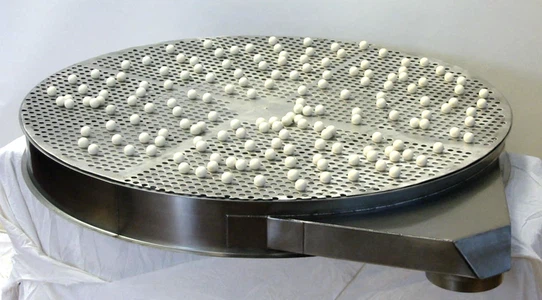
To solve this, Sieve Cleaning Balls are placed beneath the screen mesh. As the sifter vibrates, these rubber balls bounce continuously against the bottom of the screen, creating high-frequency taps that dislodge the stuck particles and keep the mesh open.

1. Zero Contamination: The FDA Compliance Rule
Because these bouncing balls are in direct, constant contact with the flour, material safety is the highest priority. Standard industrial rubber is strictly prohibited.
- White Silicone & Natural Rubber: Cleaning balls for food processing must be made from 100% FDA-compliant materials. They are typically white or translucent to ensure they do not leave colored streak marks on the screen or contaminate the white flour.
- Metal-Detectable Rubber: For ultimate safety, many modern mills now use magnetic or metal-detectable rubber balls. If a ball ever breaks down, fragments can be caught by the production line's metal detectors before packaging.
2. The Physics of the Bounce: Rebound Resilience
A cleaning ball must possess high rebound resilience-meaning it transfers maximum kinetic energy when it hits the screen rather than absorbing the shock.
However, bouncing millions of times a day causes friction. If the rubber is too soft, it will quickly abrade, shedding micro-particles of rubber dust into the flour. Polyurethane (PU) and specially formulated Natural Rubber offer the best balance: a highly elastic bounce combined with extreme abrasion resistance.
3. Choosing the Right Diameter and Weight
Selecting the correct ball size (typically ranging from 15mm to 35mm) depends on the fragility of your mesh screen and the gap in the cleaning deck.
- Large/Heavy Balls: Excellent for knocking loose dense, sticky powders, but they can damage ultra-fine, delicate wire meshes over time.
- Small/Light Balls: Perfect for high-frequency tapping on delicate screens processing very fine flour grades.
🌾 Upgrade Your Milling Equipment: Keep your vibratory screens clear and your production running smoothly with our precision-molded cleaning balls.
- Precision Solid Rubber Balls: High-rebound, wear-resistant designs for continuous operation.
- FDA-Compliant Formulations: Food-safe white silicone and natural rubber options available.
Summary: Small Parts, Massive Impact
In the high-volume world of flour milling, efficiency is measured in throughput. By investing in high-quality, abrasion-resistant, and FDA-compliant sieve cleaning balls, plant managers can eliminate screen blinding, reduce manual cleaning downtime, and guarantee the purity of their final product.
Are your sifters constantly clogging? Contact Xiamen Best Seal today to request samples of our high-bounce, food-grade sieve cleaning rubber balls.
• Xiamen Best Seal • Precision Solutions for Food Processing •