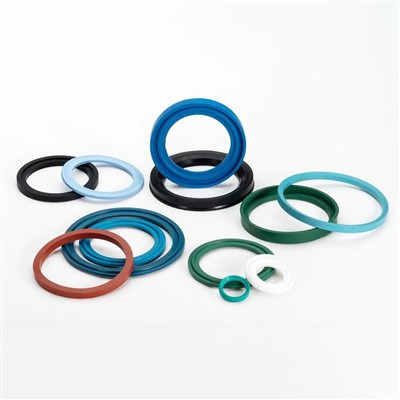
Rubber materials are widely used in industrial and civilian fields due to their unique high elasticity and excellent mechanical properties. However, different application scenarios have different requirements for the properties of rubber materials. A series of standardized tests are required to evaluate their properties to ensure product quality and reliability. This article will systematically expound on various test standards for rubber materials from the aspects of test items of rubber materials, corresponding test standards, their principles and significance.
I. Main Categories of Rubber Material Tests
The performance tests of rubber materials can be divided into the following major categories:
Mechanical property tests: Such as tensile properties, tear strength, compression set, hardness, etc., to evaluate the strength, elasticity and deformation ability of rubber.
Aging property tests: Test the aging resistance of rubber in environments such as high temperature, ozone, ultraviolet light, etc., to predict the service life of materials.
Thermal property tests: Evaluate the performance stability of rubber in high temperature environments.
Low-temperature property tests: Test the flexibility, brittleness and mechanical properties of rubber under low temperature conditions.
Medium resistance tests: Including oil resistance, acid and alkali resistance, solvent resistance, etc., to evaluate the stability of rubber in different chemical media.
Dynamic property tests: Such as dynamic fatigue and dynamic modulus tests, to evaluate the performance of rubber under dynamic working conditions.
Electrical property tests: Such as volume resistivity, dielectric constant, etc., to test the electrical properties of insulating rubber.
II. Main Test Standards and Testing Methods
1. Mechanical Property Test Standards
Tensile Property Test
Standard: ISO 37, ASTM D412, GB/T 528
Method: Stretch the specimen at a specified tensile speed and measure the tensile strength, elongation at break and tensile modulus.
Significance: Evaluate the tensile strength, elasticity and deformation ability of rubber, and it is one of the most commonly used rubber tests.
Tear Strength Test
Standard: ISO 34-1, ASTM D624, GB/T 529
Method: Use trouser-shaped, right-angled or crescent-shaped specimens to test the force required for the tear crack to propagate along the specimen.
Significance: Evaluate the ability of the material to resist crack propagation and is suitable for rubber products under dynamic loads.
Compression Set Test
Standard: ISO 815-1, ASTM D395, GB/T 7759
Method: Apply a constant pressure to the specimen at a certain temperature, and measure the percentage of residual deformation after cooling.
Significance: Reflect the resilience and resistance to permanent deformation of rubber materials, and is especially suitable for products such as seals.
Hardness Test
Standard: ISO 7619-1, ASTM D2240, GB/T 531.1
Method: Use a Shore hardness tester to test the degree of deformation of the rubber surface after being pressed.
Significance: Used to evaluate the hardness of rubber and its adaptability to application scenarios.
2. Aging Property Test Standards
Hot Air Aging Test
Standard: ISO 188, ASTM D573, GB/T 3512
Method: Age the specimen at a specified temperature and time, and measure the changes in properties such as tensile strength and elongation.
Significance: Evaluate the stability and service life of rubber in a high temperature environment.
Ozone Aging Test
Standard: ISO 1431-1, ASTM D1149, GB/T 7762
Method: Expose the specimen to an ozone-containing environment and observe cracks or other deterioration phenomena.
Significance: Predict the ozone resistance of rubber products in the atmospheric environment.
Ultraviolet Aging Test
Standard: ISO 4892, ASTM G154, GB/T 16422
Method: Use an ultraviolet lamp to simulate the ultraviolet light in sunlight and conduct an accelerated aging test on the specimen.
Significance: Evaluate the durability of rubber in an outdoor environment.
3. Thermal Property Test Standards
Thermal Stability Test
Standard: ISO 3387, ASTM D573
Method: Use thermogravimetric analysis (TGA) to evaluate the decomposition temperature and mass loss rate of rubber under high temperature conditions.
Significance: Reflect the performance of rubber materials in a high temperature environment.
4. Low-Temperature Property Tests
Low-Temperature Brittleness Test
Standard: ISO 812, ASTM D2137, GB/T 1682
Method: Apply an impact load to the specimen under low temperature conditions and measure the lowest brittleness temperature of the specimen.
Significance: Evaluate the anti-brittle cracking performance of rubber in a low temperature environment, and it is a key indicator for the design of rubber products in cold regions.
Low-Temperature Resilience Test
Standard: ISO 2921, GB/T 1685
Method: Measure the resilience of the rubber specimen under low temperature conditions to evaluate the elastic retention ability in a low temperature environment.
Significance: Suitable for rubber products under dynamic working conditions.
Low-Temperature Compression Set
Standard: ISO 815-2, GB/T 6031
Method: Test the permanent deformation rate of the rubber specimen after being compressed at low temperature.
Significance: Evaluate the performance change of rubber when it is under long-term compression in a low temperature environment.
Low-Temperature Glass Transition Temperature (Tg)
Standard: ISO 6721-11, ASTM D7028
Method: Use dynamic mechanical analysis (DMA) to measure the change in storage modulus and determine the glass transition temperature.
Significance: Reflect the low-temperature flexibility of rubber materials and is an important basis for the research and development of high-performance rubber materials.
5. Medium Resistance Test Standards
Oil Resistance Test
Standard: ISO 1817, ASTM D471, GB/T 1690
Method: Immerse the specimen in an oil medium and measure the changes in volume and mass.
Significance: Evaluate the durability of rubber in an oil environment.
Acid and Alkali Resistance Test
Standard: ISO 1817, GB/T 1690
Method: Test the performance changes of rubber in acid and alkali solutions.
Significance: Used to evaluate the corrosion resistance of rubber products in the chemical industry.
6. Dynamic Property Tests
Dynamic Compression Fatigue Test
Standard: ASTM D5992
Method: Apply repeated dynamic loads to the specimen and record the performance changes.
Significance: Reflect the fatigue resistance of rubber in a dynamic working environment.
Dynamic Modulus Test
Standard: ISO 6721, ASTM D5992
Method: Use DMA to measure the storage modulus and loss modulus to evaluate the dynamic elasticity and damping properties of rubber.
Significance: Applied to the performance optimization of shock-absorbing and sealing materials.
III. Significance of Rubber Test Standards
Importance of Standardization
Test standards unify test methods, ensure the comparability of results, and provide a scientific basis for the research and development, production and quality control of rubber products.
Trend of Environmental Protection and Green Testing
With the tightening of environmental regulations, green test methods are gradually incorporated into the standard system, such as low VOC emission tests and non-toxicity tests.
Internationalization and Multi-functionality
With the expansion of the application fields of rubber materials, international standards such as ISO and ASTM are constantly being updated, and at the same time, test methods are also developing in a more accurate and extensive direction.
Rubber material test standards are important tools for ensuring product quality and also provide scientific support for the research and development and application of rubber materials. In the future, with the development of technology and changes in social needs, test standards will be more refined and intelligent, promoting the continuous progress of the rubber industry.