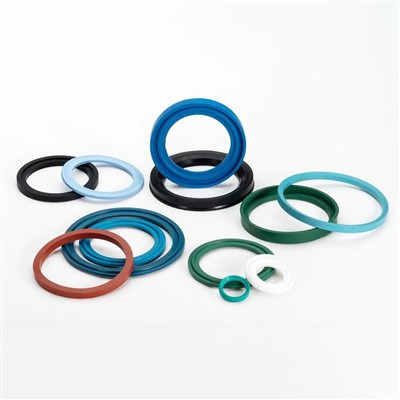
Rubber products are widely used in various industries, but during production and use, they often encounter various quality defects. Understanding the causes of these defects and mastering corresponding solutions is crucial for improving product quality and production efficiency. The following is a detailed analysis of common defects in rubber products, their causes, and solutions.
1. Surface Cracks
Phenomenon
Cracks of varying lengths and depths appear on the surface of rubber products, which may occur during production or after a period of use.
Main Causes
Over-vulcanization: Excessive vulcanization time or temperature causes rubber molecules to degrade, reducing elasticity and increasing brittleness.
Aging: Long-term exposure to ozone, ultraviolet light, or high temperatures leads to chain scission in rubber molecules.
Insufficient Plasticizers: Lack of plasticizers results in poor flexibility and increased brittleness of the rubber.
Mechanical Stress: Repeated stretching or impact causes fatigue damage to the rubber.
Solutions
Adjust vulcanization parameters (reduce temperature or shorten time) to avoid over-vulcanization.
Add anti-aging agents (e.g., antioxidants, antiozonants) to improve weather resistance.
Optimize the formula by increasing the content of plasticizers or using low-volatility plasticizers.
Avoid excessive mechanical loads and improve product structural design.
2. Bubbles and Porosity
Phenomenon
Bubbles or pores exist inside or on the surface of rubber products, reducing density and mechanical properties.
Main Causes
Air Entrapment During Mixing: Improper mixing leads to air bubbles in the rubber compound.
Moisture in Raw Materials: Hygroscopic fillers (e.g., silica, calcium carbonate) or wet rubber contain moisture that vaporizes during vulcanization.
Inadequate Mold Venting: Poor mold design prevents air from escaping during molding.
Excessive Volatile Components: High-volatility additives (e.g., certain plasticizers or accelerators) produce gas during vulcanization.
Solutions
Ensure proper mixing techniques (e.g., slow feeding, sufficient defoaming) to reduce air entrapment.
Dry raw materials (e.g., fillers, rubber) before use to remove moisture.
Improve mold design by adding venting grooves or holes to facilitate air discharge.
Replace high-volatility additives with low-volatility alternatives.
3. Surface Sticking and Poor Release
Phenomenon
Rubber products adhere to the mold during demolding, causing surface damage or deformation.
Main Causes
Insufficient Release Agent: Inadequate or improper application of release agent.
Excessive Vulcanization Temperature: High temperatures increase rubber-mold adhesion.
Rough Mold Surface: Poor mold polishing or corrosion leads to increased friction.
Low Crosslink Density: Under-vulcanized rubber has sticky surfaces.
Solutions
Apply an appropriate amount of release agent (e.g., silicone-based or fluorine-based agents) evenly.
Adjust vulcanization temperature to a reasonable range and ensure uniform heating.
Polish the mold surface or apply anti-adhesion coatings (e.g., PTFE).
Optimize vulcanization time and pressure to ensure complete crosslinking.
4. Uneven Hardness
Phenomenon
Different parts of the product exhibit inconsistent hardness, affecting performance uniformity.
Main Causes
Uneven Mixing: Non-uniform dispersion of fillers (e.g., carbon black, silica) or additives.
Formula Variations: Inaccurate weighing of raw materials during batching.
Temperature Gradients in Vulcanization: Uneven mold temperature leads to inconsistent crosslink density.
Thickness Differences: Large variations in product thickness cause uneven heat transfer.
Solutions
Improve mixing processes (e.g., use internal mixers with precise control) to ensure uniform dispersion.
Strengthen quality control for raw material weighing and batching.
Calibrate mold temperature and use thermally conductive materials to improve heat distribution.
Adjust vulcanization parameters for thick-walled products (e.g., increase holding time).
5. Poor Bonding at Interfaces
Phenomenon
Delamination occurs at the interface between rubber and metal, fabric, or multi-layer rubber, reducing composite strength.
Main Causes
Surface Contamination: Oil, dust, or release agent residues on metal/fabric surfaces.
Inadequate Adhesion Promoters: Lack of primers (e.g., Chemlok) or improper selection of bonding agents.
Mismatched Vulcanization Systems: Different vulcanization speeds between multi-layer materials.
Insufficient Pressure During Lamination: Low pressure weakens inter-layer bonding.
Solutions
Thoroughly clean and roughen the surface of metal/fabric (e.g., sandblasting, chemical etching).
Use appropriate adhesion promoters and ensure proper coating thickness.
Coordinate vulcanization systems for multi-layer materials (e.g., similar cure speeds).
Increase lamination pressure or extend pressure-holding time during molding.
6. Excessive Flash
Phenomenon
Excess rubber (flash) forms along the mold edges, requiring additional trimming and affecting appearance and dimensions.
Main Causes
Excessive Material Charge: Overloading the mold with rubber compound.
Worn Mold Clearances: Enlarged gaps between mold components due to wear.
Low Vulcanization Pressure: Inadequate pressure fails to squeeze out excess material.
High Rubber Viscosity: Poor flowability causes material to overflow from mold edges.
Solutions
Accurately calculate material charge based on product volume and mold design.
Regularly inspect and maintain molds, replacing worn components.
Increase vulcanization pressure to ensure proper material flow and compaction.
Adjust the formula to reduce rubber viscosity (e.g., add processing aids or lower filler content).
7. Color Variations
Phenomenon
Products exhibit inconsistent colors or deviate from the specified color.
Main Causes
Inaccurate Pigment Dispersion: Poor dispersion of pigments during mixing.
Pigment Migration: Volatile or incompatible pigments bleed or migrate within the rubber.
Thermal Degradation of Pigments: High vulcanization temperatures cause pigment fading.
Batch-to-Batch Variations: Differences in raw material batches affect color consistency.
Solutions
Use pre-dispersed masterbatches or improve mixing to ensure uniform pigment distribution.
Select heat-stable and compatible pigments suitable for the rubber type and process.
Control vulcanization temperature within the pigment's tolerance range.
Standardize raw material suppliers and implement strict incoming quality control.
Conclusion
Defects in rubber products can stem from formula design, processing parameters, equipment conditions, or operational errors. By systematically analyzing the root causes and implementing targeted solutions-such as optimizing formulas, refining processes, and improving mold maintenance-manufacturers can significantly reduce defect rates, enhance product quality, and boost production efficiency. Regular training for operators and strict adherence to SOPs are also critical for preventing recurring issues in rubber manufacturing.