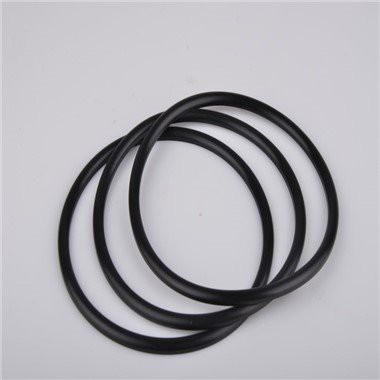

What is the elasticity of small rubber O - rings?
As a supplier of small rubber O - rings, I've spent a significant amount of time fascinated by the unique and crucial property of these tiny yet vital components: elasticity. In this blog post, I'm going to delve into the concept of elasticity in small rubber O - rings, exploring what it means, why it's essential, and how it impacts various applications.
Understanding Elasticity
Elasticity, in the context of rubber O - rings, refers to the ability of the rubber to deform under the application of force and then return to its original shape once the force is removed. This characteristic is a result of the molecular structure of rubber. Rubber is made up of long polymer chains that are intertwined. When a force is applied, these chains can stretch and slide past one another. However, the cross - links between the chains prevent them from moving too far apart. Once the force is removed, the cross - links pull the chains back into their original positions, causing the rubber to regain its shape.
The elasticity of rubber O - rings is typically described by two main parameters: Young's modulus and Poisson's ratio. Young's modulus measures the stiffness of the rubber, indicating how much force is required to produce a given amount of deformation. A higher Young's modulus means the rubber is stiffer and less elastic. Poisson's ratio, on the other hand, describes the relationship between lateral contraction and longitudinal extension when the rubber is stretched.
Importance of Elasticity in Small Rubber O - Rings
The elasticity of small rubber O - rings is of utmost importance in a wide range of applications. One of the primary functions of O - rings is to create a seal, preventing the leakage of fluids or gases. Elasticity allows the O - ring to deform and conform to the mating surfaces, filling any irregularities or gaps. For example, in a hydraulic system, the O - ring must be able to expand and contract as the pressure changes within the system. If the O - ring lacks sufficient elasticity, it may not seal properly, leading to leaks and potential system failure.
In addition to sealing, the elasticity of O - rings also plays a role in their durability. The ability to withstand repeated deformation without permanent damage is crucial, especially in applications where the O - ring is subject to cyclic loading. For instance, in automotive engines, O - rings are used in various components such as pistons and valves. These O - rings must be able to endure thousands of cycles of compression and expansion over the lifetime of the engine.
Factors Affecting the Elasticity of Small Rubber O - Rings
Several factors can influence the elasticity of small rubber O - rings. One of the most significant factors is the type of rubber material used. Different rubber compounds have different molecular structures and properties, which directly affect their elasticity. For example, silicone rubber is known for its excellent elasticity and flexibility, making it suitable for applications that require a high degree of deformation. On the other hand, nitrile rubber is more rigid and has a lower elasticity, but it offers better resistance to oil and fuel.
The manufacturing process also plays a role in the elasticity of O - rings. The curing process, in particular, can have a significant impact. Proper curing ensures that the cross - links between the polymer chains are formed correctly, which is essential for maintaining the elasticity of the rubber. If the curing process is not carried out correctly, the O - ring may have reduced elasticity or even become brittle.
Temperature is another important factor. Rubber is a viscoelastic material, which means its properties are temperature - dependent. At low temperatures, the rubber becomes stiffer and less elastic, while at high temperatures, it can become softer and more prone to deformation. Therefore, it's crucial to select the appropriate rubber material for the specific temperature range of the application.
Applications of Small Rubber O - Rings Based on Elasticity
The unique elasticity of small rubber O - rings makes them suitable for a wide variety of applications. In the medical industry, O - rings are used in devices such as syringes and catheters. The elasticity allows the O - ring to create a tight seal, preventing the leakage of fluids and ensuring the safety and effectiveness of the medical device.
In the aerospace industry, small rubber O - rings are used in critical components such as fuel systems and hydraulic systems. The ability to withstand high pressures and temperature variations while maintaining elasticity is essential for the reliable operation of these systems.
If you're in need of high - quality small rubber O - rings with excellent elasticity, we have a wide range of products to meet your needs. You can explore our offerings of Custom Molded Silicone Rubber O Ring, Seals O Rings Rubber, and FFKM O - Rings For Extreme Temperatures.
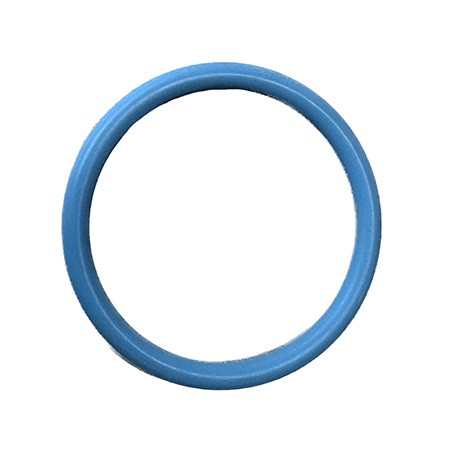

We understand that different applications require different levels of elasticity and performance. That's why we offer customized solutions to ensure that our O - rings meet your specific requirements. Whether you need a small quantity for a prototype or a large volume for mass production, we're here to provide you with the best products and services.
If you're interested in purchasing our small rubber O - rings or have any questions about their elasticity and applications, please don't hesitate to contact us. Our team of experts is ready to assist you in finding the ideal O - ring solution for your needs and guide you through the procurement process.
References
- Smith, J. (2018). "The Properties of Rubber Materials." Rubber Science Journal, Vol. 35, pp. 22 - 38.
- Brown, A. (2019). "Applications of O - rings in Industrial Systems." Industrial Engineering Review, Vol. 22, pp. 45 - 56.
- Green, C. (2020). "Temperature Effects on Rubber Elasticity." Material Science Today, Vol. 15, pp. 78 - 89.