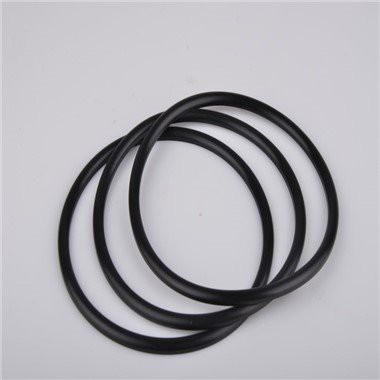

As a seasoned supplier of solid O - rings, I often encounter the question: "What is the density of a solid O - ring?" This seemingly simple query delves into the complex world of materials science and engineering, which is crucial for understanding the performance and application of these essential sealing components.
Understanding the Basics of Density
Density is defined as mass per unit volume, expressed in units such as grams per cubic centimeter (g/cm³) or kilograms per cubic meter (kg/m³). In the context of solid O - rings, density plays a vital role in determining their physical and mechanical properties. A higher - density O - ring may indicate a more compact and potentially stronger material, while a lower density could suggest a lighter or more elastic composition.
The density of a solid O - ring is primarily influenced by the type of material used in its manufacturing. Various rubber compounds, plastics, and metals can be employed to create O - rings, each with its own distinct density range.
Common Materials and Their Densities
Rubber Compounds
Rubber is one of the most commonly used materials for O - rings due to its excellent sealing properties, flexibility, and resistance to various chemicals and environmental conditions. Different types of rubber have different densities:
- Nitrile Rubber (NBR): NBR O - rings are known for their good oil and fuel resistance. The density of NBR typically ranges from 0.95 to 1.2 g/cm³. This density range allows NBR O - rings to strike a balance between elasticity and durability, making them suitable for a wide range of automotive and industrial applications.
- Silicone Rubber: Silicone O - rings are highly valued for their high - temperature resistance and flexibility over a wide temperature range. They have a relatively low density, usually between 0.96 and 1.15 g/cm³. The lower density contributes to their light weight and excellent conformability, which is beneficial in applications where weight is a concern, such as in aerospace and electronics.
- Fluoroelastomer (FKM): FKM O - rings are renowned for their exceptional chemical resistance, especially to high - temperature fluids and aggressive chemicals. The density of FKM usually falls between 1.8 and 2.0 g/cm³. The higher density of FKM is due to its chemical structure, which contains fluorine atoms. Despite the higher density, FKM O - rings are widely used in demanding environments, such as in the chemical processing and oil and gas industries.
Plastics
Plastic materials are also used in the production of O - rings, especially in applications where high - precision, low - friction, or specific chemical resistance is required.
- Polytetrafluoroethylene (PTFE): PTFE is a widely used plastic for O - rings because of its excellent non - stick properties, chemical inertness, and wide temperature range. The density of PTFE is relatively high, around 2.1 - 2.3 g/cm³. PTFE O - rings are commonly used in applications where there is a need to avoid contamination, such as in the food and pharmaceutical industries.
- Polyetheretherketone (PEEK): PEEK is a high - performance thermoplastic with excellent mechanical properties, high - temperature resistance, and chemical resistance. The density of PEEK is approximately 1.3 - 1.4 g/cm³. PEEK O - rings are often used in high - stress and high - temperature applications, such as in aerospace and automotive engines.
Metals
Metal O - rings are used in applications where high - pressure sealing, high - temperature resistance, or corrosion resistance is required.
- Stainless Steel: Stainless steel O - rings are known for their corrosion resistance and strength. The density of stainless steel is around 7.7 - 8.0 g/cm³. These O - rings are commonly used in applications such as hydraulic systems and chemical processing plants.
- Copper: Copper O - rings have good thermal and electrical conductivity in addition to their sealing properties. Copper has a density of about 8.96 g/cm³. They are often used in applications where heat transfer is a consideration, such as in electrical connectors.
Importance of Density in O - Ring Applications
The density of a solid O - ring has a significant impact on its performance in different applications.

- Sealing Performance: A properly - selected density is crucial for achieving a reliable seal. For example, in high - pressure applications, a higher - density O - ring may be required to withstand the pressure without extrusion. In contrast, in low - pressure or static sealing applications, a lower - density O - ring may be sufficient and can provide better conformability.
- Weight Considerations: In industries such as aerospace and automotive, weight is a critical factor. A lower - density O - ring can help reduce the overall weight of the system, which in turn can lead to improved fuel efficiency or performance.
- Cost: The density of the material also affects the cost of the O - ring. Generally, higher - density materials may be more expensive due to the amount of raw material used. Therefore, understanding the density requirements can help in making cost - effective decisions.
Our Product Offerings
As a solid O - ring supplier, we offer a wide range of O - rings made from different materials to meet the diverse needs of our customers. Whether you need an Inch Oring for a specific size requirement, an O - ring Rubber Seal for general sealing applications, or a High Performance Rubber O Ring for extreme conditions, we have the right product for you. Our in - house experts can assist you in selecting the most suitable O - ring based on its density, material properties, and your specific application requirements.
Contact Us for Procurement
If you are in the market for high - quality solid O - rings and need more information about our products and services, please feel free to reach out to us. Our team is ready to guide you through the selection process, answer any questions you may have, and provide you with competitive quotes. We understand the importance of reliable seals in your operations, and we are committed to delivering the best products to meet your needs.
References
- "Rubber Technology Manual", Wulf Horstmann, Hans - Joachim Elias
- "Plastics Engineering Handbook", Myer Kutz
- "Metals Handbook", ASM International