


Choosing the right molding process for a specific rubber part design is crucial, especially when you're aiming for high - quality, cost - effective production. As a Rubber Molded Part supplier, I've seen firsthand how the wrong molding choice can lead to all sorts of headaches, from poor part quality to sky - high production costs. So, let's dive into how you can make the best decision for your rubber part design.
Understanding the Basics of Rubber Molding Processes
First off, there are several common rubber molding processes out there. Compression molding is one of the oldest and simplest methods. It involves placing a pre - measured amount of rubber material into an open mold cavity. Then, the mold is closed, and pressure and heat are applied to cure the rubber. This process is great for simple shapes and low - volume production. It's relatively inexpensive in terms of tooling costs, but it can be time - consuming, as the curing process might take a while.

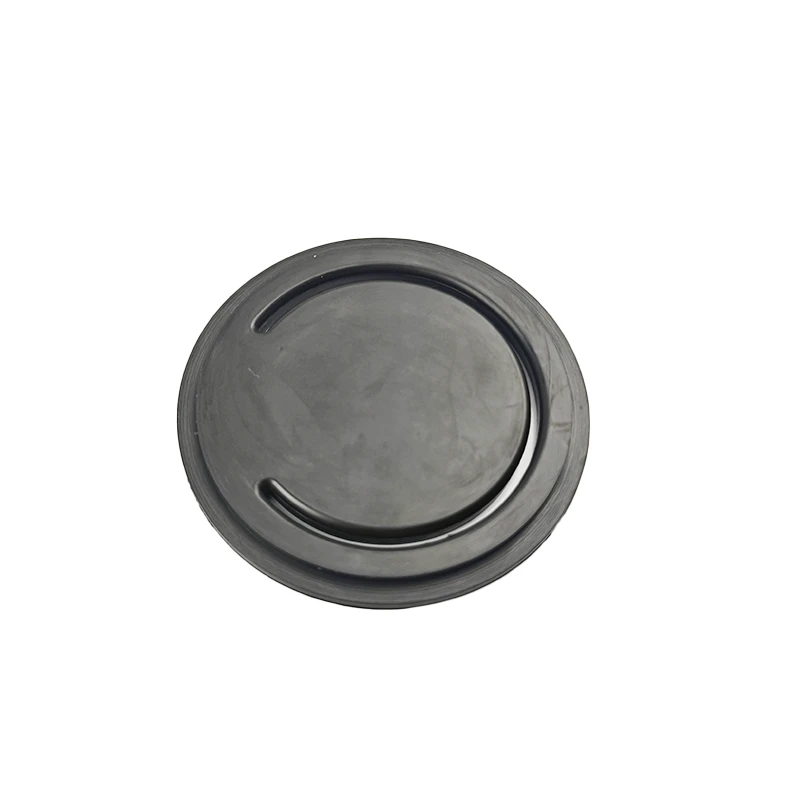
Injection molding, on the other hand, is a more advanced technique. Here, the rubber material is melted and injected into the mold cavity under high pressure. This process is much faster than compression molding, making it ideal for high - volume production. The parts produced through injection molding usually have better dimensional accuracy and a more consistent quality. However, the initial tooling costs for injection molding are quite high, so it might not be the best choice for small - scale projects.
Transfer molding is a bit of a hybrid between compression and injection molding. In transfer molding, the rubber is pre - heated in a chamber and then transferred into the mold cavity through a sprue system. It offers some of the advantages of injection molding, like better flow control and more complex part designs, while still being more cost - effective than injection molding for medium - volume production.
Factors to Consider When Choosing a Molding Process
Design Complexity
The complexity of your rubber part design is a major factor. If your part has simple shapes, like OEM Rubber Feet With Screw Hole, compression molding could be a great option. It can handle basic geometries without much trouble. But if your part has intricate details, thin walls, or complex shapes, injection molding or transfer molding might be more suitable. For example, Custom Round Rubber Molded Parts with specific internal features would require a process that can ensure accurate replication of those details.
Production Volume
How many parts do you need to produce? If it's a small batch, say a few hundred parts, compression molding is probably the way to go. The lower tooling costs make it cost - effective for low - volume runs. But if you're looking at producing thousands or even millions of parts, injection molding is the clear winner. Its high - speed production capabilities can keep up with large - scale demand. Transfer molding falls in between and is a good choice for medium - volume production, typically in the range of a few thousand to tens of thousands of parts.
Material Properties
Different rubber materials have different flow characteristics, curing times, and temperature requirements. Some materials flow more easily, which is beneficial for injection molding. Others might be more viscous and work better with compression molding. For instance, silicone rubber is often used in injection molding because it has good flow properties and can cure quickly at relatively low temperatures. On the other hand, natural rubber might be more commonly used in compression molding due to its traditional processing methods.
Cost Considerations
Cost is always a big deal. As mentioned earlier, tooling costs vary widely between different molding processes. Injection molding has high upfront tooling costs, but these costs can be amortized over a large production volume. Compression molding has lower tooling costs but might have higher per - part labor costs due to the slower production speed. Transfer molding strikes a balance between the two. You also need to consider the cost of the rubber material itself, as well as any post - processing steps that might be required.
Case Studies
Let's look at a couple of real - world examples. A customer came to us with a design for a Follower Plate. The part had a relatively simple shape but required high - volume production. Initially, they were considering compression molding because they were familiar with it. However, after analyzing the production volume and the need for consistent quality, we recommended injection molding. The initial investment in tooling was higher, but in the long run, the faster production speed and better part quality led to significant cost savings.
Another customer wanted a small batch of custom rubber gaskets with unique shapes. Since the volume was low and the design complexity was moderate, we suggested compression molding. The lower tooling costs made it an affordable option, and the process was able to produce the parts with the required quality within the customer's budget.
Making the Final Decision
Once you've considered all these factors, it's time to make a decision. It's a good idea to consult with a professional rubber molded part supplier, like us. We have the experience and expertise to help you evaluate your design and production requirements and recommend the most suitable molding process. We can also provide cost estimates and samples to give you a better idea of what to expect.
If you're still unsure, you can even request a small - scale trial production. This allows you to test the parts and see if the chosen molding process meets your quality and performance requirements. It's a low - risk way to ensure that you're making the right choice.
Contact Us for Your Rubber Part Needs
If you're in the market for rubber molded parts and need help choosing the right molding process, don't hesitate to reach out. We're here to assist you every step of the way, from design evaluation to final production. Whether you have a simple or complex rubber part design, we have the knowledge and capabilities to deliver high - quality parts that meet your specifications. Let's start a conversation and find the best solution for your project.
References
- "Rubber Processing Technology" by Maurice Morton
- "Handbook of Rubber Technology" by A. Y. Coran


